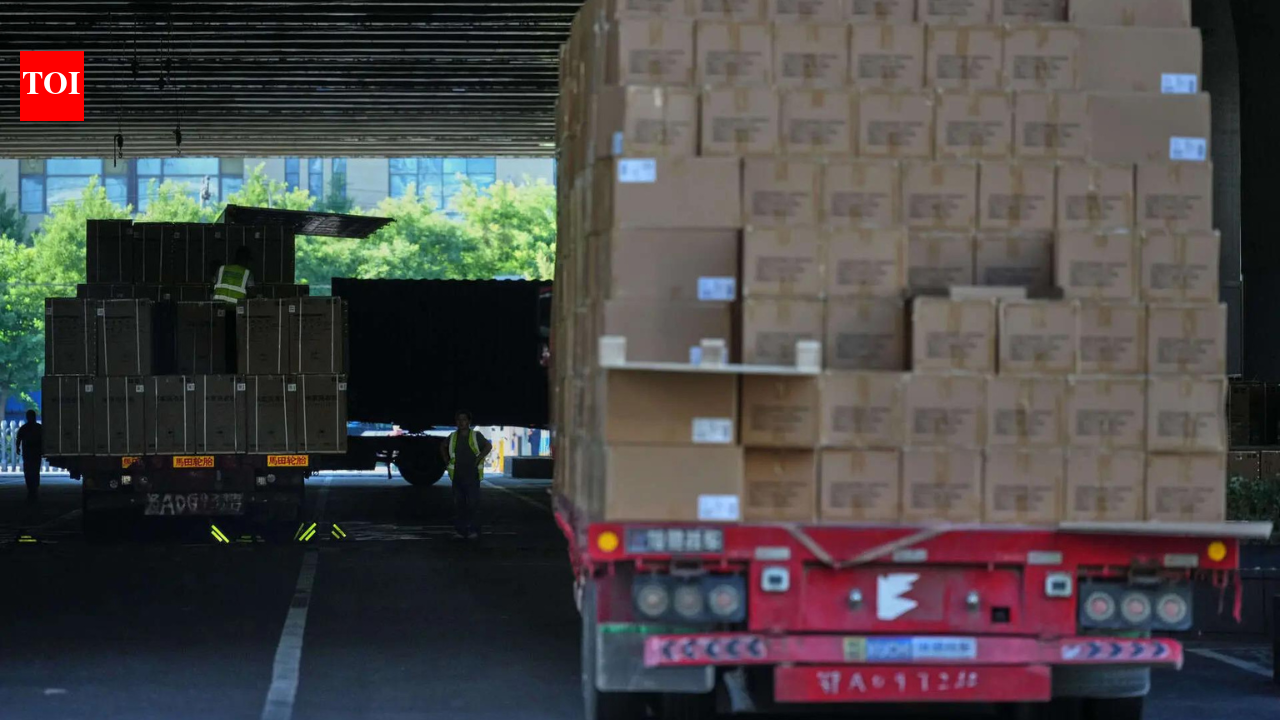
China's domestic economy continues to face significant headwinds despite robust export growth, with consumer spending, property activity and credit demand remaining weak, according to a recent market strategy report by Jefferies.
The report said there is "a continuing lack of any evidence of a pickup in domestic demand," underscoring persistent challenges in the world's second-largest economy even as its manufacturing and export sectors remain resilient.
Consumer Spending and Confidence Slump
Retail sales, a key gauge of consumer spending, declined 0.6 per cent year-on-year in May, reversing a 0.2 per cent increase recorded in April, according to the Jefferies report. This marked the first annual decline in retail sales since December 2022. The weakness in household spending is also reflected in consumer sentiment. As per the report, China's consumer confidence index fell to 89.0 in April from 91.6 in February, indicating continued caution among consumers despite policy support measures aimed at boosting demand.
Credit Growth Remains Tepid
The report also highlighted a lack of improvement in credit growth. Renminbi bank loan growth and private-sector credit growth both slowed to 5.5 per cent year-on-year in May, suggesting businesses and households remain reluctant to borrow and invest.
Property Sector Still Under Pressure
China's property market, long considered a major pillar of economic growth, continues to struggle. According to Jefferies, residential floor space sold fell 12.1 per cent year-on-year during the January-May period, while the value of property sales dropped 14.1 per cent. However, there were signs of stabilisation in the country's largest urban centres. The report noted that new home prices in China's tier-one cities increased for a fourth consecutive month in May, suggesting prices may have bottomed out in some major markets.
| Key Indicator | Change | Period |
|---|---|---|
| Retail sales | -0.6% YoY | May |
| Consumer confidence index | 89.0 (from 91.6 in Feb) | April |
| Credit growth (bank & private) | 5.5% YoY | May |
| Residential floor space sold | -12.1% YoY | Jan-May |
| Property sales value | -14.1% YoY | Jan-May |
| New home prices (tier-1 cities) | Increased for 4th consecutive month | May |
| Export of goods (USD) | +19.4% YoY to $377B | May |
| Import of goods (USD) | +27.4% YoY to $271B | May |
| Electronic integrated circuit exports | +111% YoY to $35.5B (record) | May |
Export and Chip Shipments Provide Bright Spots
While domestic demand remains subdued, China's export sector has continued to perform strongly. The report said exports of goods rose 19.4 per cent year-on-year in US dollar terms to $377 billion in May, while imports climbed 27.4 per cent to $271 billion. A particularly strong area has been semiconductor-related exports. According to the report, exports of electronic integrated circuits surged 111 per cent year-on-year to a record $35.5 billion in May. Shipments of such products reached $139 billion in the first five months of 2026, up 90 per cent from a year earlier.
Overall Assessment
Overall, Jefferies concluded that China's economy remains heavily reliant on exports and manufacturing strength, while domestic consumption, property investment and credit demand continue to lag. The report provides no timeline for a domestic recovery, noting only the persistent gap between external and internal demand.
For C-suite executives and investors, the findings underscore the bifurcation of China's economy: export-oriented industries are booming, while domestic-facing sectors face a prolonged downturn. Companies with exposure to China's consumer and property markets should monitor further policy stimulus measures, while those benefiting from the export surge, particularly in semiconductors, may continue to see momentum. The next milestone will be China's second-quarter GDP release and any additional fiscal or monetary policy announcements from Beijing.
Sources: