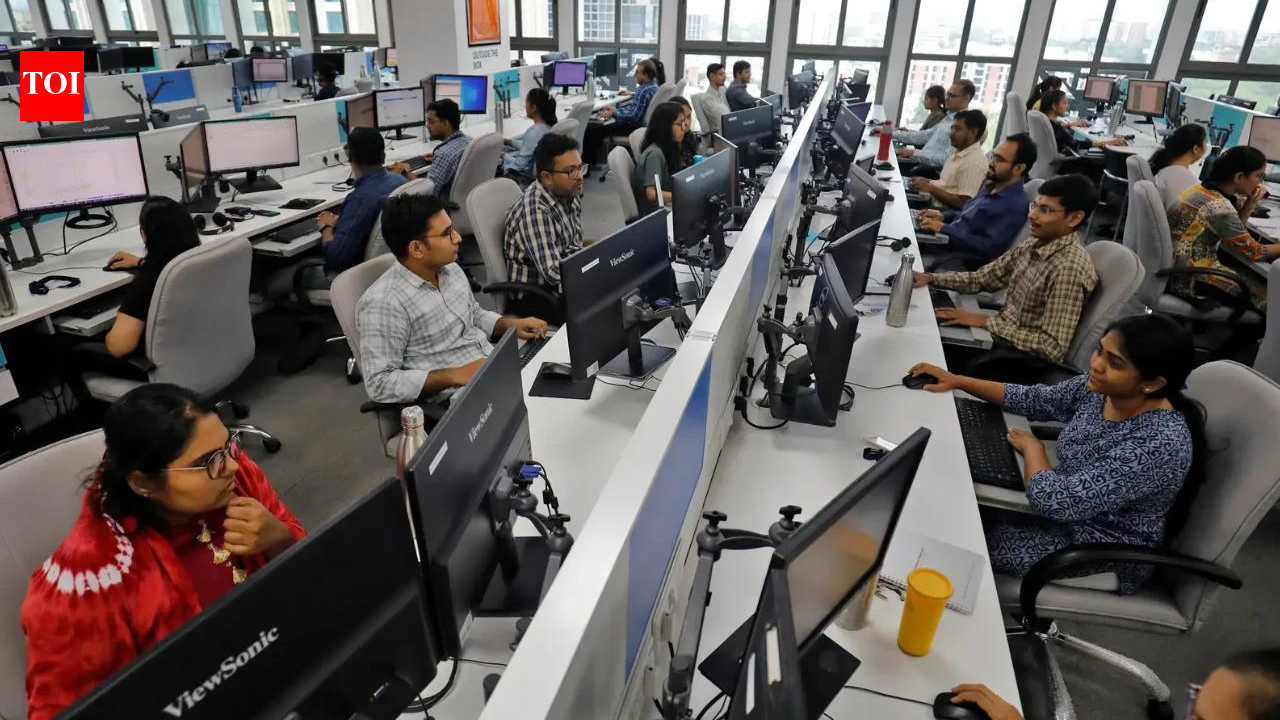
India's office market posted resilient demand in the first half of 2026, with gross leasing across the top seven cities reaching 35.7 million sq ft — a 6% rise compared to the same period in 2025 — yet the overall market remains cautious, according to a report by Colliers.
Market overview: demand exceeds supply
In the second quarter of fiscal 2026 (April-June 2026), Grade A office space uptake moderated to 17.4 million sq ft after a robust first quarter, the Colliers report noted. Despite the slower quarter, demand for office space remained intact, supported by the expansion of Global Capability Centres (GCCs) in preferred markets, steady leasing across diverse occupier segments, and continued adoption of flexible workspaces.
Importantly, during Q2 FY26, companies leased more space than was newly built or added, as developers remained cautious about adding supply. However, vacancy levels stayed range-bound at around 15% at the India level, owing to relocations and churns. Office rents increased slightly — up to 5% — in select active micro-markets, yet the overall market remains cautious.
Regional performance: Bengaluru leads, Hyderabad surges
| City | H1 2026 leasing (mn sq ft) | Share of total demand | YoY change (H1) | Notable Q2 trend |
|---|---|---|---|---|
| Bengaluru | 10.5 | 29% | — | Led market |
| Hyderabad | 7.2 | ~20% | +47% | Strong growth |
| Delhi NCR | 4–5 | — | — | Stable |
| Mumbai | 4–5 | — | — | Q2 demand -25-30% YoY |
| Chennai | 4–5 | — | — | — |
| Pune | — | — | — | Q2 demand -25-30% YoY |
Bengaluru drove space uptake of 10.5 million sq ft, accounting for a 29% share of total H1 2026 demand. Hyderabad recorded around 7.2 million sq ft of leasing activity, contributing nearly one-fifth of total demand and registering a 47% YoY rise in leasing. Delhi NCR, Mumbai, and Chennai each recorded leasing activity of 4–5 million sq ft in the first half.
However, the second quarter saw a sharp moderation. Mumbai and Pune both witnessed a 25–30% YoY decline in space uptake as occupiers turned cautious. The share of large deals (100,000 sq ft and above) in Mumbai declined from 41% in Q1 2026 to 13% in Q2 2026. In Pune, the large-sized transaction share dropped from 63% to 38% over the same period.
Flexible workspace surge
A standout trend in Q2 2026 was the leasing of 4.6 million sq ft of flexible workspace, which the Colliers report said was over 90% higher than the average quarterly flex space demand of the last five years. This signals growing adoption of flexible workspaces as a core component of occupier real estate portfolios.
Outlook: cautious but resilient
The report highlights that while demand remains resilient and exceeded new supply in Q2 FY26, the overall market sentiment is cautious. Rents are rising only in select active micro-markets, and vacancy levels have not tightened significantly due to churn. The moderation in key markets like Mumbai and Pune, along with a decline in large-deal shares, suggests occupiers are taking a measured approach. The continued strength of GCC-driven demand and the rise of flexible workspaces provide a buffer, but the market is not yet in a phase of broad-based acceleration.
Sources: