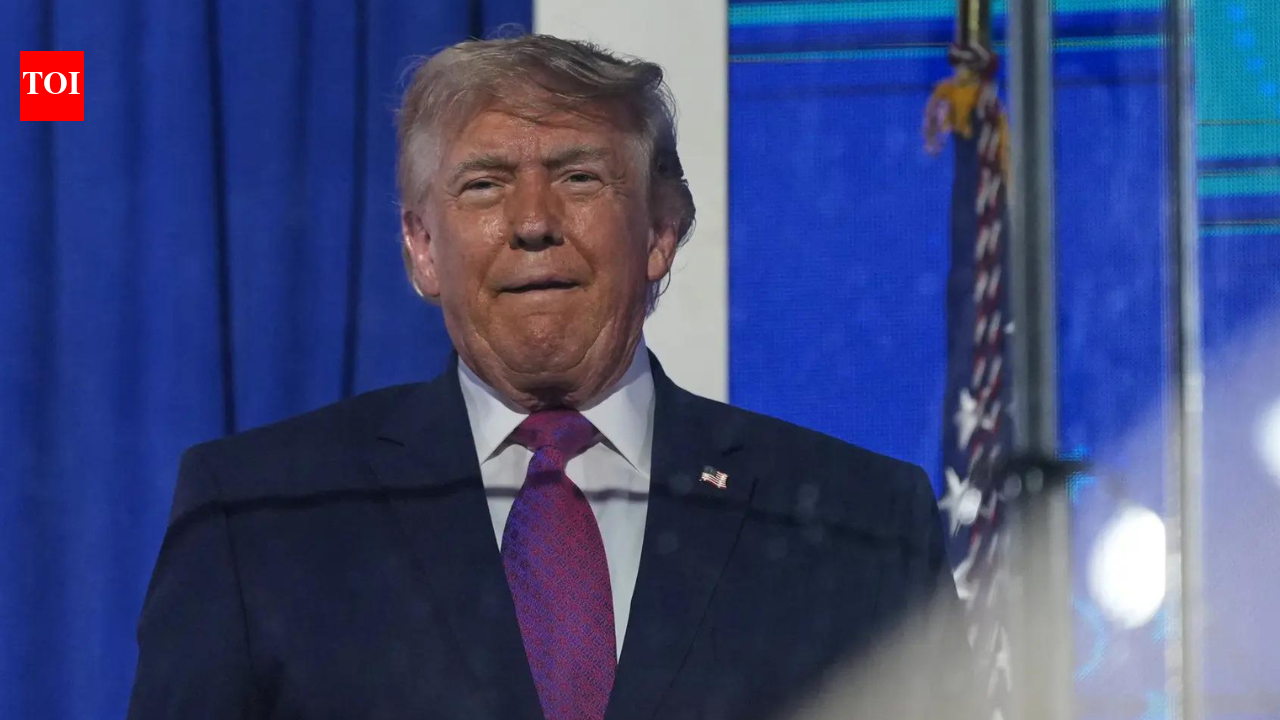
US President Donald Trump has praised India's economic performance, saying the country is 'doing very well' at 7-8% growth, marking a sharp reversal from his July 2025 criticism of India as a 'dead economy,' according to a CNBC interview transcribed by Business Today. The remarks, made on July 3, 2026, ahead of US Independence Day, carry significant weight for investors and corporate strategists monitoring US-India trade relations and tariff policies.
Sharp Contrast to 2025 Criticism
Trump's latest comments stand in stark contrast to his July 2025 remarks on Truth Social, where he wrote: 'I don't care what India does with Russia. They can take their dead economies down together, for all I care.' At that time, he announced a 25% tariff on Indian imports, accusing India of maintaining 'far too high' tariffs and 'the most strenuous and obnoxious non-monetary Trade Barriers of any Country.' The criticism escalated in August 2025, when he signed an executive order on August 6 imposing an additional 25% penalty tariff over India's purchases of Russian crude oil, bringing cumulative US tariffs on Indian goods to 50% effective August 27, 2025.
| Aspect | 2025 Stance | 2026 Stance |
|---|---|---|
| Characterization | 'Dead economy' | 'Doing very well' (7-8% growth) |
| Tariffs on India | 50% cumulative (25% baseline + 25% penalty) | Temporary regime expires July 24; negotiations underway |
| Trade Deal | Failed to conclude interim agreement | Framework finalized; awaiting tariff advantage |
Trade Deal Negotiations Gather Pace
Trump's change in tone coincides with accelerating bilateral trade talks. Union Commerce Minister Piyush Goyal recently stated that the framework for a proposed bilateral trade agreement has been finalized, though implementation depends on India securing a tariff advantage over competing exporting nations, according to the Business Today report. The negotiations gained momentum after Prime Minister Narendra Modi and Trump met on the sidelines of the G7 Summit in France in June 2026. Both countries are now working to conclude an interim trade pact before the temporary US tariff regime expires on July 24. The proposed agreement is expected to deepen cooperation in trade, investment, and technology while expanding market access for businesses in both countries.
Trump Defends US Economic Performance
During the same interview, Trump used India as an example while defending the strength of the US economy and criticizing the Federal Reserve's approach to interest rates. He argued that strong economic growth should not automatically prompt higher interest rates, stating, 'There's no reason we should stop at 4%. We should be at 12% and 13% GDP.' Trump claimed the US was in a 'Golden Age,' citing more factories being built than ever before, record-high employment, fresh stock market highs, and sharply risen retirement savings. He added that the current economy was performing even better than during his first term: 'This is better... I think this is going to blow it away.'
The reversal on India's economy signals a pragmatic shift as both nations approach a critical tariff deadline. For C-suite executives and investors, the evolving US-India trade framework—if finalized by July 24—could unlock significant market access and reduce tariff costs for sectors such as technology, pharmaceuticals, and textiles. The 50% tariff wall imposed in 2025 has strained supply chains; a potential rollback would be a major catalyst for cross-border investment. Meanwhile, Trump's defense of high growth amid loose monetary policy suggests continued volatility in currency and bond markets, which multinational corporations with Indian operations must monitor closely.
Sources: