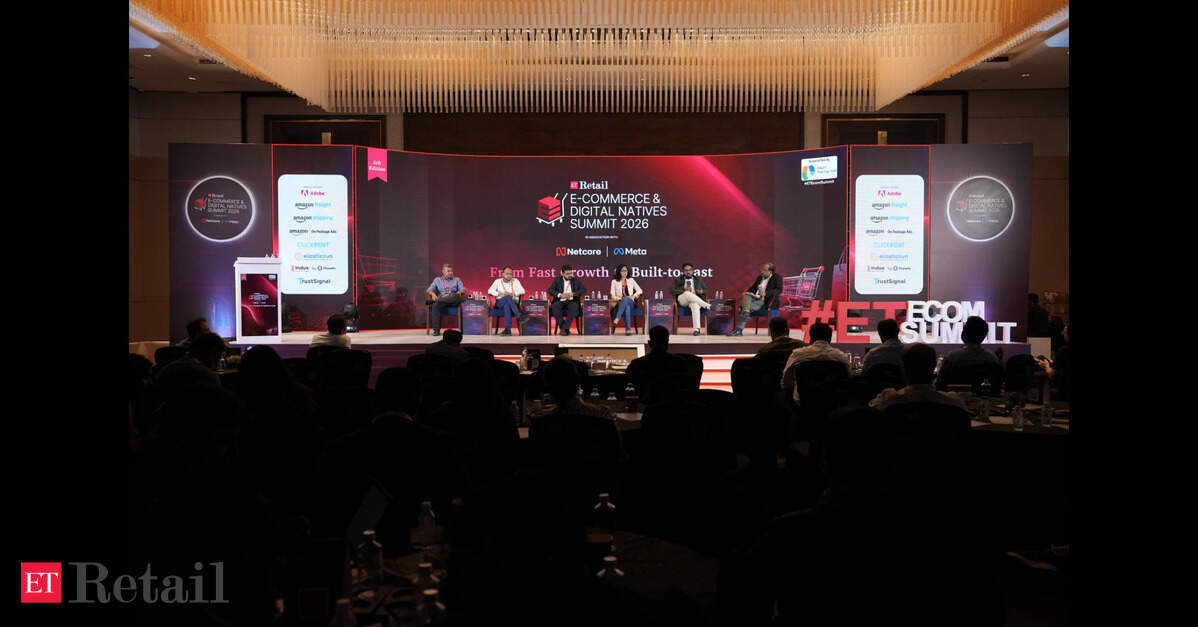
Industry leaders from ITC, Bajaj Consumer, Zydus Wellness, IKEA India, and Campus told the ETRetail Summit 2026 that ecommerce and quick commerce chiefs are becoming full-stack business strategists, with roles expanding from channel management to integrated ownership of supply chain, marketing, and P&L.
The discussion, titled "The Hottest Seat in Retail: The Rise and Rise of the Ecommerce & Quick Commerce Chief," featured:
- Pratik Agrawal, Head of Ecommerce & D2C, Zydus Wellness
- Saket Kandoi, Head of Ecommerce, ITC
- Amit Sonwani, Head of Ecommerce, Bajaj Consumer
- Bhavana Jaiswal, Head of eCommerce, IKEA India
- Satyam Singh, AVP - Ecommerce, Campus
- Moderated by Amit Singal, Founding Partner, Indicorn Angels & Fluid Ventures
Ecommerce as a Core Business Driver
Opening the discussion, panelists highlighted how ecommerce leadership roles have expanded significantly over the past few years, moving beyond channel management into integrated business ownership spanning supply chain, marketing, and demand planning, according to the ETRetail Summit 2026 report.
Pratik Agrawal of Zydus Wellness noted that ecommerce has fundamentally shifted from being a distribution extension to a core business driver, driven by rapid changes in supply chain infrastructure and quick commerce adoption. He said technology-led speed in fulfilment and changing consumer discovery patterns have expanded the role of ecommerce into a supply-chain intensive function, where demand planning and availability are critical levers.
Consumer Behaviour and Channel Shift
Amit Sonwani of Bajaj Consumer highlighted that consumer movement across channels is accelerating, with shoppers no longer loyal to a single platform or brand channel. He noted that categories once dominated by traditional FMCG distribution are now seeing demand redistribution across ecommerce and quick commerce platforms, forcing brands to adapt to multi-channel competition. He added that impulse-led categories such as snacks and beverages are particularly impacted by quick commerce adoption, which has significantly altered purchase frequency and availability expectations.
Ecommerce as a Business Strategy Function
Panelists collectively agreed that ecommerce is no longer a standalone channel but an integrated part of business strategy, according to the source. Saket Kandoi of ITC said ecommerce leadership now requires managing supply chain decisions, marketing performance, pricing strategy, and platform dynamics simultaneously. He emphasised that ecommerce roles today involve owning both top-line growth and P&L responsibility, making them central to enterprise decision-making.
Supply Chain, Discovery, and Algorithms
Pratik Agrawal said the biggest shift in recent years has been driven by supply chain acceleration and platform-level algorithmic discovery. He noted that earlier ecommerce was limited to a few platforms, but today multiple discovery touchpoints exist, making consumer journeys more fragmented but also more data-rich. He added that quick commerce has fundamentally changed consumption behaviour by turning planned purchases into instant fulfilment-driven demand.
Evolving FMCG and Retail Models
ITC’s ecommerce leadership noted that FMCG discovery and availability challenges have evolved significantly, with ecommerce now playing a key role in identifying emerging consumption trends. The panel highlighted that consumption occasions such as instant grocery needs and impulse categories are expanding rapidly, requiring brands to rethink both product and supply chain strategies.
Data, Platforms, and Decision-Making
Panelists also discussed the increasing importance of platform data and algorithmic visibility in shaping brand performance. They noted that marketplace algorithms today evaluate conversion rates, return rates, and other metrics to determine product visibility, making it essential for brands to optimise across multiple dimensions to maintain shelf-space in digital storefronts, according to the ETRetail Summit 2026 report.
Implications for Executives and Investors: The shift of ecommerce chiefs to full-stack strategists signals that companies in FMCG and retail must embed digital commerce expertise at the highest strategy levels. For investors, firms that successfully integrate ecommerce leadership with supply chain and P&L management may gain competitive advantage in an environment where quick commerce and platform algorithms increasingly dictate consumer choice. As the role expands, expect more companies to restructure their executive teams to elevate ecommerce heads to C-suite positions or create chief commerce officer roles.
Sources: