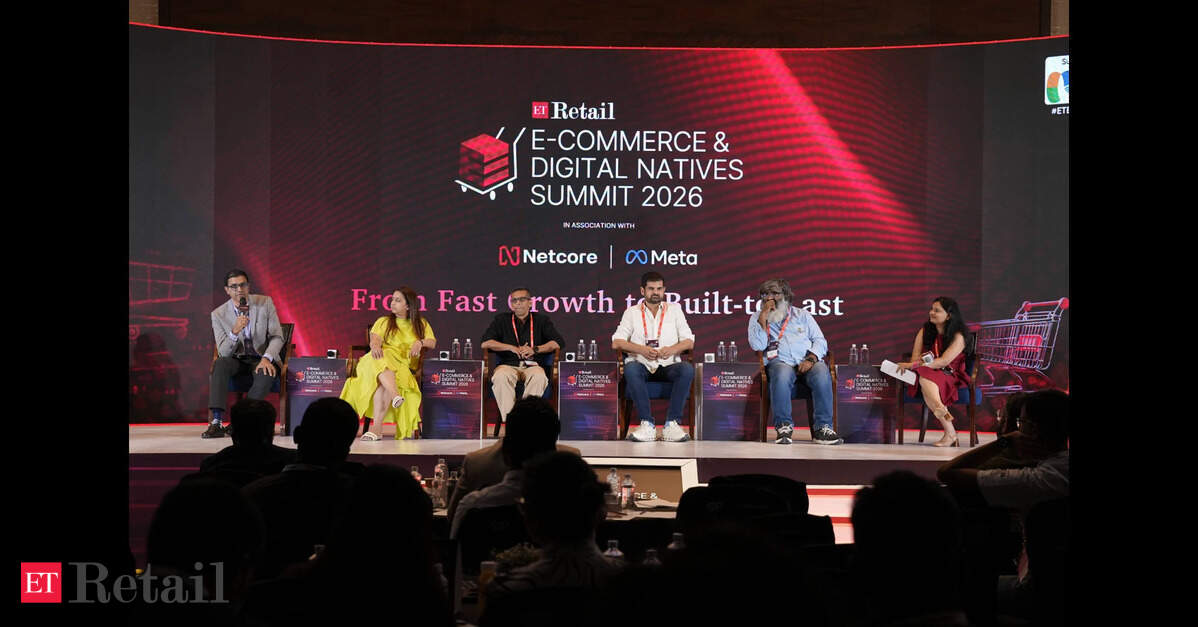
Endurance, not early growth, will separate successful direct-to-consumer (D2C) brands in India from those that fade away, according to founders speaking at the EDNS 2026 conference. The panel, titled “The Hottest Seat in Retail: The Rise and Rise of the Ecommerce & Quick Commerce Chief”, featured leaders from Plum, Indo Era, Fast&Up, Kapiva, and Akshaykalpa Organic. They unanimously pointed to product strength as the foundational differentiator for long-term survival in India’s crowded D2C ecosystem, as reported by ETRetail.
Product Strength as the Foundation
Shankar Prasad, Founder and CEO of Plum, said sustainable brands are built on product credibility rather than marketing intensity. “Marketing gets the customer, product keeps the customer,” he stated, adding that retention depends on whether a product consistently meets both stated and unstated consumer needs. Srishti Tanwani, Co-Founder of Indo Era, highlighted the increasing importance of product presentation and packaging in a hyper-competitive market. Vijayaraghavan Venugopal, Co-Founder of Fast&Up, emphasised consistency and longevity in brand building, noting that endurance requires sustained storytelling and disciplined execution. He said long-term brand value is created when consumers continue to recognise and trust a brand over decades, not just years of rapid growth.
Ameve Sharma, Co-Founder of Kapiva, stressed that measurable outcomes remain the strongest moat in wellness categories. He noted that in health-driven businesses, “if the customer does not see a measurable benefit in a measurable amount of time, you will disappear very soon,” underscoring the importance of scientific validation and repeat efficacy. Shashi Kumar, Founder & CEO of Akshaykalpa Organic, pointed to the upstream nature of food businesses, stating that true differentiation begins at the farm level rather than at the brand layer. He emphasised that sustainable organic value chains require long-term investment in agriculture systems, which cannot be easily replicated through capital alone.
Category Creation vs Competition Intensity
Discussing increasing competition in D2C categories, especially beauty and wellness, founders noted that most categories are now crowded with similar positioning and claims, making differentiation more complex. Shankar Prasad said consumer behaviour is often irrational and difficult to decode, requiring brands to go beyond functional claims. “The customer does not think what she feels, does not say what she thinks, and does not do what she says,” he said, highlighting the need for deeper emotional and sensory product alignment.
Defensibility and Moats
| Founder | Company | Key Moat |
|---|---|---|
| Shashi Kumar | Akshaykalpa Organic | Organic agriculture systems; structural dependency on farming ecosystems |
| Vijayaraghavan Venugopal | Fast&Up | Organisational DNA evolution; shifting from awareness to market share defence |
Shashi Kumar said organic agriculture remains the strongest moat in his category due to its structural dependency on farming ecosystems. He added that while capital can accelerate branding and distribution, it cannot replace the foundational constraints of organic production systems. Vijayaraghavan Venugopal noted that as categories scale, companies must shift from building awareness to defending market share, which requires organisational DNA evolution. He said category creators must transition from evangelisation to competitive resilience once markets mature.
Industry Challenges and Global Ambition
Shankar Prasad flagged the lack of a globally dominant Indian beauty brand as a key industry gap, noting that India has strong scientific and formulation capability but limited global scale presence. Srishti Tanwani highlighted the challenges of building a brand in a market where consumer expectations are rapidly evolving. The panel was moderated by Pallavi Goel, Senior Business Journalist at ETRetail.
The consensus among the founders was clear: while early growth spikes may attract attention, only brands that invest in product integrity, supply chain depth, and enduring consumer relevance will thrive in India’s next phase of D2C evolution. For investors and corporate strategists, the takeaway is to look beyond vanity metrics and evaluate brands on the structural moats they have built—whether in organic agriculture, clinical efficacy, or emotional resonance with consumers.
Sources: