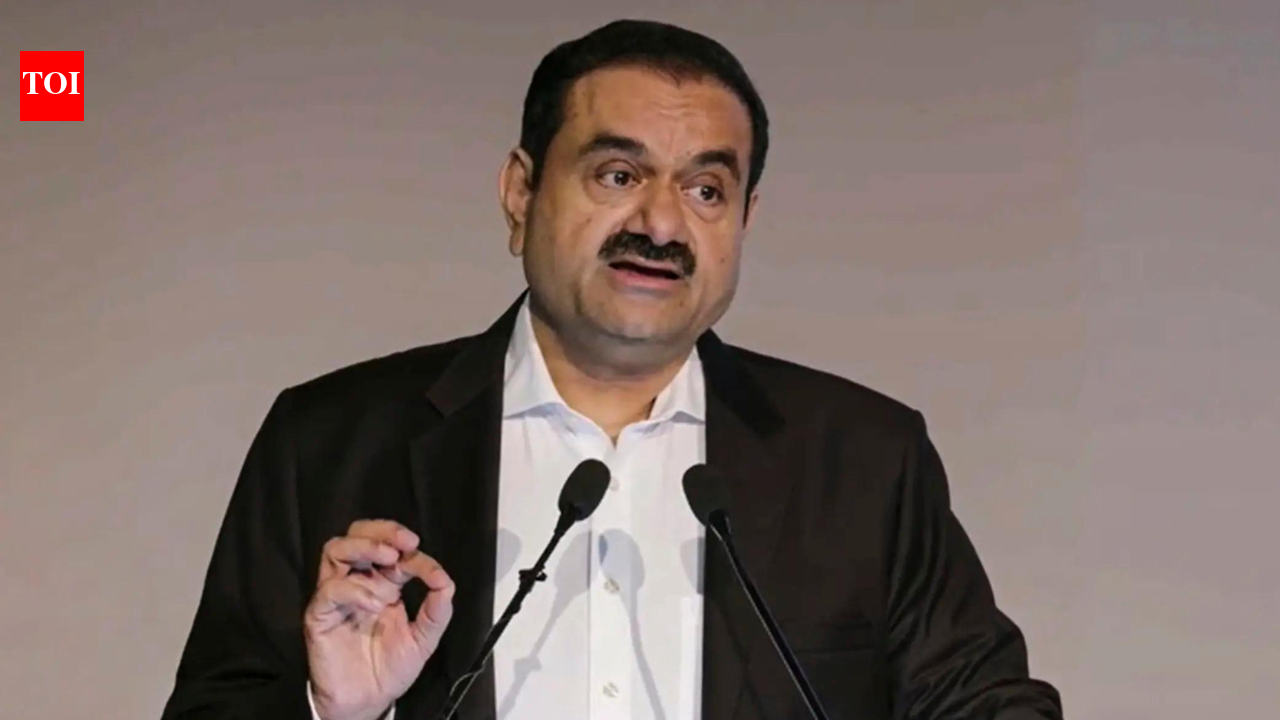
A federal judge in Brooklyn has ordered the US Justice Department to explain its decision to drop criminal charges against Indian billionaire Gautam Adani, declining to grant a quick dismissal of the case, according to a court filing reported by Business Today.
Judge's Ruling and Deadline
US District Judge Nicholas Garaufis ruled on Friday that the government's May 18 announcement that it would no longer pursue the case did not provide a sufficient basis for dismissal. In his written order, Garaufis described the prosecutors' statement as "terse, bland and conclusory," affording the court "neither a sufficient basis to reach any conclusion, nor the opportunity to conduct any analysis of the Government's request for dismissal." He gave the Justice Department until July 13 to submit additional information justifying the move.
Background of the Charges
The charges against Adani were brought in 2024 during the final months of then-President Joe Biden's term. The indictment alleged that Adani agreed to bribe Indian government officials to secure approval for a solar energy plant being developed by a subsidiary of his Adani Group. Adani was also accused of misleading US investors about the company's anti-corruption practices, constituting securities fraud and wire fraud. The decision to drop the charges represents the latest instance of the Justice Department seeking to end a high-profile white-collar criminal prosecution under President Donald Trump's second term.
Legal Context
Legal experts cited in the report note that federal judges have limited discretion to compel prosecutors to continue pursuing cases they no longer wish to prosecute. However, the charges against Adani remain officially pending until Judge Garaufis orders them dismissed. A spokesperson for the Brooklyn U.S. Attorney's office, which brought the original charges, declined to comment.
Defense Arguments
Robert Giuffra, Adani's lawyer, argued in a letter to Garaufis on June 24 that the case should be dismissed because it was beyond the reach of US law and prosecutors would be unable to prove the alleged bribery in India. Giuffra stated that Adani's legal team held several meetings with Justice Department officials and submitted nearly 500 pages of materials to demonstrate the case's weaknesses. "The DOJ’s decision reflects its careful consideration of the indictment’s legal and factual weaknesses," Giuffra wrote. The government's dismissal request, signed by senior officials but not by the career prosecutors who brought the case, said the department had "decided, in its prosecutorial discretion, not to devote further resources to these criminal charges against individual defendants."
Related Settlements
Separately, the US Securities and Exchange Commission (SEC) brought civil charges against Adani. A settlement was reached under which Gautam Adani would pay $6 million and his nephew, Sagar Adani, would pay $12 million. Additionally, Adani Enterprises Limited agreed to pay $275 million to the US Treasury Department to settle alleged violations of Iran sanctions. The Adani Group has consistently denied any wrongdoing.
Broader Pattern
The case mirrors another instance where the Justice Department under Trump dropped corruption charges against a high-profile figure. In 2025, senior DOJ officials in Washington overruled career prosecutors to drop charges against then-New York Mayor Eric Adams, leading to resignations among the prosecution team.
| Key Date | Event |
|---|---|
| 2024 | Indictment of Gautam Adani for securities fraud and bribery scheme |
| May 18, 2026 | DOJ announces decision to drop criminal charges |
| June 24, 2026 | Adani's lawyer files letter arguing for dismissal |
| June 27, 2026 | Judge Garaufis orders DOJ to justify decision, sets July 13 deadline |
Next Milestone
The next key date is July 13, 2026, when the Justice Department must submit a detailed explanation to the court. Until then, the charges remain pending, and Adani has not appeared in US court to respond to the allegations.
Sources: