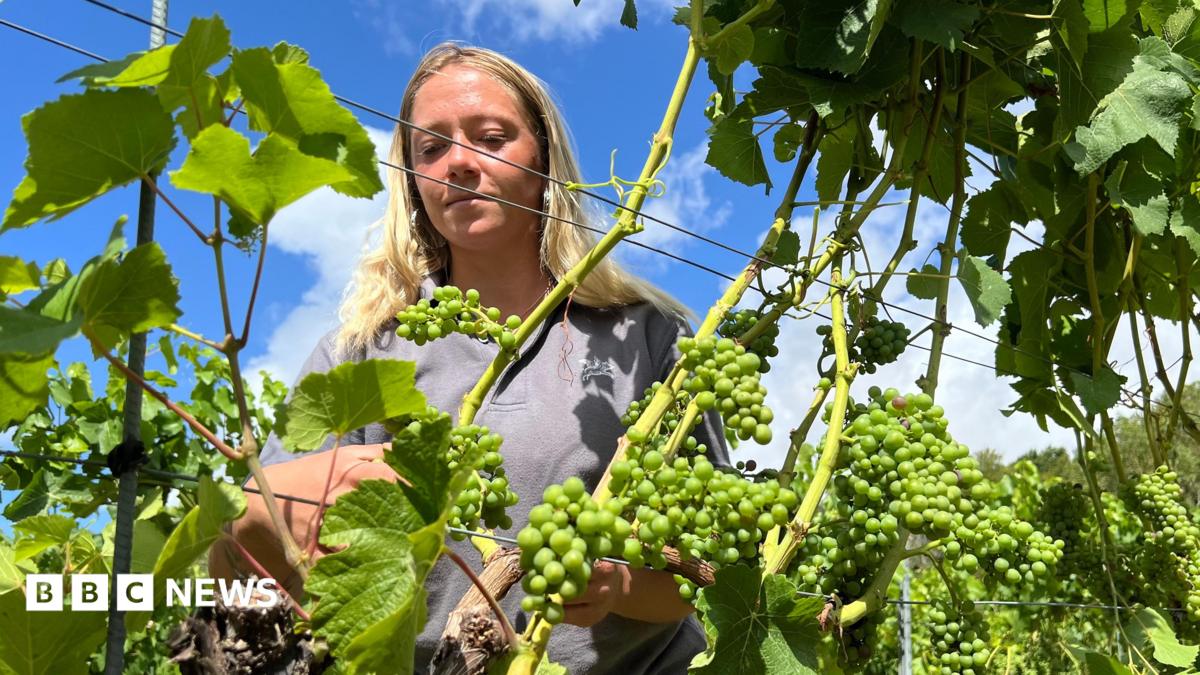
The driest July for 190 years has split English agriculture into winners and losers, according to BBC Business reporter Dave Harvey. At Aldwick Estate in Somerset, winemaker Sandy Luck told the BBC the vines love the warm, dry days, while 50 miles away in Wiltshire, vegetable farmer Phil Collins showed off fields of ruined cauliflowers and shrivelled Marfona potatoes.
Six weeks without rain
Phil Collins, a Wiltshire vegetable farmer, told the BBC he had never needed an overdraft until this year. Six weeks without rain scorched his cauliflowers, shrivelled his potatoes, and shrunk his bank balance. He pointed to a field of 6,000 cauliflowers at £1.25 each, saying "you do the maths". Another 6,500 cauliflowers, he said, had "basically cooked" in the field.
Six thousand cauliflowers at £1.25 each.
The dry spell marks the driest July for 190 years, according to the BBC, and vegetable farmers across England are warning of a shortage of produce.
Vegetable crops wilt in Wiltshire
Walking through a potato field, Collins showed BBC Business plants shrivelled to nothing and lying brown on the soil. The variety is Marfona, "meant to be a drought resistant variety," he explained, but this year has been so dry the plants could not cope. "The plants should be two foot high and green - there's nothing left there."
Collins and his team sell vegetables through farmers' markets but still compete with supermarket prices, he told the BBC.
| Crop | Location | Reported impact |
|---|---|---|
| Cauliflowers | Wiltshire | 6,000 lost at £1.25 each; 6,500 "basically cooked" |
| Potatoes (Marfona) | Wiltshire | Plants shrivelled to nothing; "should be two foot high and green" |
| Grapes | Somerset | Plump and plentiful; veraison advanced; "ahead of the game" |
Winemakers thrive in the heat
At Aldwick Estate vineyard in North Somerset, winemaker Sandy Luck told the BBC the long hot dry days have ripened the fruit and "keep disease at bay". Veraison — the colour change of young green fruit turning purple — is advanced, putting the vineyard "ahead of the game" this year.
More sun means more sugar in the grapes, which will mean higher alcohol content, Luck explained. That allows English winemakers to produce still red wines, where traditionally the cool climate limited them to drier sparkling varieties. "It makes a more rounded wine," Luck said. "The quality is higher, and we have more variety we can make."
According to the BBC report, the South and South West of England are now frequently getting the kind of summers found in central France 20 years ago, making French-style wine possible. Aldwick frequently win awards for its Somerset vintages.
English wine volumes climb
Hot summers also mean more wine. In 2025, English wine production was 55% up on the previous year, according to the BBC. But that does not mean French wine prices. English wine has always been more expensive than continental competition, and Luck said that will not change: "Sadly not. We are a small team, our vineyard is just over 12 acres, and we are going for quality not quantity."
For commodity traders and procurement teams, the report highlights two diverging supply signals:
- Vegetable supply is tightening, with English growers reporting severe losses in cauliflowers and potatoes after the driest July in 190 years.
- English wine production expanded 55% in 2025, with quality improvements enabling new styles such as still red wines.
- The climate pattern means southern England is increasingly able to produce in the style of central France from two decades ago, reshaping what domestic buyers can source.
Sources: