
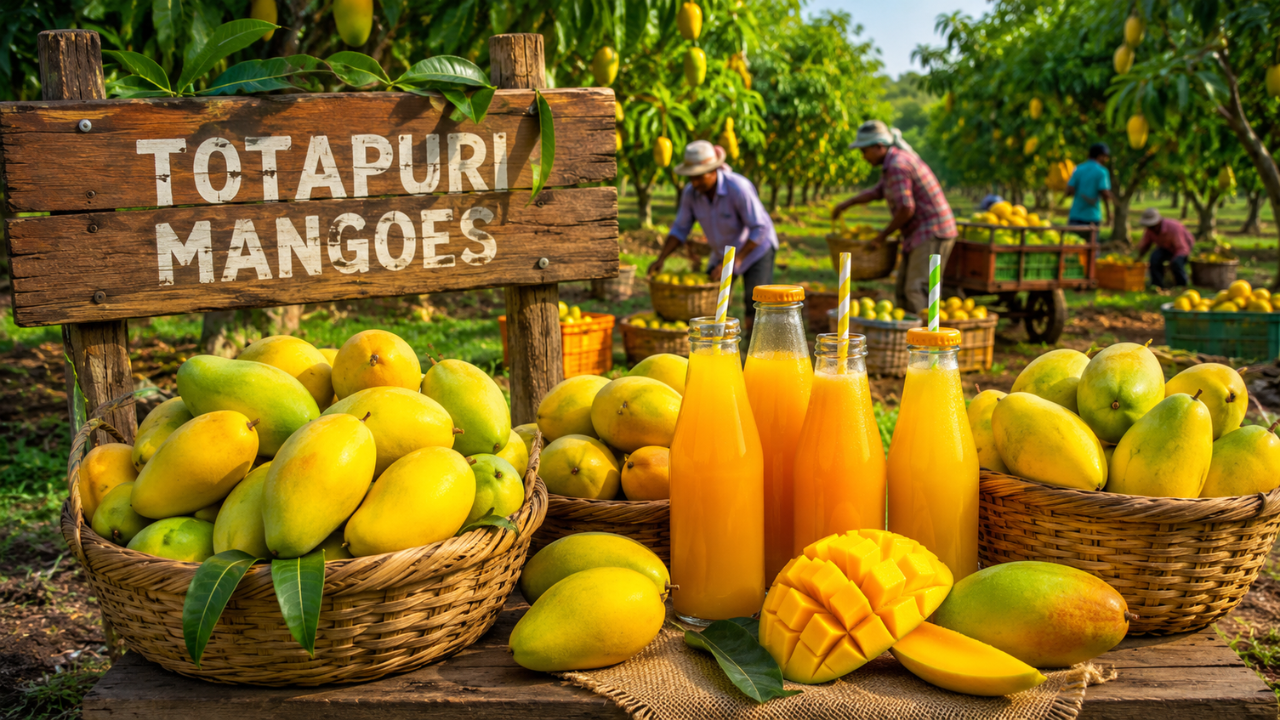
An expert panel appointed by the Indian government has proposed linking the Goods and Services Tax (GST) rate on mango-based beverages to their natural pulp content, in a move designed to revive demand for Totapuri mangoes after a sharp decline in prices. The committee recommended that beverages containing 22-25% genuine natural mango pulp continue to attract the concessional 5% GST slab, while products with lower pulp content should face a higher rate, according to the Ministry of Agriculture and Farmers Welfare.
GST Proposal Details
The committee, headed by T Damodaran, Director of ICAR-Central Institute of Subtropical Horticulture (CISH), Lucknow, submitted its report to Agriculture Minister Shivraj Singh Chouhan. The minister has directed officials to initiate inter-ministerial consultations involving the Food Safety and Standards Authority of India (FSSAI), the GST Council, and the ministries of finance, food processing industries, agriculture and health to finalise the standards and tax structure.
"In the committee’s view, if only those beverages which contain more than the prescribed limit of pulp are kept in the 5 per cent concessional Goods and Services Tax (GST) category, and higher GST rates are applied to low-pulp products, then on the one hand consumption of Totapuri mango pulp will increase, and on the other hand consumers will get more nutritious and genuine fruit-based beverages," the Ministry of Agriculture and Farmers Welfare said in an official statement.
The proposed GST structure is as follows:
| Beverage Pulp Content | Proposed GST Rate |
|---|---|
| 22-25% genuine natural mango pulp | 5% (concessional) |
| Below prescribed threshold | Higher rate (to be determined) |
Why Totapuri Prices Crashed
The panel attributed the decline in Totapuri prices to a combination of factors: a mismatch between processing capacity and procurement timelines, low pulp content in beverages sold domestically, and volatility in global prices. Damodaran said processing units in several centers do not begin procuring fruit early enough in the season, even as large volumes of mangoes reach markets simultaneously, bunching arrivals and pushing down prices.
To address such fluctuations, the committee has recommended the creation of a Central Coordination and Price Stabilisation Committee covering Andhra Pradesh, Tamil Nadu, and Karnataka. Before each season, this body would evaluate crop estimates, processing and export demand, input costs, and market conditions to arrive at indicative farm-gate procurement prices and reference pulp prices, providing advance price signals to both growers and processors.
Reviving Ageing Orchards
The report also noted the decline in yield and fruit quality in ageing Totapuri orchards in Andhra Pradesh's Chittoor, Tirupati, Annamayya, and Kadapa districts. The committee has recommended top-working—grafting existing trees with scions of higher-value varieties such as Neelam, Alphonso, Himayat, and Banganapalli. This technique could restore orchards to more remunerative production within two to three years. Simultaneously, the panel suggested cluster-level adoption of Good Agricultural Practices (GAP) and farmer training programs.
Implications for Commodity Markets
For commodity traders and procurement teams, the proposal signals potential stabilization in Totapuri pulp pricing if implemented. The linking of GST rates to pulp content could increase domestic consumption of genuine pulp, supporting farm-gate prices. However, the lack of specific price data in the report limits immediate trading signals. The inter-ministerial process and upcoming season assessments by the proposed price stabilization committee will be key to watch. The initiative also highlights the government's focus on reducing price volatility in horticultural commodities through regulatory intervention.
Sources:


