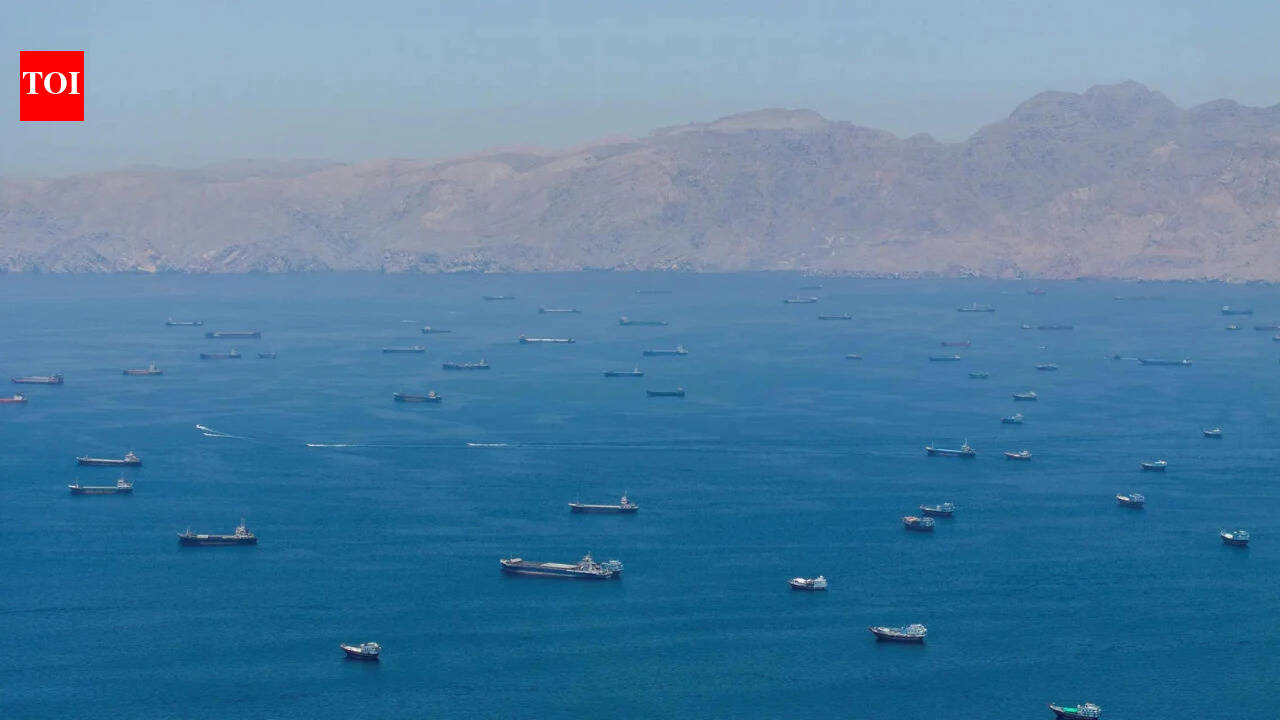
Crude oil futures climbed sharply on Thursday, with Brent topping $96 per barrel, after Iran-backed Houthis attacked two Saudi oil tankers in the Red Sea, according to The Hindu BusinessLine. The assault reignited fears of supply disruptions along a key maritime route for Saudi crude exports.
Price movements
At 9.34 am on Thursday, September Brent oil futures on the Intercontinental Exchange (ICE) stood at $96.14 per barrel, up 2.20% from the previous close. September West Texas Intermediate (WTI) crude futures on the New York Mercantile Exchange (NYMEX) traded at $88.35 per barrel, gaining 1.75%. On India's Multi Commodity Exchange (MCX), August crude futures opened at ₹8,562 per barrel, up 1.81% from the prior close of ₹8,410, while September contracts rose 1.33% to ₹8,247, according to The Hindu BusinessLine.
Geopolitical drivers
The rally was triggered by reports that the Houthis attacked two oil tankers from Saudi Arabia with missiles and drones in the Red Sea, raising concerns over Saudi crude exports via that route, the business daily reported. Citing an official source at Saudi Arabia's Transport General Authority (TGA), the Saudi Press Agency said the vessel ENCELIA, owned by a Saudi company, was targeted while sailing in the Red Sea, resulting in a fire at the bow. The source confirmed all crew members were safe and relevant authorities had taken measures to secure the vessel and protect the marine environment, describing the attacks as a violation of international laws guaranteeing the safety of commercial vessels.
Separately, US Central Command said its forces completed another round of strikes against Iran at 10.30 pm ET on July 22. The strikes targeted Iranian military assets including maritime capabilities, missile and drone storage facilities, coastal surveillance sites, and air defence assets, according to the statement. The US military said the strikes further degrade Iran’s ability to attack civilian mariners and commercial vessels. This month, American forces have targeted dozens of Iranian military sites on land while resuming a blockade against Iran at sea. As of July 22, US Central Command redirected nine commercial vessels and disabled one to prevent ships from entering or departing Iranian ports, it said. More than 50,000 US service members are operating across West Asia and remain highly vigilant, focused, lethal, and ready, the command added.
Supply-side developments
On the fundamentals side, the US Energy Information Administration (EIA) reported an increase in crude inventories. According to the EIA, US commercial crude oil inventories rose by 2 million barrels for the week ending July 17, reaching 411.7 million barrels — about 6% below the five-year average for this time of year. Total motor gasoline inventories increased by 0.8 million barrels and stand 7% below the five-year average. Distillate fuel inventories grew by 1.4 million barrels and are 10% below the five-year average, the EIA data showed.
Demand-side trends
Total products supplied in the US over the last four-week period averaged 20.4 million barrels per day, down 1% from the same period last year. However, motor gasoline product supplied averaged 8.9 million barrels per day, up 1.4% year-on-year. Distillate fuel product supplied averaged 3.7 million barrels per day, up 2.2% from a year ago. Jet fuel product supplied surged 9.1% compared with the same four-week period last year, indicating strong aviation demand, according to The Hindu BusinessLine.
Price outlook
The combination of heightened geopolitical risk in the Red Sea, US military strikes on Iranian assets, and a blockading of Iranian ports is likely to keep supply concerns elevated. While the EIA reported a modest build in US crude inventories, stock levels remain below seasonal averages, especially for gasoline and distillates. Traders will watch for further Houthi attacks and any escalation in US-Iran tensions, along with weekly EIA data, to gauge the direction of crude prices.
Sources: