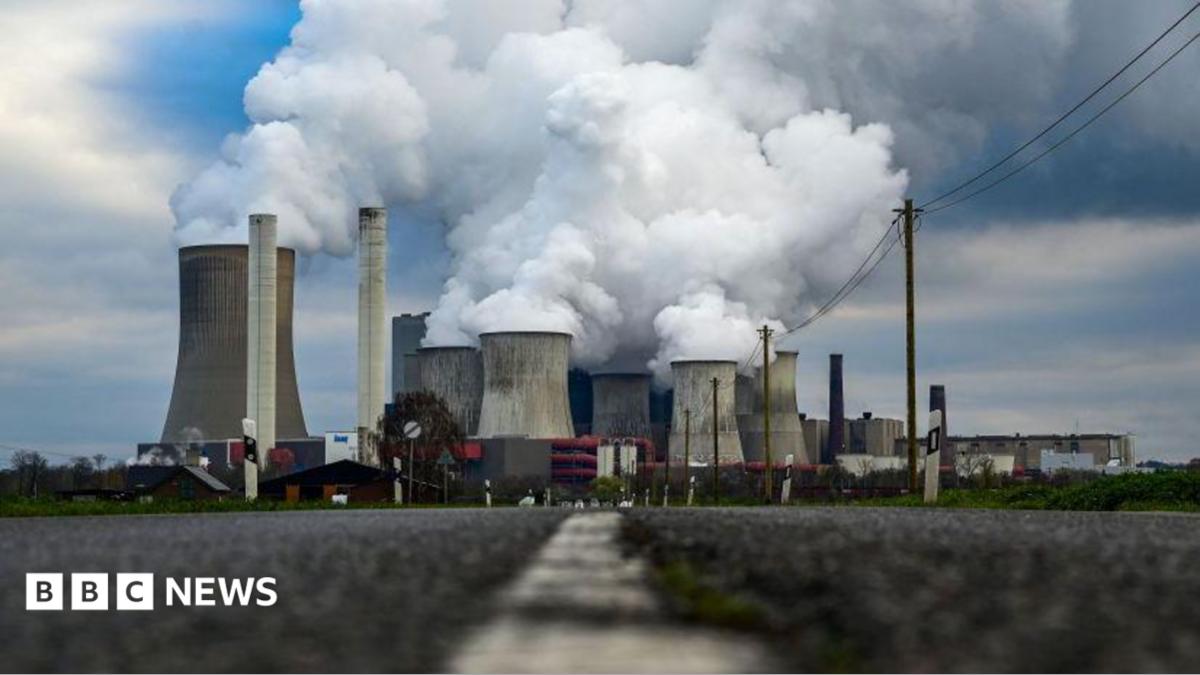
Amazon has acquired a massive off-grid power plant under construction in Texas for one of its data centers, a facility permitted to emit up to 33 million tons of greenhouse gases a year — potentially one of the biggest single sources of US emissions, according to WIRED. The plant will rely solely on simple-cycle gas turbines, a much less efficient design than the combined-cycle units used at most on-grid power plants, the report said, and the choice carries significant consequences for the environmental impact of artificial intelligence and the future of the US grid.
Why Simple-Cycle Turbines Emit More
WIRED explained that simple-cycle turbines mix fuel and air in a combustion chamber to create energy, letting off a significant amount of waste heat in the process. Combined-cycle units, which are generally used at on-grid power plants, add an additional steam turbine component to capture that waste heat and turn it into more energy, meaning they release fewer emissions for the same amount of electricity.
The difference is stark at Amazon's Texas project. Permitted emissions on natural gas plants are usually much higher than actual emissions, WIRED noted, but even if the facility emits half of what is on its permit each year, it would still create more greenhouse gas pollution than 78 average-sized natural gas plants, according to the US Environmental Protection Agency.
A Wave of Simple-Cycle Data Center Plants
Simple-cycle turbines are becoming an increasingly common choice for data center power developers seeking flexible power that is quick to install, WIRED reported. The trend spans multiple states and some of the biggest names in tech:
- Williams / Meta (Ohio): At least three power plants being developed by oil and gas company Williams for Meta will rely on simple-cycle units, according to permit applications.
- Crusoe / Microsoft (Abilene, Texas): Crusoe is building a power plant on its Stargate campus with 39 simple-cycle turbines to power a Microsoft data center.
- Crusoe / Google (Goodnight, Texas): The permit application for Google's Goodnight data center describes relying on 20 simple-cycle turbines.
- xAI (Memphis, Tennessee): Both xAI's Colossus 1 and Colossus 2 data centers are powered by dozens of simple-cycle turbines.
| Project | Location | Developer | Turbine configuration | Emissions status per WIRED |
|---|---|---|---|---|
| Amazon data center plant | Texas | Amazon | Simple-cycle only | Permitted up to 33M tons GHG/year |
| Williams plants for Meta (3) | Ohio | Williams | Simple-cycle units | Permit applications; millions of tons GHG |
| Stargate campus plant | Abilene, Texas | Crusoe | 39 simple-cycle turbines | Powering Microsoft data center |
| Goodnight data center | Texas | Crusoe | 20 simple-cycle turbines | Permit application; millions of tons GHG |
| Colossus 1 & 2 | Memphis, Tennessee | xAI | Dozens of simple-cycle turbines | Powered by simple-cycle units |
All of these facilities are permitted to release millions of tons of greenhouse gases, WIRED reported. Both Williams and Crusoe told WIRED in an email that their gas plants comply with local and national regulations and are outfitted with emissions control technology.
Why Developers Choose Simple-Cycle Turbines
Britt Burt, a senior vice president at Industrial Info Resources, an energy market intelligence firm, told WIRED he did not expect data center developers to lean so heavily on simple-cycle turbines. “It’s not the most efficient way to use a gas turbine,” he said.
For companies racing to get data centers online, though, it is a lot quicker — and cheaper — to install a handful of simple-cycle turbines than to wait for the additional equipment needed for combined-cycle units, WIRED reported. That is especially true given a yearslong backlog for turbine orders and associated parts. “Right now, because of the way the supply chain is for turbines, they’re having to go with what they can get their hands on,” Burt said.
Simple-cycle turbines also start up and shut down more rapidly than combined-cycle units thanks to their fewer moving parts, which suits AI training workloads that require big spikes of energy on demand. In fact, those spikes are so large that many data center operators have reported turbines breaking from the extreme stress of turning on and off, according to WIRED.
“If you have a highly fluctuating load, it's better to have 30 things that can individually turn on and off than to have one giant thing that doesn't like to be turned on and off,” the WIRED report noted.
Emissions Controls and Company Response
Amazon spokesperson Heather Callahan wrote in an email to WIRED that the Texas plant provides “on-site generation that won't raise electricity costs for Texas families,” adding that the site would also have solar and battery storage and that the company remains committed to reaching net-zero emissions by 2040.
For commodity and energy market participants, the trend points to sustained natural gas demand from power-hungry AI data centers and continued tightness in the gas turbine supply chain, with developers opting for whatever equipment they can procure rather than the most efficient configurations, WIRED reported.
Sources: