iGEN
Visit IGEN World Explore IGEN Expo
EXPLORE UPGRADE PLANS
BREAKING
UPS shift away from Amazon shows bigger payoff Lanesurf: 62% of Loads Get Vetted Carrier Offers Before Brokers Arrive India-China Border Trade Via Lipulekh Resumes Aug 1; China Permits 20 Traders Geopolitics Drives CMA CGM Q2 Profit Surge of 42% as Volumes and Rates Climb Benchmark Diesel Price Rises Third Week as Futures Plunge; Spread Hits Record Indian Government Limits Sugar Dealers to 400 Tonnes Stock Until November to Curb Hoarding Tenants signing longer leases for larger warehouses as 3PLs lock in capacity US stock market flat as S&P 500 and Dow barely move, Nasdaq slides over 1% on chip rout TruAlt Bioenergy Q1 Net Zooms to ₹59.27 Crore on Higher Revenues, Capacity Expansion India’s cotton sowing crosses 100 lakh hectares as monsoon picks up, area expands in key states UPS shift away from Amazon shows bigger payoff Lanesurf: 62% of Loads Get Vetted Carrier Offers Before Brokers Arrive India-China Border Trade Via Lipulekh Resumes Aug 1; China Permits 20 Traders Geopolitics Drives CMA CGM Q2 Profit Surge of 42% as Volumes and Rates Climb Benchmark Diesel Price Rises Third Week as Futures Plunge; Spread Hits Record Indian Government Limits Sugar Dealers to 400 Tonnes Stock Until November to Curb Hoarding Tenants signing longer leases for larger warehouses as 3PLs lock in capacity US stock market flat as S&P 500 and Dow barely move, Nasdaq slides over 1% on chip rout TruAlt Bioenergy Q1 Net Zooms to ₹59.27 Crore on Higher Revenues, Capacity Expansion India’s cotton sowing crosses 100 lakh hectares as monsoon picks up, area expands in key states
Home ›› Commodities ›› Commodities Energy ›› India's Strategic Reserves Strategy: Crude Oil, LPG, and LNG for Energy Security

India's Strategic Reserves Strategy: Crude Oil, LPG, and LNG for Energy Security

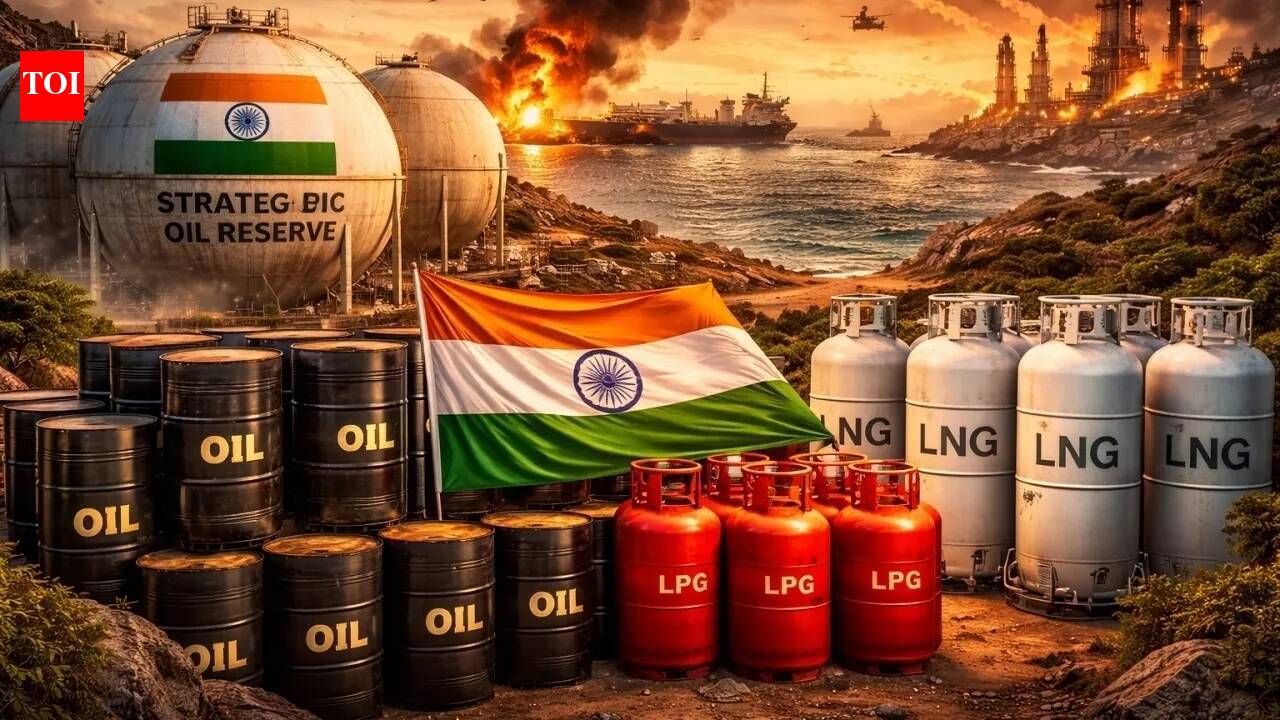
India is strengthening its energy security with strategic reserves for crude oil, LPG, and LNG. Current SPR capacity is 5.33 MMT (9.5 days of consumption), with plans to expand to 11.88 MMT. Experts advocate a three-tier policy: large physical crude reserves, distributed LPG reserves, and virtual LNG reserves to cover 90 days of consumption.

iG
iGEN Editorial
July 25, 2026
India's Strategic Reserves Strategy: Crude Oil, LPG, and LNG for Energy Security

India’s energy security has come into sharp focus amid the US-Iran conflict, highlighting the need for robust strategic reserves to counter global supply disruptions, according to a Business Today report by Smriti Jain.

Current Strategic Petroleum Reserves (SPR)

India's dedicated strategic petroleum reserves capacity stands at 5.33 MMT (million metric tonnes), spread across Visakhapatnam, Mangaluru, and Padur, equivalent to roughly 9.5 days of crude oil consumption, as per PIB data released in March 2026. The government has approved a Phase II expansion of 6.5 MMT at Chandikhol (Odisha) and Padur (Karnataka) under a public-private partnership model. Once completed, total SPR capacity will reach 11.88 MMT, moving India significantly closer to the 90-day reserve target. Additionally, India is working with the UAE for 30 million barrels of crude storage capacity.

Expert Recommendations for a Three-Tier Strategy

Experts argue that India's strategic reserve policy should evolve into a broader energy security strategy covering crude oil, LPG, and LNG. Pranav Master, Director of Crisil Intelligence, advocates a three-tier strategic reserves policy:

  • Large physical reserves for crude oil
  • Distributed operational-security reserves for LPG
  • Mainly contractual or virtual reserve model for LNG, as LNG is expensive and technically difficult to store for long periods

Sourav Mitra, Partner – Oil & Gas at Grant Thornton Bharat, suggests that for crude oil, India should target a minimum of 30 days of dedicated strategic reserves managed by Indian Strategic Petroleum Reserve Limited (ISPRL), complemented by a mandatory 60 days of commercial refiner operational stock, bringing total national coverage to about 90 days — in line with International Energy Agency (IEA) standards.

Sumit Ritolia, Lead Analyst, Modelling and Refining at Kpler, also advocates 75–100 days of total inventory cover, consistent with international best practices, noting that expanding strategic crude storage should remain the top priority given India's growing refining capacity and import dependence.

Key Elements of Crude Reserve Policy

According to Pranav Master, the crude reserve policy should incorporate:

  • A minimum stockholding requirement to prevent underutilization of storage capacity
  • A transparent drawdown and release framework with clearly defined triggers such as geopolitical conflicts, sanctions, shipping disruptions, extreme price shocks, or major supply outages
  • A counter-cyclical inventory build-up mechanism that encourages reserve accumulation during periods of low global oil prices rather than emergency purchases during crises

LPG Strategic Reserves

LPG fuel availability impacts more than 330 million households in India. A disruption in LPG supply quickly becomes a household welfare issue and can create social stress. India imports around 60% of its LPG requirement, with a very large share linked to the Gulf region and the Strait of Hormuz. Currently, India holds an insignificant amount of strategic LPG reserve. Experts recommend mandating a dedicated 25–40-day strategic reserve via salt-caverns and an additional 30 days of commercial buffer via import terminals, refineries, and bottling plants.

LNG and Virtual Reserves

For LNG, storage is expensive and technically challenging. Experts advocate a contractual and virtual reserve model, relying on long-term contracts and diversified supply sources rather than physical stockpiles. This approach would leverage India's growing LNG import infrastructure and diplomatic relationships to ensure supply security.

Implications for Traders and Analysts

The strategic reserve buildup signals India's intent to reduce vulnerability to supply shocks. For commodity traders, this means potential changes in import patterns, storage demand, and pricing dynamics. The expansion of SPR capacity and LPG reserves will influence global crude and LPG flows, particularly from the Middle East. Analysts should monitor India's policy triggers for reserve releases, as they could affect spot market prices during crises.


Sources: Business-Today
Keep Reading

Recommended Stories

India's strategic gas storage: LNG buffer mandate for terminals in the works - what it means Commodities

India's strategic gas storage: LNG buffer mandate for terminals in the works - what it means

India is planning to require LNG terminal operators to create additional storage capacity as a strategic gas reserve, allowing cost recovery through higher regasification charges. The move follows supply disruptions through the Strait of Hormuz during the Iran conflict. Separately, India is diversifying LPG imports, with the US emerging as the largest supplier, and oil marketing companies are asked to prepare a roadmap for a 30-day strategic LPG reserve.

July 7, 2026
India Has Over 60 Days of Crude and Gas Stocks, Hardeep Puri Rules Out Energy Crunch Commodities

India Has Over 60 Days of Crude and Gas Stocks, Hardeep Puri Rules Out Energy Crunch

India holds over 60 days of crude and natural gas stocks and 75-80 days of LPG, according to Union Minister Hardeep Singh Puri. Domestic LPG production has risen sharply, and fuel prices have fallen 3.1% since May 2022, contrasting with steep increases in other nations. The minister also outlined a push for E85 fuel pumps and piped natural gas.

June 15, 2026
India and Japan to Sign LNG Security Pact Amid Global Supply Disruptions Commodities

India and Japan to Sign LNG Security Pact Amid Global Supply Disruptions

India and Japan are set to sign an agreement to strengthen LNG supply security during the annual summit between PM Modi and PM Takaichi. The pact includes a joint task force for stockpiling and information-sharing, amid ongoing global supply chain disruptions.

July 1, 2026
India Plans 30-Day LPG Storage Buffer After Iran War Exposes Hormuz Supply Risk Commodities

India Plans 30-Day LPG Storage Buffer After Iran War Exposes Hormuz Supply Risk

State-run OMCs in India are developing a 30-day strategic LPG reserve to mitigate supply risks highlighted by the Iran conflict, with BPCL investing roughly Rs 5,000 crore to nearly double its storage capacity. The plan includes expanded onshore, underground, and floating storage, alongside import diversification from the US, Europe, and Russia. India imports nearly 60% of its LPG, with about 90% of those imports passing through the Strait of Hormuz.

July 1, 2026