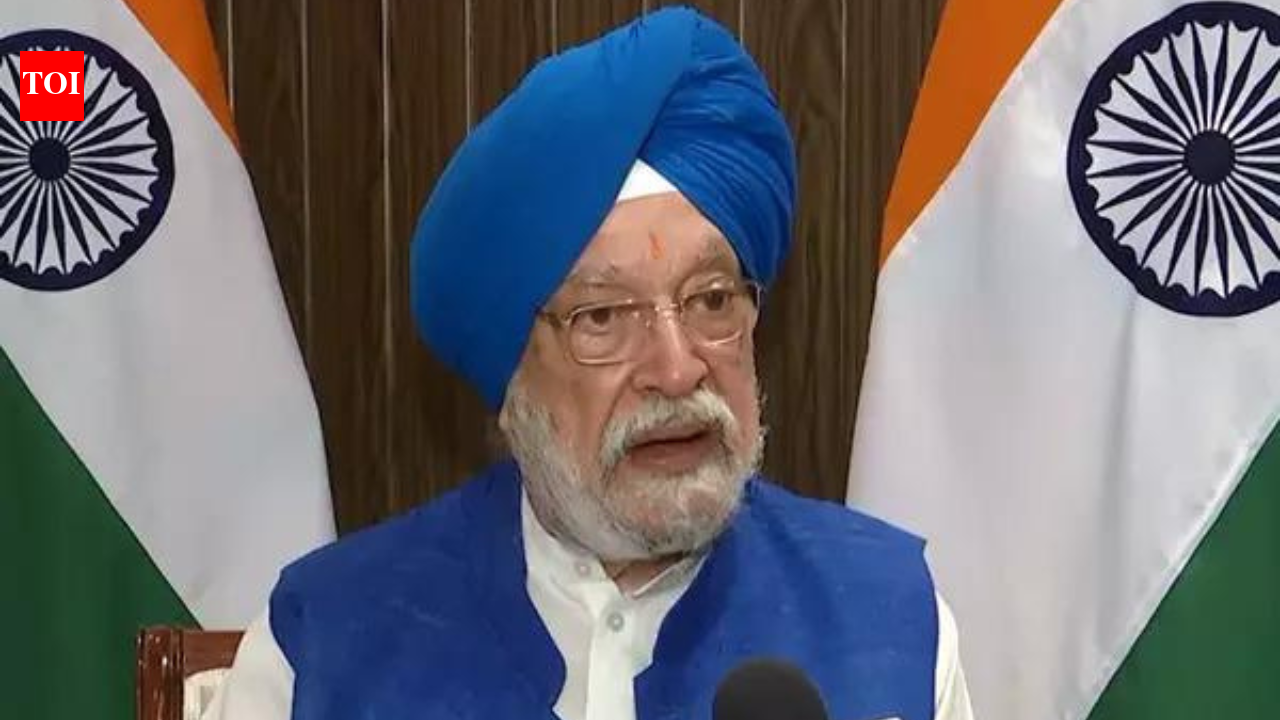
Union Petroleum and Natural Gas Minister Hardeep Singh Puri on Saturday assured that India faces no energy supply crunch, stating that the country holds strategic reserves of crude oil, natural gas, and LPG sufficient for two months or more. Speaking to reporters in Ludhiana, Puri disclosed that "We have a stock of crude oil for over 60 days, we have natural gas stock for over 60 days." The announcement comes amid heightened geopolitical tensions following the Iran conflict, which has unsettled global energy markets, according to a Business Today/PTI report.
India's Strategic Reserves and Supply Security
India's crude oil and natural gas inventories stand at over 60 days of cover, providing a buffer against sudden supply disruptions. For LPG, the situation is even more robust, with the minister stating, "We have a maximum stock of LPG which is 75-80 days of stock." These figures underline the government's focus on energy security, especially as the Iran conflict has pushed global oil prices higher, Puri noted. However, he stressed that domestic availability remains comfortable and that India has successfully reduced its dependence on LPG imports.
Domestic LPG Production Gains
A key driver of improved self-sufficiency is the ramp-up in domestic LPG production. Puri provided specific numbers: while daily consumption is around 80,000 metric tonnes, domestic production has increased from 32,000 metric tonnes per day to 54,000 metric tonnes per day. This jump of 22,000 mt/day has significantly cut reliance on imported LPG. The minister did not specify a timeline for this increase but indicated the trend is ongoing. With LPG stocks at 75-80 days, the supply cushion is substantial.
Global Fuel Price Comparison and Domestic Relief
Puri contrasted India's retail fuel price performance with that of other nations over the four-year period from May 2022 to May 2026. While many countries saw double-digit percentage increases, India recorded a decline. The table below summarises the data:
| Country / Region | Petrol Price Change (May 2022 – May 2026) |
|---|---|
| Pakistan | +70% |
| Sri Lanka | +66% |
| France | +47% |
| Italy | +46% |
| Bangladesh | +36% |
| United States | +35% |
| India | -3.1% |
According to the minister, the reduction in India was achieved through excise duty cuts on three occasions: in November 2021, May 2022, and most recently. "A few weeks ago, excise duty on petrol and diesel was reduced by Rs 10 a litre," he said, adding that this move imposed an additional burden of Rs 1 lakh crore on the budget but was undertaken because "the PM did not want people to face any financial burden." He also noted that India, along with Japan, recorded the lowest increase in fuel prices when measured over a longer period.
Push for Alternative Fuels and Piped Gas
The government is actively promoting alternative fuels to reduce oil dependence. Puri said there are currently 47 E85 fuel pumps in the National Capital Region (NCR). This number is expected to rise to 500 by December 2026 and further expand to 5,000 by December 2027. E85 is a blend of 85% ethanol and 15% petrol, supporting the ethanol blending programme. Additionally, LPG connection holders are being encouraged to shift to piped natural gas (PNG) wherever infrastructure is available, he added.
Government Measures and Diplomatic Action
On the question of a 200-litre-per-day cap on diesel sales, Puri explained the restriction was introduced to curb black marketing. He did not elaborate on current enforcement. Separately, he addressed the killing of three Indian seafarers in a U.S. military strike on a merchant vessel in the Gulf of Oman. India lodged a strong protest, summoning the U.S. Charge d'Affaires twice. External Affairs Minister S. Jaishankar also raised the issue with Marco Rubio. This incident underscores the risks to shipping and energy logistics in the region, though Puri did not link it directly to India's energy stocks.
For commodity traders and analysts, the key takeaway is India's comfortable inventory position, which reduces the likelihood of sudden import demand spikes that could tighten global markets. The continued rise in domestic LPG production also points to structural changes in India's energy mix. Attention will now turn to EIA and IEA data for broader global crude stock levels, along with OPEC+ production decisions that may influence prices in the coming months.
Sources: