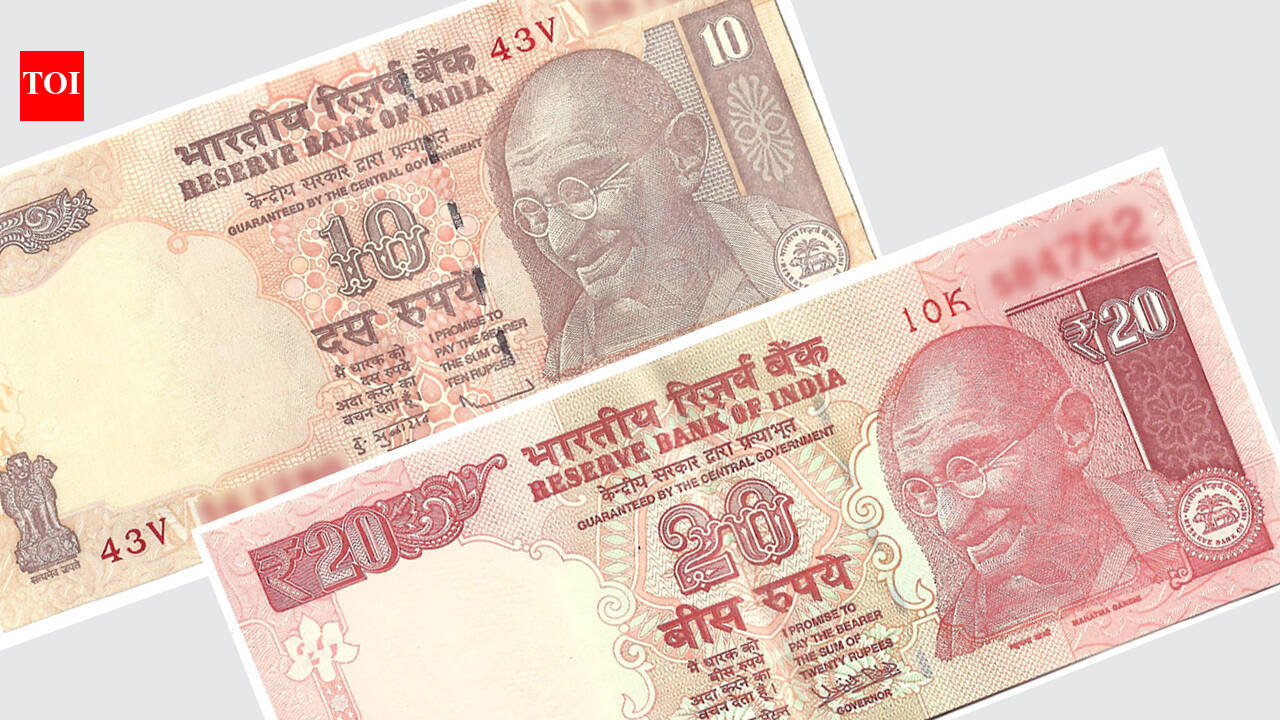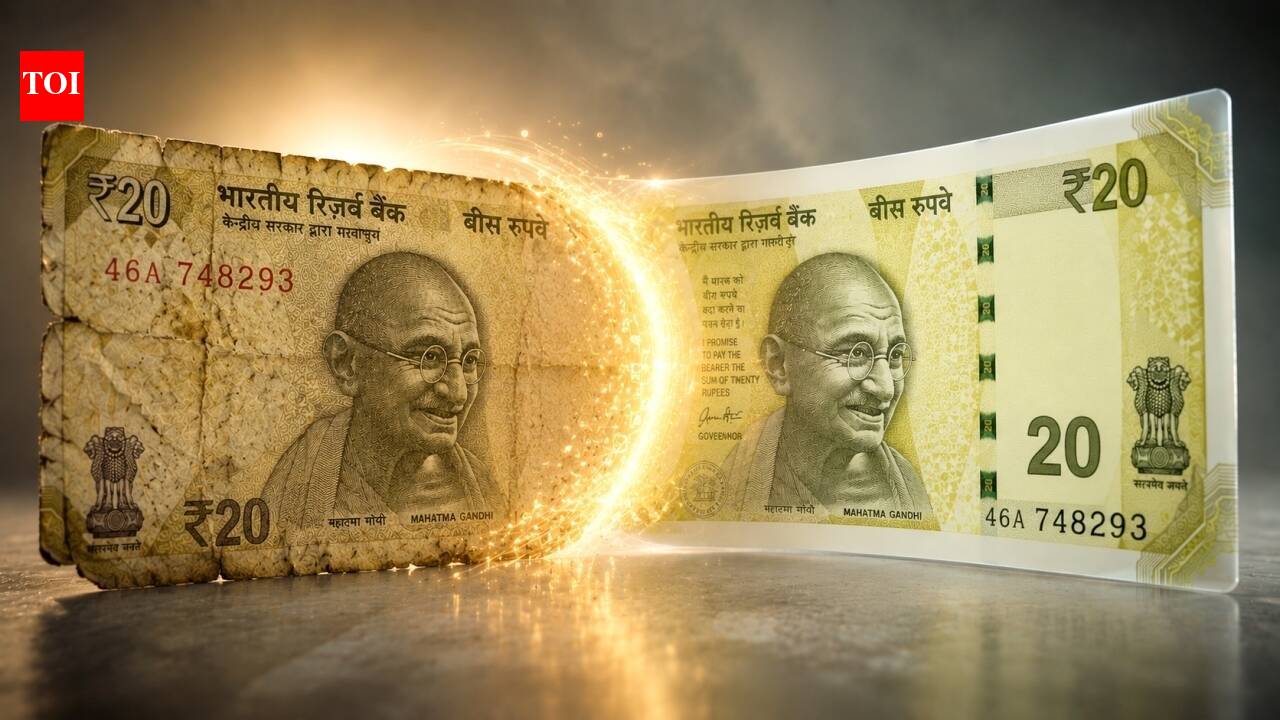
India has taken the first step towards introducing plastic or polymer currency, according to Business Today. The government has permitted the Reserve Bank of India (RBI) to print as many as 2 billion polymer notes — one billion each of Rs 10 and Rs 20 — for field trials. Paper currency will continue to coexist as legal tender, with no move to replace it, according to the government.
RBI has already floated a tender to source polymer substrate sheets with embedded security features through its currency printing arm, Bharatiya Reserve Bank Note Mudran Pvt Ltd (BRBNMPL), which is inviting global expressions of interest, according to Business Today. The tender conditions require suppliers to obtain government clearance, face restrictions on China- and Pakistan-linked operations and raw materials, and demonstrate prior experience supplying polymer banknote substrates to central banks.
"RBI has informed that as per international studies, the life span of polymer banknotes is significantly higher than that of paper banknotes. The introduction of polymer banknotes is currently in a preliminary phase," Minister of State for Finance Pankaj Chaudhary told the Lok Sabha.
Why India is shifting to polymer
The significance lies in the cost of replacing soiled notes. India has discarded around Rs 50 trillion worth of soiled notes in the last decade, and spending on security features is substantial at Rs 5,000 crore annually, according to estimates cited by Business Today. Reports suggest that since FY17, for every 100 new notes that RBI supplies, 71 soiled notes have been withdrawn from circulation. The number of counterfeit notes is also on the rise, according to the report.
D K Srivastava, Chief Policy Advisor at EY India, notes that paper currency notes are easily soiled in India because of humidity and the country's diverse climatic conditions. The total soiled notes, in volume terms, as a percentage of total notes in circulation stood at an average of 14.9% during 2023-24 and 2024-25, and has come down marginally to close to 10% in 2025-26, according to Business Today.
The economics of polymer notes
The arithmetic favours introduction of polymer currency, but the payback is multi-year, not immediate, experts say. India spent nearly Rs 6,500 crore on security printing in FY25, up from just above Rs 5,000 crore the year before, and disposed of 24 billion soiled notes in FY25 — nearly double the previous year, according to Business Today.
"Global experiences suggest that polymer notes last two to three times longer than paper, so even at two to three times the unit production cost, the lifetime cost per note-year is comparable or lower — and the savings extend beyond printing to transportation, storage, logistics and destruction of soiled notes. The gains are largest precisely where India is likely to start: Rs 10 and Rs 20 notes, which have the highest churn and shortest lives. The upfront investment is real; the net present value over a decade is favourable. That is why no major adopter has regretted the economics," says Sujan Hajra, Chief Economist & Executive Director, Anand Rathi Group.
Key numbers at a glance
| Metric | Period | Value |
|---|---|---|
| Security printing expenditure | FY25 | nearly Rs 6,500 crore |
| Security printing expenditure | FY24 | just above Rs 5,000 crore |
| Soiled notes disposed | FY25 | 24 billion |
| Soiled notes as % of notes in circulation | 2023-24 & 2024-25 avg | 14.9% |
| Soiled notes as % of notes in circulation | 2025-26 | close to 10% |
| Soiled notes withdrawn per 100 new notes | since FY17 | 71 notes |
What this means for CFOs and treasurers
Polymer notes address durability, counterfeiting and costs together, according to Business Today. For businesses that handle cash, the savings extend beyond printing to transportation, storage, logistics and destruction of soiled notes, as Sujan Hajra observed. However, because field trials are limited to Rs 10 and Rs 20 notes and the project is in a preliminary phase, paper currency will continue to be legal tender, according to the government.
Sources: