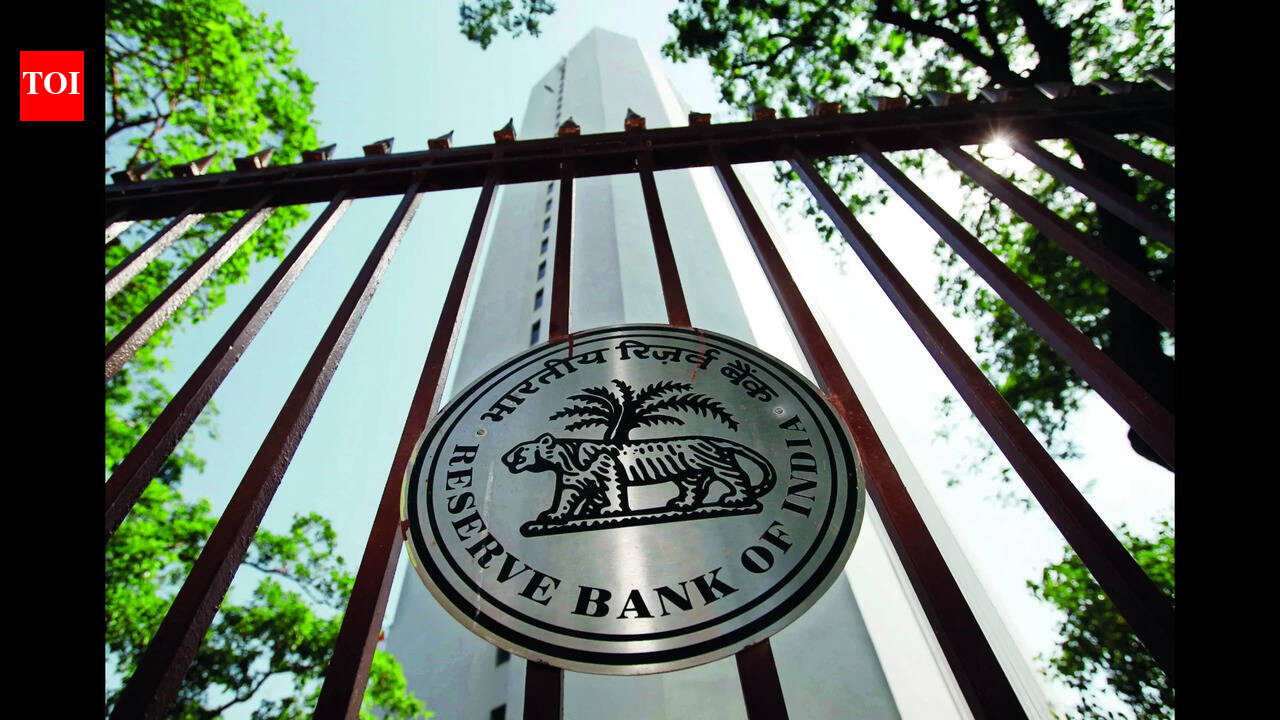
Loans against gold jewellery extended by non-banking financial companies (NBFCs) grew 69.3% year-on-year to Rs 3.41 lakh crore at the end of June 2026, according to Reserve Bank of India (RBI) data reported by Business Today. The June expansion followed a 69.9% increase in May and ran more than three times the pace of growth in NBFCs' overall retail loan portfolio, even as the RBI tightened its regulatory framework for lending against precious-metal collateral.
Gold loans outpace broader retail credit
NBFC retail loans grew 20.3% year-on-year in June, accelerating from 14.3% a year earlier, according to the same RBI data. Outstanding retail credit stood at around Rs 25.62 lakh crore, compared with Rs 21.29 lakh crore in June 2025. The central bank said that within retail lending, housing, vehicle and loans against gold jewellery recorded robust credit growth.
Housing loans grew 11.4% year-on-year to around Rs 8.44 lakh crore, while vehicle loans rose 15.2% to around Rs 6.24 lakh crore. Consumer durable loans recorded even faster growth of 46.8%, reaching Rs 72,201 crore. Gold-backed lending, however, remained a standout segment, expanding at more than three times the pace of overall retail credit.
| Credit segment | YoY growth (June 2026) | Outstanding |
|---|---|---|
| Gold jewellery loans (NBFC) | 69.3% | Rs 3.41 lakh crore |
| Consumer durable loans | 46.8% | Rs 72,201 crore |
| NBFC retail loans | 20.3% | Rs 25.62 lakh crore |
| Vehicle loans | 15.2% | Rs 6.24 lakh crore |
| Housing loans | 11.4% | Rs 8.44 lakh crore |
| Credit to industry | 6.7% | — |
| Credit to services | 17.6% | — |
| Agriculture credit | 17.9% | — |
RBI framework and supervisory concerns
The continued surge comes after the RBI introduced a harmonised regulatory framework for lending against gold and silver collateral. The RBI (Lending Against Gold and Silver Collateral) Directions, 2025, issued in June 2025, laid down rules for regulated entities, including NBFCs, Business Today reported.
The framework followed supervisory concerns raised by the RBI in September 2024 over practices followed by some lenders. These included deficiencies in the use of third parties for loan sourcing and gold appraisal, inadequate due diligence, weaknesses in monitoring loan-to-value ratios, and a lack of transparency in auctions of pledged jewellery after defaults. The RBI had also asked regulated entities to closely monitor their gold-loan portfolios amid significant growth at some lenders.
Despite the regulatory scrutiny, gold-backed lending has continued to expand rapidly, according to the report.
Industry and services credit moderate, agriculture accelerates
The growth in gold loans contrasts with a moderation in credit to other parts of the economy. Credit to industry grew 6.7% year-on-year in June, down from 10.3% a year earlier, with the RBI attributing the slowdown primarily to subdued growth in infrastructure, a major component of industrial credit.
Credit growth in the services sector also moderated to 17.6%, compared with 22.4% a year earlier. While commercial real estate recorded strong expansion, credit growth to trade and transport operators slowed. Agriculture and allied activities were a notable exception: credit growth in the segment accelerated sharply to 17.9% in June, from 5.1% a year earlier.
The RBI's provisional sectoral credit data cover a sample of NBFCs in the Upper and Middle Layers and housing finance companies. Together, these institutions account for about 87% of the total credit covered by the central bank's reference data, according to news agency ANI.
Reading the diverging credit picture
For finance executives tracking credit conditions, the June data show a pronounced divergence: gold-backed lending growing at 69.3% — more than three times the 20.3% rate of overall NBFC retail credit — while industrial credit growth has nearly halved from a year earlier. The RBI's supervisory attention to gold-loan practices includes specific deficiencies around third-party sourcing and appraisal, LTV monitoring, and auction transparency, which remain areas of focus for regulated lenders under the 2025 Directions. With gold loans outstanding reaching Rs 3.41 lakh crore, the segment now represents a significant share of NBFC retail credit, though the RBI data do not break out the exact proportion.
The sustained expansion in gold-backed credit, alongside continued supervisory oversight by the RBI, positions gold-loan portfolios as a key area to monitor in India's credit cycle. The sectoral data cover about 87% of total credit in the RBI's reference set, according to ANI, giving the figures broad significance for tracking credit trends.
Sources: