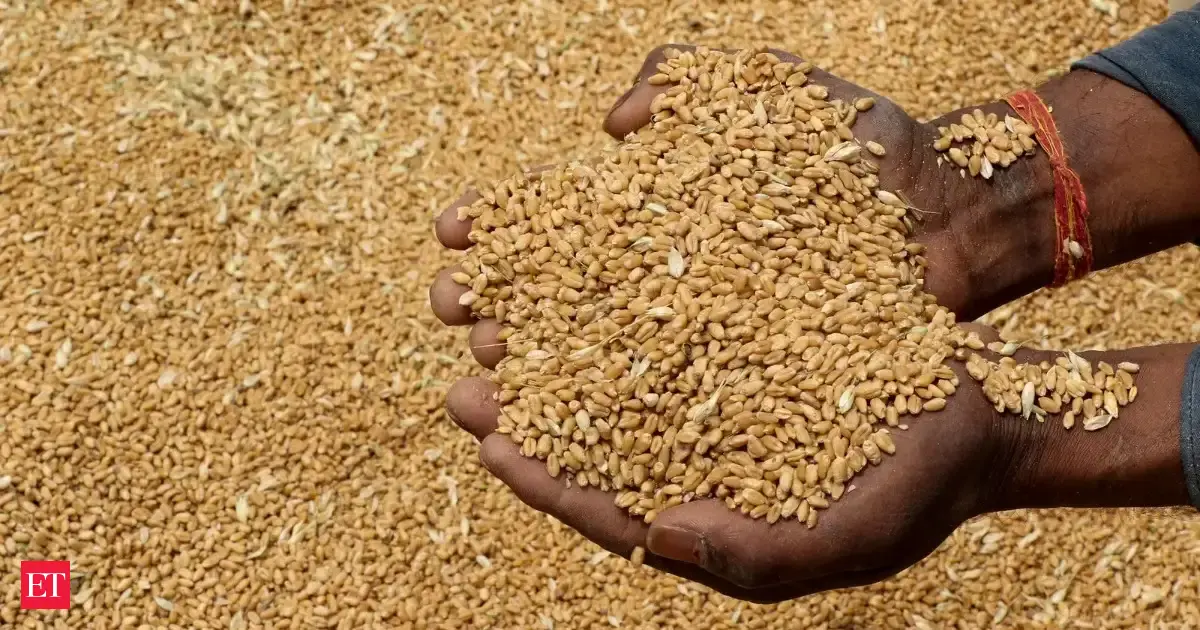
India has permitted the export of 5 million tonnes of wheat after a four-year ban, driven by a global wheat rally and ample domestic stocks, according to a report by the Economic Times on 1 July 2026. The policy reversal aims to capitalise on high international prices and manage a record surplus in the central pool.
Wheat Stock Surplus Powers Export Decision
The total stock of wheat in the central pool stands at 57.8 million metric tonnes, comprising a carry-forward stock of 22 million tonnes as of 1 April 2026 and procurement of 35.8 million tonnes during the rabi marketing season 2026-27, per government data cited in the report. The government requires approximately 21 million tonnes for the Public Distribution System (PDS) and Other Welfare Schemes, plus 7.5 million tonnes for buffer stock. The surplus available for commercial sale and exports has prompted the policy shift.
| Stock Category | Volume (million tonnes) |
|---|---|
| Carry-forward stock (as of 1 April 2026) | 22.0 |
| Procurement (rabi 2026-27) | 35.8 |
| Total central pool | 57.8 |
| Required for PDS & welfare schemes | 21.0 |
| Required for buffer stock | 7.5 |
Government's Rationale and Phased Allowance
The Economic Times reported that while authorising an additional 25 lakh tonnes (2.5 million tonnes) of wheat exports in April 2026, the government stated the decision "was taken to enhance market liquidity, facilitate efficient stock management, and prevent distress sales during the peak arrival season." The headline figure of 5 million tonnes suggests a cumulative quota that may include the April allocation, though the source does not explicitly reconcile the two numbers.
Price Trends and Market Management
Wholesale wheat prices in the Delhi market have risen 1.7% over the past month, according to government data. Wheat prices typically increase during the lean period from June to February. To keep prices under control, the central government sells excess wheat in the open market under the Open Market Sales Scheme (OMSS). The export allowance is expected to provide an additional outlet for surplus grain without destabilising domestic prices, as the PDS and buffer requirements remain fully covered.
- Effective date: The export allowance follows the earlier April 2026 decision for 2.5 million tonnes; the broader 5 million tonne quota appears to be a cumulative or expanded measure.
- Enforcement body: Government of India, through the Food Corporation of India and the Directorate General of Foreign Trade (DGFT).
The move places India back in the global wheat market after a four-year ban, which was initially imposed in 2022 to secure domestic supply. The global wheat rally, driven by production shortfalls in other exporting nations, has made Indian wheat competitive despite freight and logistics costs.
Sources: