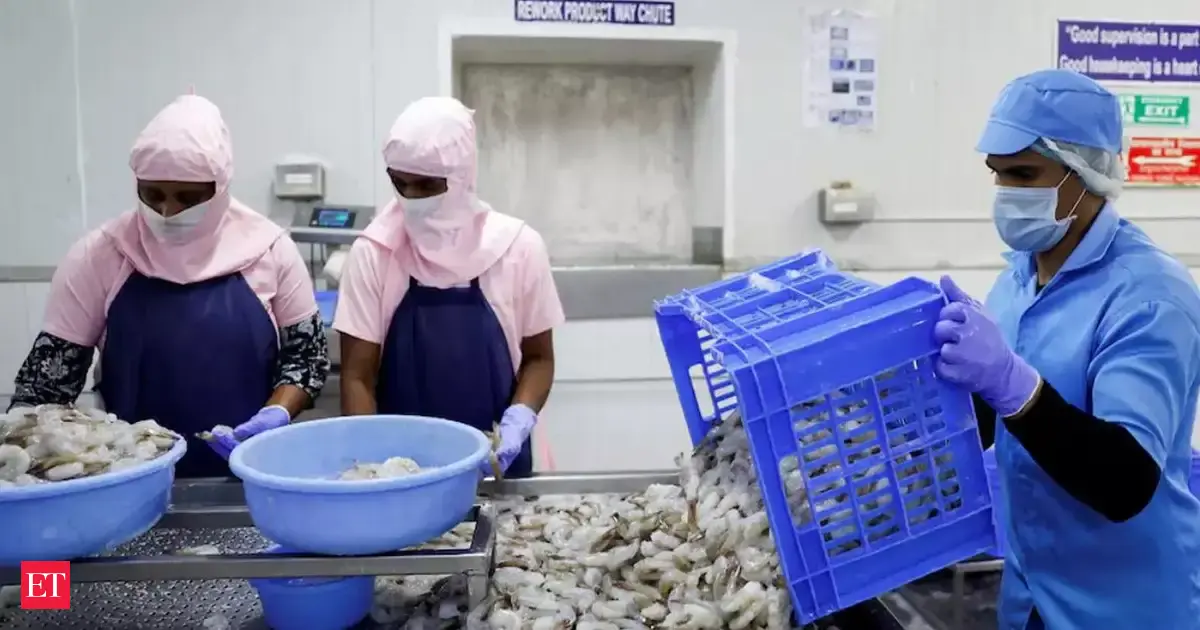
India's seafood industry has demonstrated remarkable resilience in the face of significant challenges. In 2025, the United States imposed cumulative tariffs of 55.8% on Indian seafood, threatening a sector heavily reliant on the US market. Despite these obstacles, India's seafood exports reached a record $8.46 billion in FY26, according to government data.
Market Diversification
The industry's success can be attributed to strategic market diversification. Australia reopened its market to unpeeled prawns from Andhra Pradesh after an eight-year ban. India also made significant inroads into the European Union and Russia by addressing non-tariff barriers.
- Exports to the US: Declined due to tariffs
- Growth in China, EU, Japan, Southeast Asia: Compensated for US losses
"The diversification strategy has been crucial in mitigating the impact of US tariffs," said Fisheries Minister Rajiv Ranjan Singh.
Value Addition Ambitions
Policymakers are now focusing on increasing value addition in seafood exports. Currently, only 12% of fish processing involves significant value addition. The government aims to raise this to over 25%, aligning with China's standards.
| Year | Export Value (USD Billion) | Volume (Million Metric Tonnes) |
|---|---|---|
| FY25 | 7.45 | - |
| FY26 | 8.46 | 1.97 |
Structural Optimism
The global fisheries trade has expanded from $150 billion in FY14 to $164 billion in FY24, driven by rising demand for protein-rich foods. Andhra Pradesh Chief Minister N. Chandrababu Naidu emphasized the potential for further growth through enhanced processing capabilities.
Future Prospects
The Indian government continues to push for higher-value processing and branded offerings. This strategic shift is expected to strengthen India's position in the global seafood market, ensuring sustainable growth despite external challenges.