iGEN
Visit IGEN World Explore IGEN Expo
EXPLORE UPGRADE PLANS
BREAKING
Transponders Off: Saudi Crude Tankers for India Exit Red Sea 'Dark' to Avoid Houthi Blockade Nvidia’s Open Source Alliance Snubs OpenAI and Anthropic, Deepening AI Rift For the First Time, Zoox Can Charge People for Rides in Its Steering-Wheel-Free Robotaxis Chrome's AI-Driven Bug Hunt Spurs Twice-a-Week Security Patches, Google Reports Domestic Sugar Prices to Remain Firm in Short-Term, Says Triveni Engineering Saia’s Softer Q3 Margin Guidance Triggers 12% Share Drop Despite Record Q2 Results Buffalo meat and non-basmati rice lead 14% surge in India's Q1 agri exports Mahindra & Mahindra Records 34% Profit Jump Despite Commodity Cost Headwinds Patanjali Gets IRDAI Nod for Rs 4,500 Crore Acquisition of Magma General Insurance Sid's Farm Raises ₹81 Crore in Pre-Series B Round Led by Omnivore and NSFO Transponders Off: Saudi Crude Tankers for India Exit Red Sea 'Dark' to Avoid Houthi Blockade Nvidia’s Open Source Alliance Snubs OpenAI and Anthropic, Deepening AI Rift For the First Time, Zoox Can Charge People for Rides in Its Steering-Wheel-Free Robotaxis Chrome's AI-Driven Bug Hunt Spurs Twice-a-Week Security Patches, Google Reports Domestic Sugar Prices to Remain Firm in Short-Term, Says Triveni Engineering Saia’s Softer Q3 Margin Guidance Triggers 12% Share Drop Despite Record Q2 Results Buffalo meat and non-basmati rice lead 14% surge in India's Q1 agri exports Mahindra & Mahindra Records 34% Profit Jump Despite Commodity Cost Headwinds Patanjali Gets IRDAI Nod for Rs 4,500 Crore Acquisition of Magma General Insurance Sid's Farm Raises ₹81 Crore in Pre-Series B Round Led by Omnivore and NSFO
Home ›› Technology ›› Ai ›› Robotics ›› For the First Time, Zoox Can Charge People for Rides in Its Steering-Wheel-Free Robotaxis

For the First Time, Zoox Can Charge People for Rides in Its Steering-Wheel-Free Robotaxis

The National Highway Traffic Safety Administration (NHTSA) granted Amazon subsidiary Zoox a two-year exemption to deploy up to 5,000 steering-wheel-free robotaxis and charge for rides. Zoox will begin paid operations in Las Vegas, having already transported over 500,000 riders free of charge. The approval marks a milestone for autonomous vehicles built without traditional controls, subject to heightened oversight and safety reporting.

iG
iGEN Editorial
July 30, 2026
For the First Time, Zoox Can Charge People for Rides in Its Steering-Wheel-Free Robotaxis

The National Highway Traffic Safety Administration (NHTSA) announced on Thursday it has granted the first-ever approval for a purpose-built, steering-wheel-free robotaxi to pick up paying customers in the US. The recipient is Zoox, the autonomous vehicle subsidiary of Amazon. The company says it will soon begin charging for rides in Las Vegas, where it has been carrying passengers for free since last year. Zoox is also currently picking up a limited set of passengers in Austin, Miami, and San Francisco, all for free.

Regulatory Milestone

The approval is a milestone for the autonomous vehicle industry. Waymo, the nation's leading robotaxi provider, uses vehicles that still meet government design standards—with steering wheels, pedals, and mirrors, and conventional seating arrangements. Even Waymo's new purpose-built robotaxi retains those legally mandated features. But some industry players argue that driverless tech can only reach its potential with vehicles built to be driven by computers—ones that don't meet federal vehicle safety standards written for older technology. Zoox has worked for more than a decade to design, manufacture, and receive government approvals for its vehicles, which have no steering wheel or pedals and feature a “campfire-style” seating arrangement where riders face each other while riding.

Operational Scope and Vehicle Design

The NHTSA’s two-year exemption from its safety standards will allow Zoox to deploy up to 5,000 robotaxis. In exchange, the company will be subject to more stringent government oversight and must submit extra data on crashes and unexplained stops. The NHTSA can retract the exemption if it finds that Zoox is not operating safely. Currently, Zoox has 105 active robotaxis according to a government filing earlier this month—an indication that scaling to 5,000 will require significant effort.

Metric Figure
Active robotaxis 105
Maximum allowed under exemption 5,000
Riders transported autonomously More than 500,000
Miles driven autonomously More than 3 million

Zoox says that even before official approval to charge customers, it has autonomously transported more than 500,000 riders more than three million miles.

Safety Oversight and Industry Context

In a speech at an industry conference in San Diego on Thursday, NHTSA Administrator Jonathan Morrison said Zoox had proved that it exceeded the safety standards applied to traditional cars. “This technology needs to be developed appropriately, safely and responsibly,” Morrison told an audience of industry insiders and policy experts. “If we see an unreasonable risk to safety, you're going to hear from us.”

Earlier this month, Morrison published an unusual open letter drawing attention to what he called a “clear pattern” of autonomous vehicles interfering with the work of emergency responders. “To state it bluntly: An AV that cannot safely interact with first responders is a danger to the general public,” he wrote, directing companies to focus resources on fixing the issue. Morrison said the NHTSA would meet with several companies on their solutions to this emergency response interference problem.

Zoox itself issued a voluntary recall on its software earlier this month after finding that its cars might not properly detect smoke and could obstruct emergency vehicles. That recall filing disclosed the 105-robotaxi count.

Competitive Landscape

Tesla says it started testing its own steering-wheel-free Cybercab late last month, but has not outlined how it might receive government approval for those vehicles. Its limited robotaxi service currently uses modified Model Y vehicles with steering wheels and pedals.

Implications for Enterprise Audiences

For technology decision-makers in logistics and supply chain, the NHTSA’s approval signals a regulatory path for vehicles that fundamentally break from traditional design norms. The exemption model—granting waivers in exchange for enhanced data-sharing and oversight—could become a template for deploying autonomous cargo vehicles or delivery robots. Zoox’s progress also demonstrates the importance of demonstrating safety equivalence to existing standards, a principle that applies to autonomous trucks and warehouse robots. As more companies like Waymo and Tesla push for similar exemptions, enterprise buyers should monitor how the NHTSA balances innovation with public safety, as the same framework may soon govern automated yard trucks, last-mile delivery pods, and autonomous forklifts.


Sources: WIRED – Top Stories

Keep Reading

Recommended Stories

Uber's Autonomous Vehicle Strategy: Lobbying to Slow Robotaxi Adoption to Protect Its Business Model Technology

Uber's Autonomous Vehicle Strategy: Lobbying to Slow Robotaxi Adoption to Protect Its Business Model

Uber is lobbying for 'hybrid network' laws that would require human drivers to serve 85% of rides for three years in autonomous vehicle deployments. The strategy, outlined by CEO Dara Khosrowshahi, aims to make Uber the go-to platform for all robotaxi operators. Proposed legislation in New Jersey and Washington DC could force autonomous vehicle developers like Waymo and Tesla to partner with existing ride-hail apps.

July 12, 2026
Can China Repeat Its Electric Vehicle Success with Robotaxis? Technology

Can China Repeat Its Electric Vehicle Success with Robotaxis?

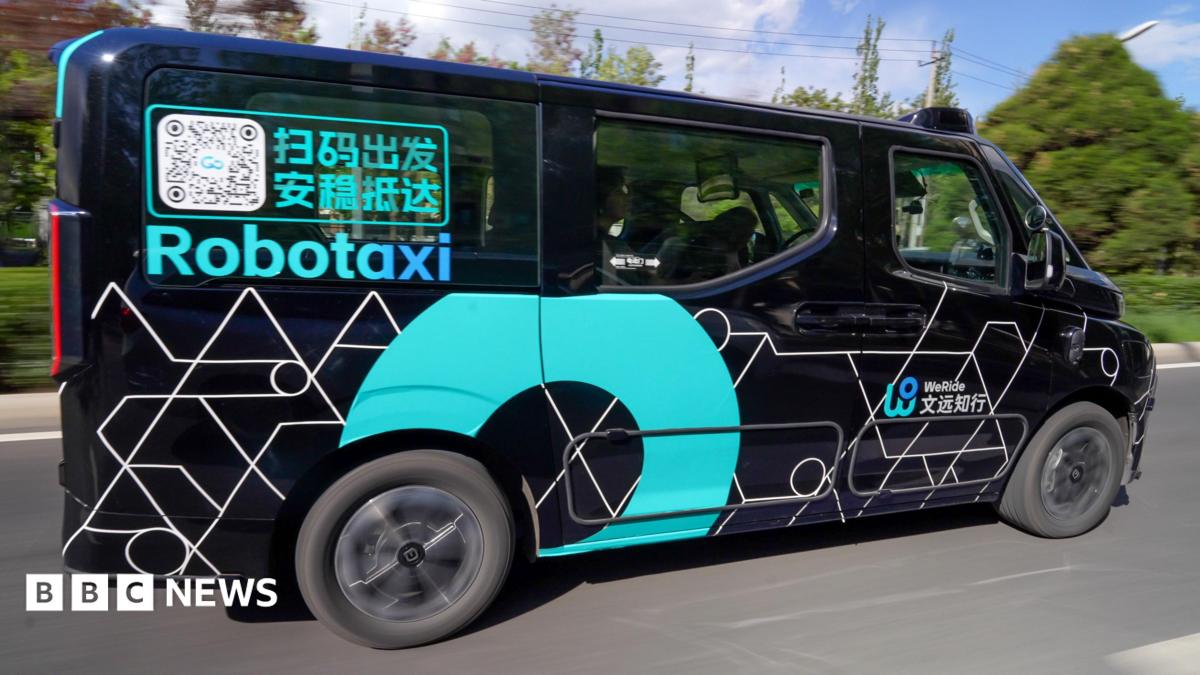
Chinese robotaxi companies like Baidu, WeRide, and Pony.ai are testing commercial services in Beijing, building on the country's massive EV industrial ecosystem. However, extreme weather and unique driving environments abroad may limit rapid global expansion, according to industry executives.

July 6, 2026
Free Waymo Rides in California? A Regulatory Quirk Delays Expansion and Keeps Prices at $0 Technology

Free Waymo Rides in California? A Regulatory Quirk Delays Expansion and Keeps Prices at $0

Waymo's new Ojai robotaxis are giving free rides in California because the state's Public Utilities Commission has not yet approved the company's application to expand its service area and add the vehicles to its fleet. The delay, tied to questions about emergency response and unaccompanied minors, means passengers ride without charge while Waymo waits for regulatory sign-off.

July 8, 2026
Tesla Says It’s Building a Wheelchair-Accessible Robotaxi Technology

Tesla Says It’s Building a Wheelchair-Accessible Robotaxi

Tesla revealed plans for a wheelchair-accessible robotaxi during a DC City Council hearing. The company is developing the vehicle in Texas but provided no timeline. Currently no US robotaxi company offers fully accessible driverless rides.

July 13, 2026