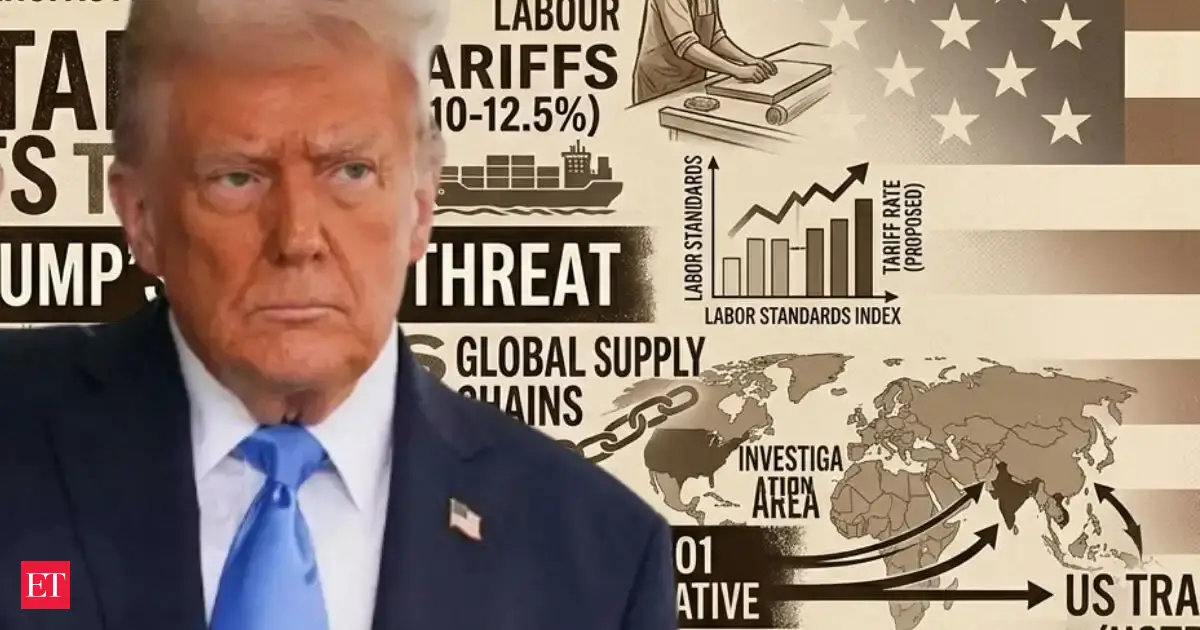
The United States Trade Representative (USTR) has proposed additional tariffs of 10% to 12.5% on imports from India and 59 other economies, citing their failure to effectively enforce import bans on goods made using forced labour. The recommendation, announced in early June 2026, stems from a Section 301 investigation launched in March 2026 that examined forced labour practices in manufacturing and the importation of such goods into the United States.
Section 301 Investigation and Proposed Tariffs
According to the USTR, the investigation looked into situations where forced labour is used directly in manufacturing and cases where countries fail to prohibit imports made with forced labour and use them in goods exported to the United States. The proposed additional duty of 10% to 12.5% targets all affected countries. Ambassador Jamieson Greer stated: “The failure of our most important trading partners to address the importation of goods made with forced labor is unacceptable. This creates a dynamic where American workers are forced to compete globally on an unlevel playing field.” He added that some trading partners have taken initial steps through the USMCA and commitments in Agreements on Reciprocal Trade, but more action is needed.
Reactions and Industry Support
US steel industry groups are expected to support the move, arguing that a surge in steel imports partly driven by weaker labour standards and the absence of effective bans on forced labour goods has hurt domestic manufacturers. The proposed tariffs have drawn mixed reactions from other stakeholders.
Hearings Schedule and Participants
The three-day proceedings opened on Tuesday, July 7, 2026, with submissions from government representatives. Officials from the following countries are scheduled to participate:
- India
- Pakistan
- Vietnam
- Mexico
- Chile
- Ecuador
- Guatemala
- Guyana
- Honduras
- Peru
- Jordan
- South Korea
- Sri Lanka
- South Africa
- Brazil
Mexico's Ernesto Acevedo Fernández is expected to outline how the country enforces its forced labour import rules under the US-Mexico-Canada Agreement (USMCA). Officials from Chile, Ecuador, Guatemala, Guyana, Honduras, and Peru are also scheduled to present their views before the USTR. Several countries are expected to defend their labour enforcement systems and challenge the USTR's findings.
India's Position and Trade Implications
India prohibits forced labour under the Bonded Labour System (Abolition) Act, 1976. However, according to a June 2026 report by ToI, several export sectors rely on intermediate inputs imported from China, some of which could come under scrutiny under the USTR's methodology. The Global Trade Research Initiative (GTRI) noted that India's reliance on Chinese inputs means some exports could still face investigations despite the domestic ban.
India and the US have been negotiating the framework for the first phase of their proposed trade agreement, with discussions at the ministerial level. The final tariff structure needed to implement the deal is expected to be settled only after the Trump administration unveils its revised tariff policy. India has pushed to retain a competitive edge over export rivals such as China, Vietnam, Bangladesh, and ASEAN bloc members.
Key Data Points
| Item | Detail |
|---|---|
| Investigation launched | March 2026 |
| Proposed additional tariff | 10%–12.5% |
| Number of affected economies | 60 (including India) |
| Enforcement body | United States Trade Representative (USTR) |
| Relevant Indian law | Bonded Labour System (Abolition) Act, 1976 |
What Happens Next
The hearings will continue over the three days. The USTR will consider submissions and may finalize the tariff recommendations. The outcome will directly impact importers and exporters dealing with the affected countries, particularly in sectors sensitive to forced labour allegations. Ongoing US-India trade negotiations may face additional pressure from this investigation.
Sources: