The United States on Thursday unveiled fresh tariff slabs of 10 per cent and 12.5 per cent on several economies under its Section 301 action, with India placed in the lower 10 per cent tariff category, according to the Economic Times. The Office of the US Trade Representative (USTR) announced tariffs ranging from 10 per cent to 12.5 per cent on 60 economies as part of action directed by US President Donald Trump over what it described as inadequate measures to prohibit the import of goods produced with "forced labour." India is among 17 economies that will face the lower 10 per cent tariff, a group that also includes the United Kingdom, Canada, Indonesia, Mexico and Bangladesh. The remaining 38 economies face the higher 12.5 per cent rate.
Tariff Structure and India's Position
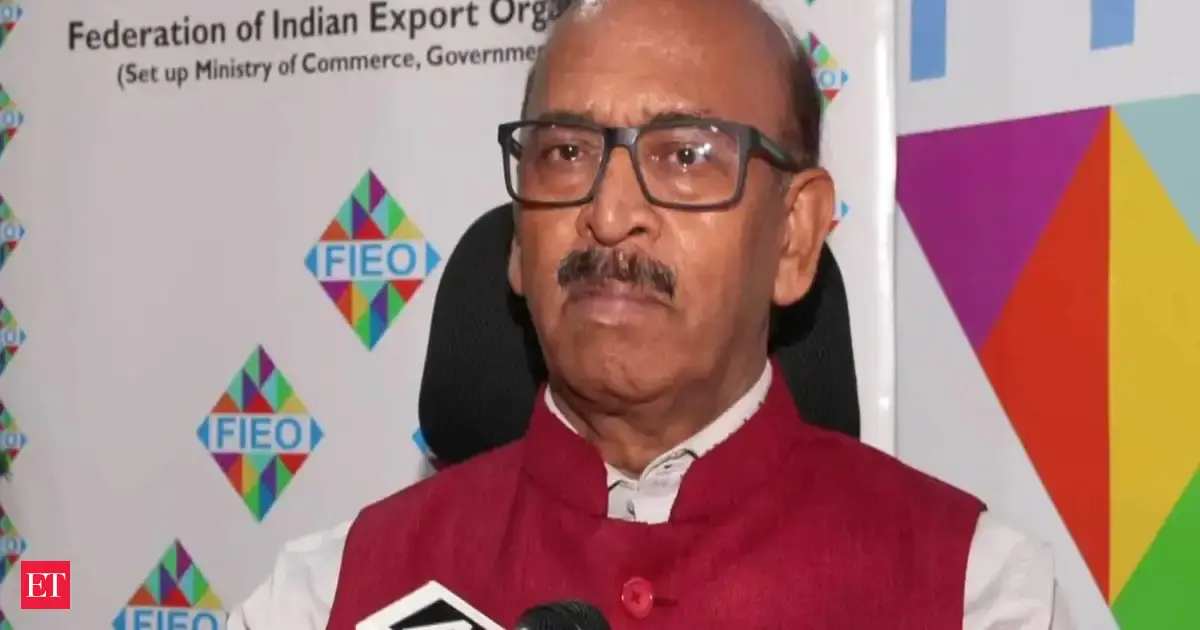
The USTR's action places India in a relatively favourable tariff bracket. According to the source, Sahai, the FIEO chief, said, "It's not a welcome development but at the same time it is not going to impact our exports. If you see that India beside other 16 countries is placed into 10 per cent category where a large number of countries around 38 has been put into 12.5 per cent category." The tariff rate quota (TRQ) for some competing countries was also announced.
| Tariff Category | Number of Economies | Examples (per USTR) |
|---|---|---|
| 10% | 17 | India, UK, Canada, Indonesia, Mexico, Bangladesh |
| 12.5% | 38 | Not specified in source |
Textile Sector Concerns
While India's overall exports may be shielded by the lower tariff slab, the textile and apparel sector requires close attention. The Economic Times reports that India has not been included in the textile and apparel tariff-rate quota (TRQ) exemption available to Bangladesh, Cambodia, Indonesia and Malaysia for specified exports using US-origin cotton and fibre. This exclusion could place Indian textile exporters at a competitive disadvantage relative to these countries.
Exclusions and Existing Tariffs
Sahai further highlighted that products already covered under Section 232 tariffs would not be affected by the latest announcement. "Secondly, all the products where the tariff was imposed under section 232, including steel, aluminium, automobile component they are not impacted by the tariff. So the impact is limited," he said. This means existing Section 232 duties on these products remain unchanged, and the new Section 301 tariffs do not stack on top of them.
FIEO Chief's Response
Reacting to the development, Sahai stressed that while the tariff action is unwelcome, India has adequate safeguards in place. He noted, "India has already given adequate proof that there is no use of the forced labor import products into India. DGFT has recently rolled out a notification also not allowing such imports onto the country and we are signatory to International Labor Organization and the convention on the forced labor also." This statement underscores India's compliance with international labour standards and its efforts to address the US concerns.
Overall, the FIEO chief's assessment suggests that the direct impact on Indian exports will be limited, but the textile sector warrants close monitoring due to the TRQ exclusion. The USTR's action takes effect immediately, with the effective date of July 24, 2026.
Sources: