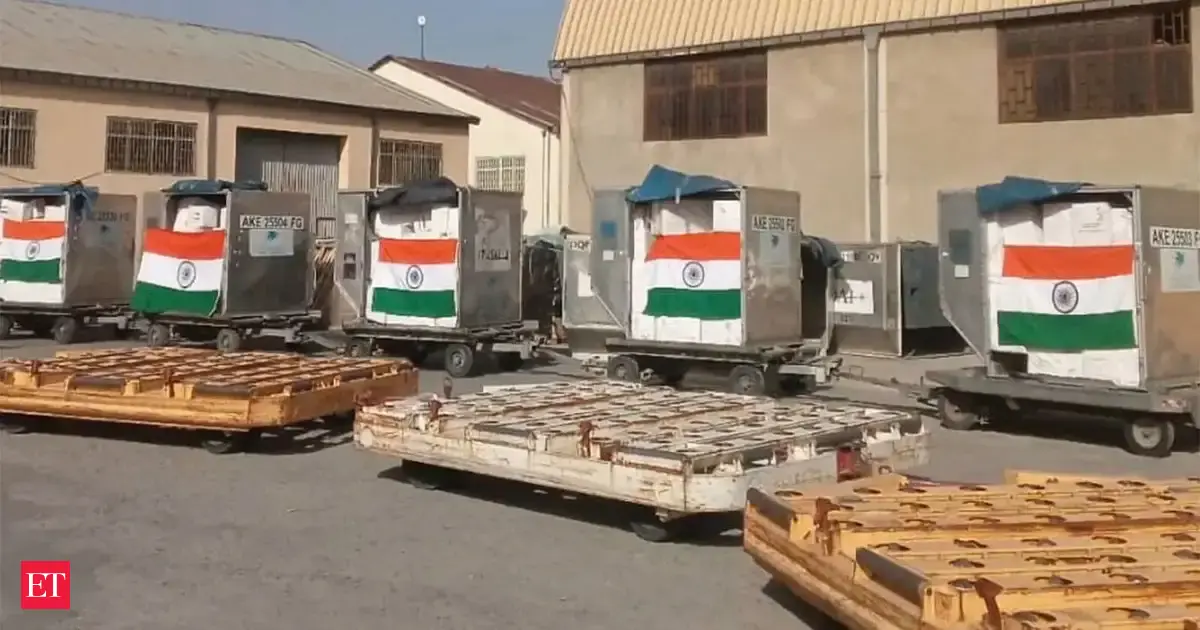
India delivered another 5 tonnes of essential medicines and medical equipment to Kabul, Afghanistan, via air freight, reaffirming its commitment to humanitarian assistance, according to the Ministry of External Affairs (MEA). The shipment, announced by MEA Official Spokesperson Randhir Jaiswal in a post on X on June 17, 2026, marks a continued logistics operation supporting Afghanistan's health sector.
Cargo Composition and Handling Requirements
The aid includes essential medicines and medical equipment for diagnosis and treatment, specifically neonatal and pediatric care devices, cardiograph machines, ventilators, patient monitors, maxillofacial electrocautery units, plastic surgery sets, and specialized medical kits. The 5-tonne consignment required careful packaging and temperature management for pharmaceuticals, though the source does not specify cold-chain requirements. For freight forwarders, such mixed medical cargo demands compliance with IATA dangerous goods regulations for any battery-operated devices and proper labeling for humanitarian shipments.
Affected Trade Lane and Mode
The delivery was conducted via air freight from India to Kabul, the primary international gateway for Afghanistan. This lane has seen periodic disruptions due to security and infrastructure constraints. The shipment adds to the cargo volume at Kabul International Airport, which handles both commercial and humanitarian flights. According to the MEA, India continues to support Afghanistan through initiatives related to food security, healthcare, and pharmaceutical assistance, indicating a sustained air bridge for medical supplies.
Operational Implications for Logistics Providers
For airline operators and freight forwarders handling this and similar consignments, key considerations include:
- Customs clearance: Humanitarian aid often requires expedited clearance. Coordinating with Afghan authorities and Indian agencies is critical to avoid delays.
- Cargo security: Medical equipment like ventilators and monitors are high-value items requiring secure handling and tracking.
- Documentation: Accurate manifests and certificates of origin are needed for duty-free entry under humanitarian provisions.
- Handling: Specialized medical kits may require fragile handling and priority boarding.
A comparison of equipment types and their logistics needs is summarized below:
| Equipment Type | Quantity/Weight (Not Specified) | Handling Requirements |
|---|---|---|
| Essential medicines | Part of 5 tonnes | Temperature control, possibly cold chain |
| Neonatal/pediatric devices | Not specified | Fragile, sterile packaging |
| Cardiograph machines | Not specified | Electronic, shock-sensitive |
| Ventilators | Not specified | Bulky, power source checks |
| Patient monitors | Not specified | Electronic, calibration data |
| Maxillofacial electrocautery | Not specified | Surgical, sterile |
| Plastic surgery sets | Not specified | Sterile, instrument kits |
| Specialized medical kits | Not specified | Mixed contents, labeled per IATA |
Shipper and Forwarder Recommendations
Logistics operators involved in humanitarian air freight to Afghanistan should:
- Maintain close liaison with the MEA and Afghan health authorities for pre-clearance.
- Use temperature-controlled packaging for medicines, if required.
- Ensure all electronic devices are battery-compliant for air transport.
- Consider insurance for high-value medical equipment.
Watch List
- Future announcements by MEA regarding additional aid shipments.
- Security and operational status at Kabul International Airport.
- Any changes in customs procedures for humanitarian cargo at Afghan borders.
Sources: