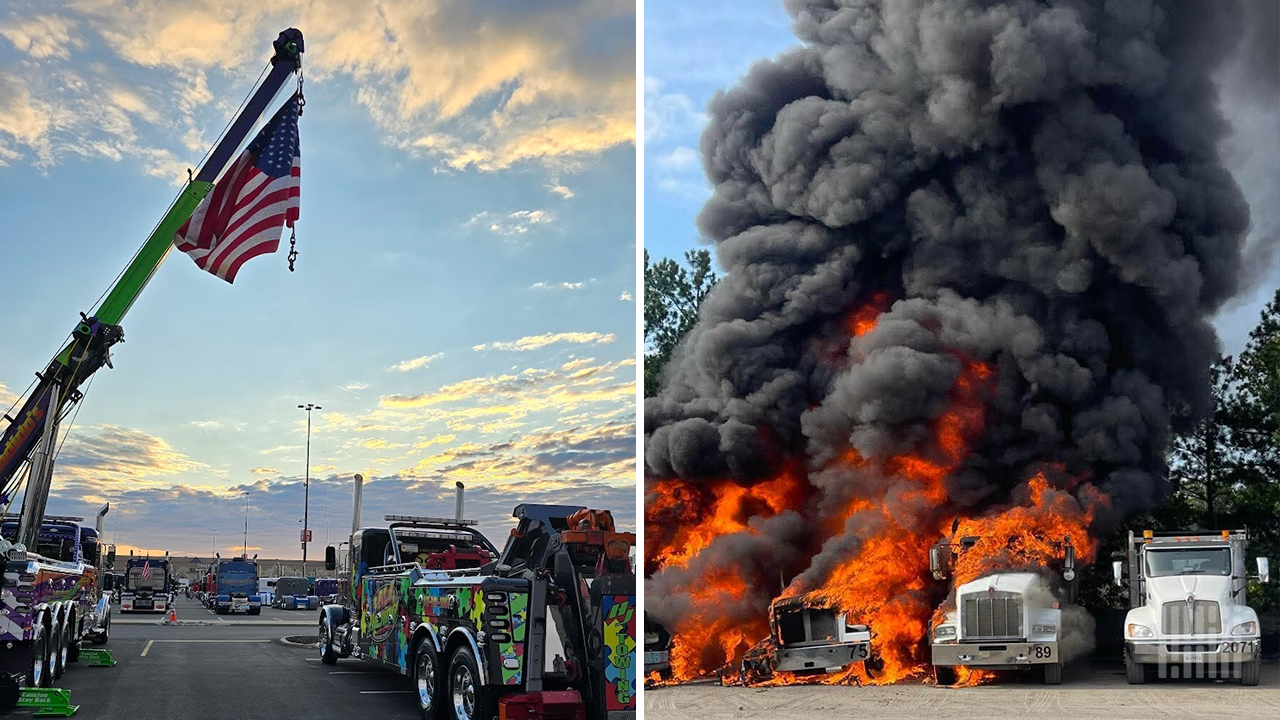
A fireworks-laden trailer caught fire on June 6 on Interstate 75 near Ooltewah, Tennessee, shutting down both directions for 25 minutes as mortars and shells exploded. According to FreightWaves, the driver, Dalton Beeler, was cited for operating without a hazardous materials endorsement, missing placards, shipping papers, emergency response information, and a USDOT number. Investigators believe the fire started in the trailer's rear brakes—a predictable failure mode for the most dangerous cargo on the road.
The brake violation data
FreightWaves pulled every roadside inspection from FMCSA's database where the shipper was a fireworks company. Across the worst-performing carriers, there are more than 1,400 brake violations on record, with 334 resulting in out-of-service orders. Two intermodal drayage operators dominate the total:
| Carrier | Brake violations | Brake out-of-service orders |
|---|---|---|
| Evans Delivery Company | 783 | 183 |
| ContainerPort Group | 233 | 51 |
These carriers haul containers off rail and out of ports, which matters because the overwhelming majority of consumer fireworks sold in the U.S. are manufactured in China and arrive by ocean container. The supply chain for Fourth of July fireworks begins with a container handoff to a class of carrier with a documented, repeating brake problem, as FreightWaves reported.
Hotshot equipment and regulatory gaps
Of the fireworks loads where combined vehicle weight was recorded, almost a third moved on hotshot equipment—a pickup and trailer rated at 26,000 pounds or less. Twenty-six thousand and one pounds is the federal threshold where a commercial driver's license becomes required. Black Diamond Fireworks, Stateline Fireworks, Phantom Fireworks western operation, towing companies, and rental units from Ryder and Idealease all show up near that line.
The driver in the June 6 incident was transporting fireworks from South Pittsburg to Knox County without a hazmat endorsement, without placards, without shipping papers, without emergency response information, without current hazmat registration, and without a USDOT number where one was required. The Tennessee Highway Patrol's Commercial Vehicle Enforcement Division conducted the post-incident inspection, and forwarded findings to federal regulators for possible penalties.
Implications for shippers and operators
For logistics managers arranging fireworks imports, the data shows that the truck that burned on I-75 was not an outlier. It was a representative sample of the brake weaknesses in the drayage sector moving port containers inland. Shippers should verify carrier hazmat compliance, including endorsements, placarding, and paperwork, before tendering Class 1 explosives. Carriers must address brake maintenance to avoid out-of-service orders and potential catastrophic failures. The upcoming Fourth of July demand will put additional pressure on this freight network, where one in three rides is on light equipment operating at the edge of regulatory thresholds.
Sources: