iGEN
Visit IGEN World Explore IGEN Expo
EXPLORE UPGRADE PLANS
BREAKING
Gartner Report Warns Power Demands May Halt AI Data Center Advances by 2030 Govt Says All Refineries Operating at High Capacity with Adequate Crude Inventories and Sufficient Stocks of Petrol, Diesel SpaceX IPO Raises $10bn More Than Initially Thought, Totaling $85.7bn USTR Greer and Piyush Goyal to Hold Trade Pact Talks Next Week in Delhi Anthropic Sued Over Claude Max Usage Limits: What Enterprise Leaders Should Know About AI Subscription Risks India’s Silver Imports Plunge 87% in May After Government Curbs Bite India caps diesel sales after bulk users divert 3.5 lakh tonnes to retail outlets Incogni Report Reveals Job-Search Platforms Selling User Data Without Awareness RBI tightens mis-selling rules; banks barred from incentive structures that encourage aggressive sales Government to Sell Up to 5% Stake in GIC at Rs 352 per Share; OFS Opens June 16 Gartner Report Warns Power Demands May Halt AI Data Center Advances by 2030 Govt Says All Refineries Operating at High Capacity with Adequate Crude Inventories and Sufficient Stocks of Petrol, Diesel SpaceX IPO Raises $10bn More Than Initially Thought, Totaling $85.7bn USTR Greer and Piyush Goyal to Hold Trade Pact Talks Next Week in Delhi Anthropic Sued Over Claude Max Usage Limits: What Enterprise Leaders Should Know About AI Subscription Risks India’s Silver Imports Plunge 87% in May After Government Curbs Bite India caps diesel sales after bulk users divert 3.5 lakh tonnes to retail outlets Incogni Report Reveals Job-Search Platforms Selling User Data Without Awareness RBI tightens mis-selling rules; banks barred from incentive structures that encourage aggressive sales Government to Sell Up to 5% Stake in GIC at Rs 352 per Share; OFS Opens June 16
Home ›› Logistics ›› Last Mile ›› Box Truck Drivers: The Real Safety Risk in US Freight

Box Truck Drivers: The Real Safety Risk in US Freight

An analysis of FMCSA roadside inspection data reveals that box truck drivers are nearly twice as likely to be placed out of service as tractor-trailer drivers, with driver fitness and substance abuse violations far higher. The root cause is a regulatory loophole: trucks under 26,001 lbs require no CDL and no drug testing, leading to a less-qualified driver pool even as equipment itself is as safe as big rigs.

iG
iGEN Editorial
June 14, 2026
Box Truck Drivers: The Real Safety Risk in US Freight

Box truck drivers are pulled off the road at nearly double the rate of tractor-trailer drivers, according to an FMCSA database analysis by FreightWaves. The problem isn't the equipment—it's the people behind the wheel, and federal regulations written around arbitrary weight thresholds are the root cause.

The Data Gap

FreightWaves pulled every roadside inspection from the FMCSA database and split carriers by straight trucks versus tractor-trailers. The truck themselves came back clean: box truck fleets get a vehicle put out of service 17.2 times per hundred inspections, versus 19.4 for tractor fleets. On vehicle maintenance, box trucks again scored lower. The iron is not the story.

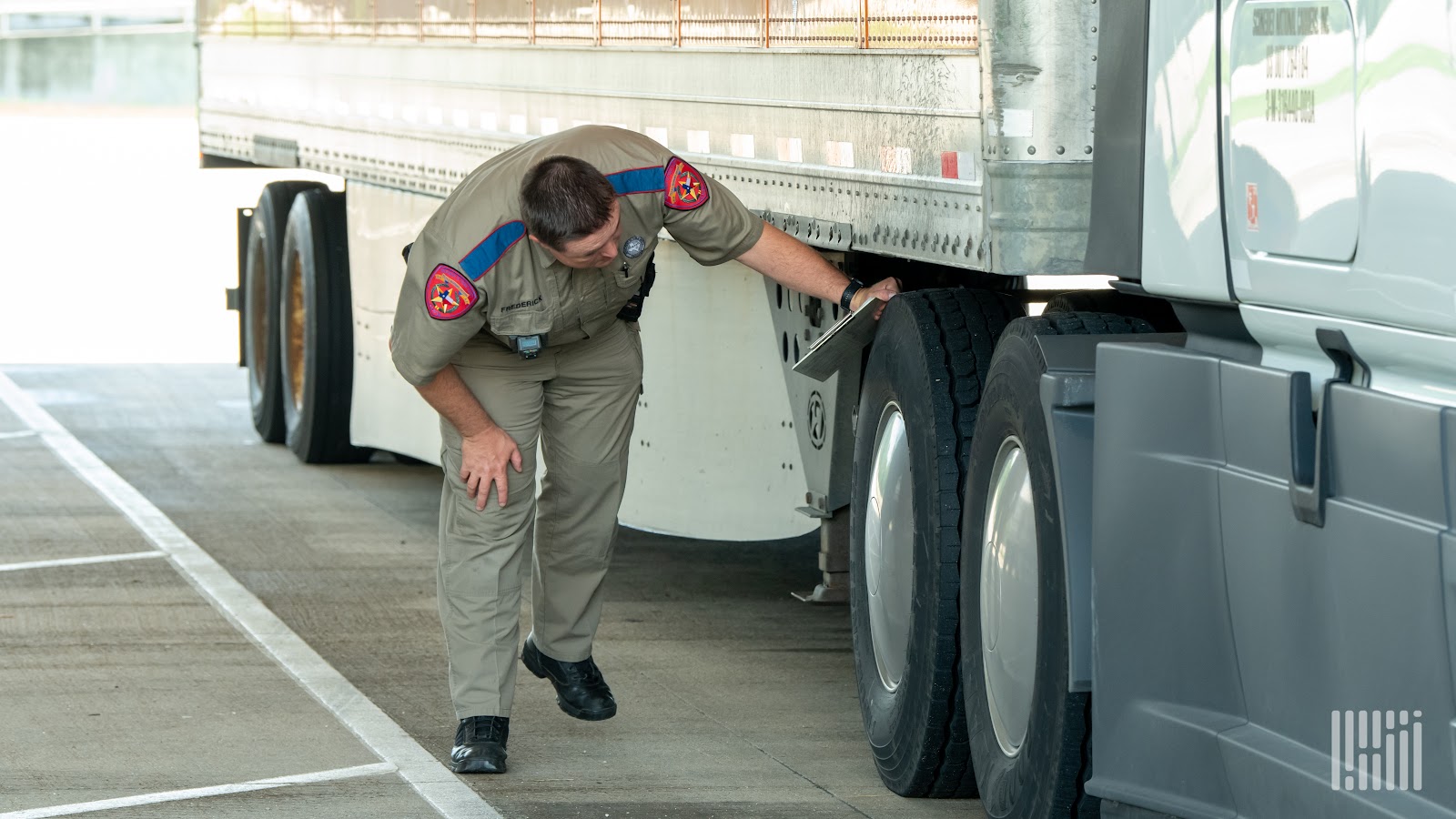
The driver is. Box truck fleets get a driver pulled off the road 7.6 times per hundred inspections; tractor fleets, 4.1. That is nearly double on the same roads, with the same enforcement, under the same criteria. A driver-out-of-service order means the person behind the wheel had no business there—an invalid or missing license, a disqualification, a medical card that doesn't check out, or hours run past the legal limit.

Metric Box Truck Fleets Tractor Fleets
Vehicle out-of-service (per 100 inspections) 17.2 19.4
Driver out-of-service (per 100 inspections) 7.6 4.1
Driver Fitness violation rate 2.5x tractor fleets baseline
Driver Fitness out-of-service rate 3x tractor fleets baseline
Controlled Substances/Alcohol violation rate 2.5x tractor fleets baseline

The Driver Fitness Problem

When breaking the inspection record into federal safety categories, the box truck disadvantage shows up in exactly two places: Driver Fitness and Controlled Substances/Alcohol. Driver Fitness covers licensing, medical certification, and disqualification. Box truck fleets have a violation rate two and a half times that of tractor fleets and an out-of-service rate more than three times that of tractor fleets.

The line for a commercial driver's license is 26,001 pounds. Almost every box truck on an American street is built to exactly 26,000 pounds—one pound under—making it the most common commercial truck in the country. The line for federal safety regulation is lower, 10,001 pounds, catching most box trucks. A 24,000-pound delivery truck still owes a DOT number, hours of service, a medical card, driver qualification files—the works. What it does not require is drug testing or a CDL. People hear “no CDL” and assume “no rules.” That’s the gap.

The Drug Testing Loophole

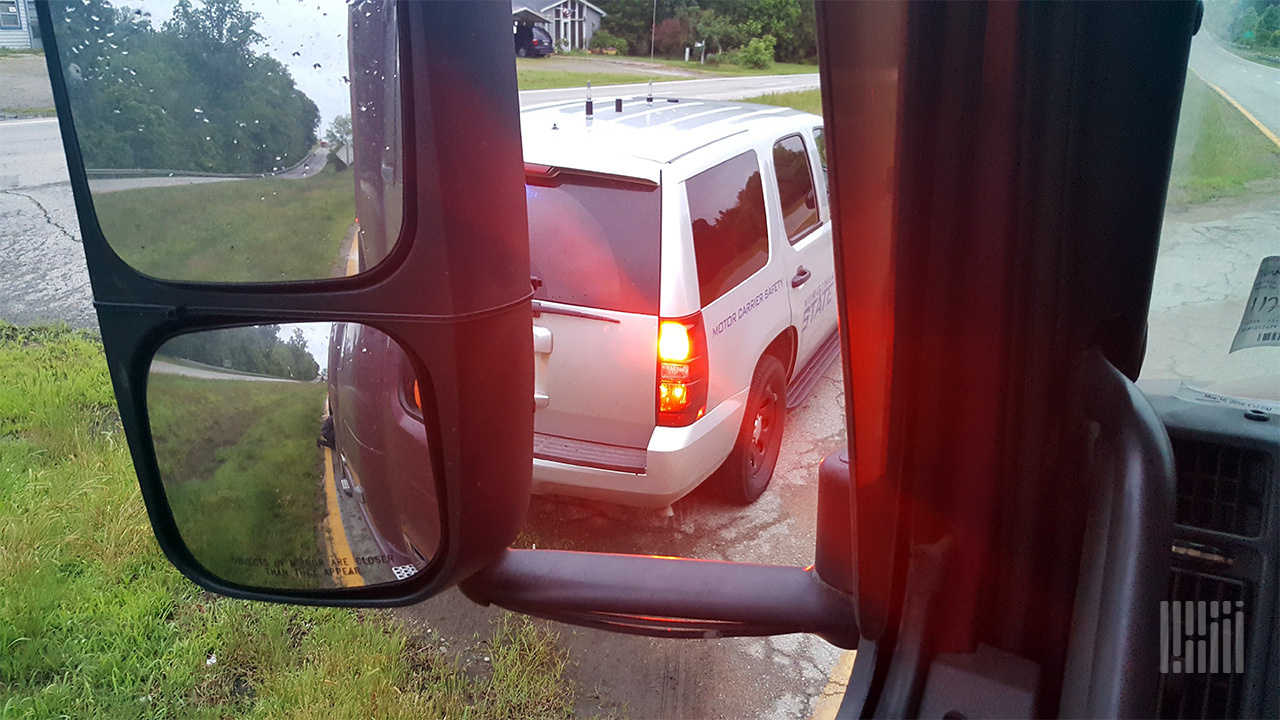
The second problem area is Controlled Substances and Alcohol, where box truck fleets run more than two and a half times the rate of tractor fleets. A truck under 26,001 lbs is not in the federal drug and alcohol testing program: no random tests, no pre-employment screen, nothing. That does not make it legal to drive high or drunk; it just changes how you get caught. FreightWaves sorted these citations by code, and about three-quarters are roadside findings—an officer catching it at the window under 49 CFR 392.4 and 392.5, not a failed test. There is no test. The cop is the test. And it is not mostly drunk driving: the drug findings (operating while in possession or under the influence) outnumber alcohol findings roughly four to one. The single largest category is a driver operating under the influence of drugs. With no screening program in front of him, the driver is more likely to get behind the wheel impaired.

Implications for Freight Reliability

For international trade executives and freight forwarders who rely on box trucks for last-mile and regional delivery, these statistics represent a hidden risk in supply chain reliability. A driver out-of-service order means delayed shipments, missed delivery windows, and potential cargo issues. The regulatory gap at 26,001 lbs means the largest segment of the commercial truck fleet is operating with less oversight than tractor-trailers, yet the vehicles themselves are just as heavy and dangerous. Until Congress or the FMCSA closes the CDL/drug testing loophole, importers and exporters should expect higher rates of driver-related disruptions from box truck carriers.


Sources: FreightWaves

Keep Reading

Recommended Stories

He Walked Away From Barber Chair for Box Truck: Lessons for Logistics Operators Logistics

He Walked Away From Barber Chair for Box Truck: Lessons for Logistics Operators

Victor Newton left a 28-year barber career to become a box truck owner-operator after a YouTube headline claimed $20,000 in a month. Five years in, he discusses the 90% failure rate, the difference between truck ownership and business ownership, and niche strategies like partial loads that can change the math for small carriers.

June 11, 2026
UPS Meets Deadline for Retrofitting 2,000 Delivery Vans with AC, Teamsters Say Logistics

UPS Meets Deadline for Retrofitting 2,000 Delivery Vans with AC, Teamsters Say

UPS met its obligation to retrofit 2,000 parcel delivery vans with air conditioning in the hottest parts of the U.S. by June 1, Teamsters union President Sean O'Brien announced. The company also launched a pilot to cool cargo compartments. The progress resulted from enforcement of the 2023 national contract, which includes a standing arbitrator for grievances.

June 14, 2026
LTL's All-In Rate Hits Multi-Year High, but Fuel Surcharge Masks Base Rate Cuts Logistics

LTL's All-In Rate Hits Multi-Year High, but Fuel Surcharge Masks Base Rate Cuts

LTL all-in revenue per hundredweight has reached its highest level in five years, but the gain is entirely driven by fuel surcharges. Base rates remain flat to negative, with carriers cutting rates across freight classes to compete for volume. The Yellow liquidation in mid-2023 created a floor for LTL pricing, while the recent recovery in truckload contract rates signals a broader freight cycle turn.

June 14, 2026
Brake failures plague fireworks logistics as Fourth of July approaches Logistics

Brake failures plague fireworks logistics as Fourth of July approaches

A June 6 fireworks truck fire on I-75 near Chattanooga, Tennessee, uncovered severe hazmat compliance failures. FreightWaves analysis of FMCSA data shows over 1,400 brake violations among fireworks carriers, with Evans Delivery Company and ContainerPort Group accounting for most. Nearly a third of fireworks loads move on hotshot equipment, raising safety concerns as the Fourth of July demand peaks.

June 12, 2026