iGEN
Visit IGEN World Explore IGEN Expo
EXPLORE UPGRADE PLANS
BREAKING
Werner Enterprises Posts Highest Revenue Per Truck Growth in One-Way Segment in a Decade CMA CGM and Stonepeak Launch United Ports LLC in $2.4 Billion Terminal Joint Venture UPS shift away from Amazon shows bigger payoff Lanesurf: 62% of Loads Get Vetted Carrier Offers Before Brokers Arrive India-China Border Trade Via Lipulekh Resumes Aug 1; China Permits 20 Traders Geopolitics Drives CMA CGM Q2 Profit Surge of 42% as Volumes and Rates Climb Benchmark Diesel Price Rises Third Week as Futures Plunge; Spread Hits Record Indian Government Limits Sugar Dealers to 400 Tonnes Stock Until November to Curb Hoarding Tenants signing longer leases for larger warehouses as 3PLs lock in capacity US stock market flat as S&P 500 and Dow barely move, Nasdaq slides over 1% on chip rout Werner Enterprises Posts Highest Revenue Per Truck Growth in One-Way Segment in a Decade CMA CGM and Stonepeak Launch United Ports LLC in $2.4 Billion Terminal Joint Venture UPS shift away from Amazon shows bigger payoff Lanesurf: 62% of Loads Get Vetted Carrier Offers Before Brokers Arrive India-China Border Trade Via Lipulekh Resumes Aug 1; China Permits 20 Traders Geopolitics Drives CMA CGM Q2 Profit Surge of 42% as Volumes and Rates Climb Benchmark Diesel Price Rises Third Week as Futures Plunge; Spread Hits Record Indian Government Limits Sugar Dealers to 400 Tonnes Stock Until November to Curb Hoarding Tenants signing longer leases for larger warehouses as 3PLs lock in capacity US stock market flat as S&P 500 and Dow barely move, Nasdaq slides over 1% on chip rout
Home ›› Logistics ›› Ports Customs ›› Survey: Drayage Operators Face Pressure from Congestion, Driver Shortages, and Margins

Survey: Drayage Operators Face Pressure from Congestion, Driver Shortages, and Margins

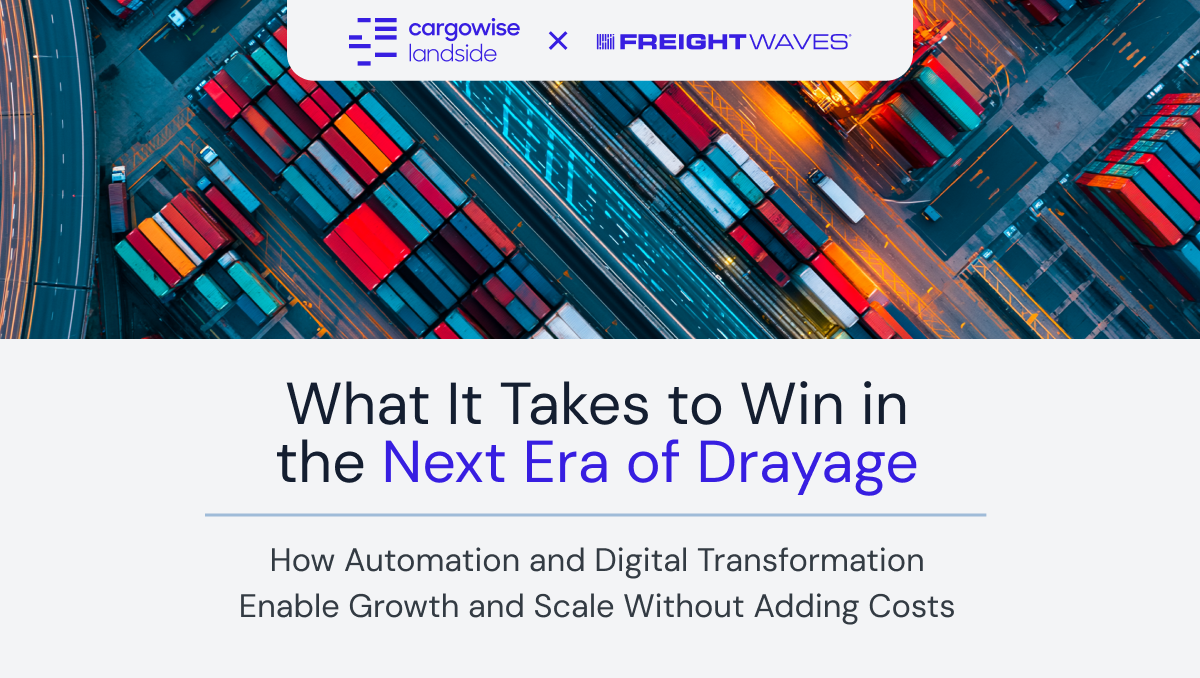
A survey by FreightWaves and CargoWise Landside of drayage professionals highlights the biggest operational challenges limiting growth, including demand volatility, terminal congestion, driver shortages, and shrinking margins. The report also explores where providers are investing in automation and digital transformation, and why manual processes are no longer sustainable.

iG
iGEN Editorial
June 29, 2026
Survey: Drayage Operators Face Pressure from Congestion, Driver Shortages, and Margins

Drayage operators are under growing pressure from demand volatility, terminal congestion, driver shortages, and shrinking margins, according to a new survey by FreightWaves in partnership with CargoWise Landside. The survey of drayage professionals reveals that relying on manual processes is no longer sustainable, and carriers are seeking ways to adapt.

Operational Challenges Limiting Growth

The survey identified the biggest operational challenges that are limiting growth and profitability in the drayage sector. Demand volatility, terminal congestion, driver shortages, and shrinking margins were cited as the primary pressures. These factors have made it increasingly difficult for operators to maintain efficiency and service levels.

Automation and Digital Transformation Investments

In response, drayage providers are investing in automation and digital transformation. The survey uncovered how fleet size and business mix influence technology priorities. Larger fleets with diverse customer bases tend to prioritize different tools than smaller operators, but the overall trend is toward modernization. The report details where these investments are being directed.

Insight Area Key Finding
Biggest operational challenges Demand volatility, terminal congestion, driver shortages, shrinking margins
Investment focus Automation and digital transformation
Technology priority factors Fleet size and business mix
Barriers to modernization Identified but not detailed in survey summary
Digital tools benefit Scaling without adding costs

Barriers to Modernization

The survey also examined the barriers preventing operators from modernizing their businesses. While the summary does not specify the exact obstacles, it notes that these challenges are significant enough to keep many operators reliant on manual processes. The full report promises to detail these hurdles.

Why Digital Tools Are Essential

Digital tools are becoming essential for scaling operations without adding costs, the survey found. As margins shrink and congestion persists, automation enables operators to handle more volume with existing resources. The report positions digital adoption as a key differentiator for top performers.

Implications for Shippers and Operators

For freight forwarders, logistics managers, and 3PL operators, the survey underscores the need to evaluate drayage partners' digital capabilities. As drayage providers invest in automation, shippers may benefit from improved visibility, reduced dwell times, and more reliable capacity. The findings suggest that carriers who fail to modernize risk falling behind in a competitive market.

Upcoming industry events, such as the Supply Chain AI Symposium and the F3: Future of Freight Festival in Chattanooga, TN, are expected to further explore these trends, though the survey report is available now for download.


Sources: FreightWaves
Keep Reading

Recommended Stories

Trucking costs rose 3.4% per mile in 2025, outpacing inflation: ATRI report Logistics

Trucking costs rose 3.4% per mile in 2025, outpacing inflation: ATRI report

The American Transportation Research Institute (ATRI) reported that average trucking operational costs rose to $2.336 per mile in 2025, a 3.4% increase from 2024, outpacing consumer inflation by 1.5 percentage points. Excluding fuel, costs increased 4.2% to $1.854 per mile. Driver wages rose at a sub-inflationary 2.5%, while benefits costs surged 6.6%.

July 15, 2026
STG Logistics Emerges From Chapter 11 With 90% Debt Reduction as Intermodal Demand Surges Logistics

STG Logistics Emerges From Chapter 11 With 90% Debt Reduction as Intermodal Demand Surges

STG Logistics announced Thursday it has exited Chapter 11 bankruptcy after completing a financial restructuring that reduced its total funded debt by approximately 90%. The intermodal provider now has new ownership, a leaner balance sheet, and $150 million in new capital from investors including Fortress, Fidelity, and Invesco. The restructuring comes as U.S. intermodal rail traffic rose 8% year-over-year in the second quarter, with domestic container volumes up by double-digit percentages, and intermodal rates now 31% cheaper than over-the-road truckload.

July 9, 2026
Defense Spending Surge to $1.5 Trillion Signals Major Freight Demand for Flatbed Carriers Logistics

Defense Spending Surge to $1.5 Trillion Signals Major Freight Demand for Flatbed Carriers

The US defense budget is set to reach $1.5 trillion, a 50% increase with 80% allocated to weapons procurement, signaling significant new demand for flatbed freight transportation. According to FreightWaves, carriers and shippers should prepare for a surge in defense-related freight movement, while flatbed tender rejections are normalizing amid construction season activity.

July 8, 2026
Muted Truck Transportation Job Growth Signals Persistent Capacity Constraints for Shippers Logistics

Muted Truck Transportation Job Growth Signals Persistent Capacity Constraints for Shippers

U.S. truck transportation employment in June 2026 totaled 1,466,600 jobs, just 1,000 higher than January, with monthly declines in four of the last five months. Analysts cite regulatory pressure, high operating costs, and a fragile consumer economy as factors, warning that continued rate increases may be needed to attract drivers. Meanwhile, warehouse jobs grew by 18,100 over three months but remain below year-ago levels, and rail employment continues to lag.

July 2, 2026