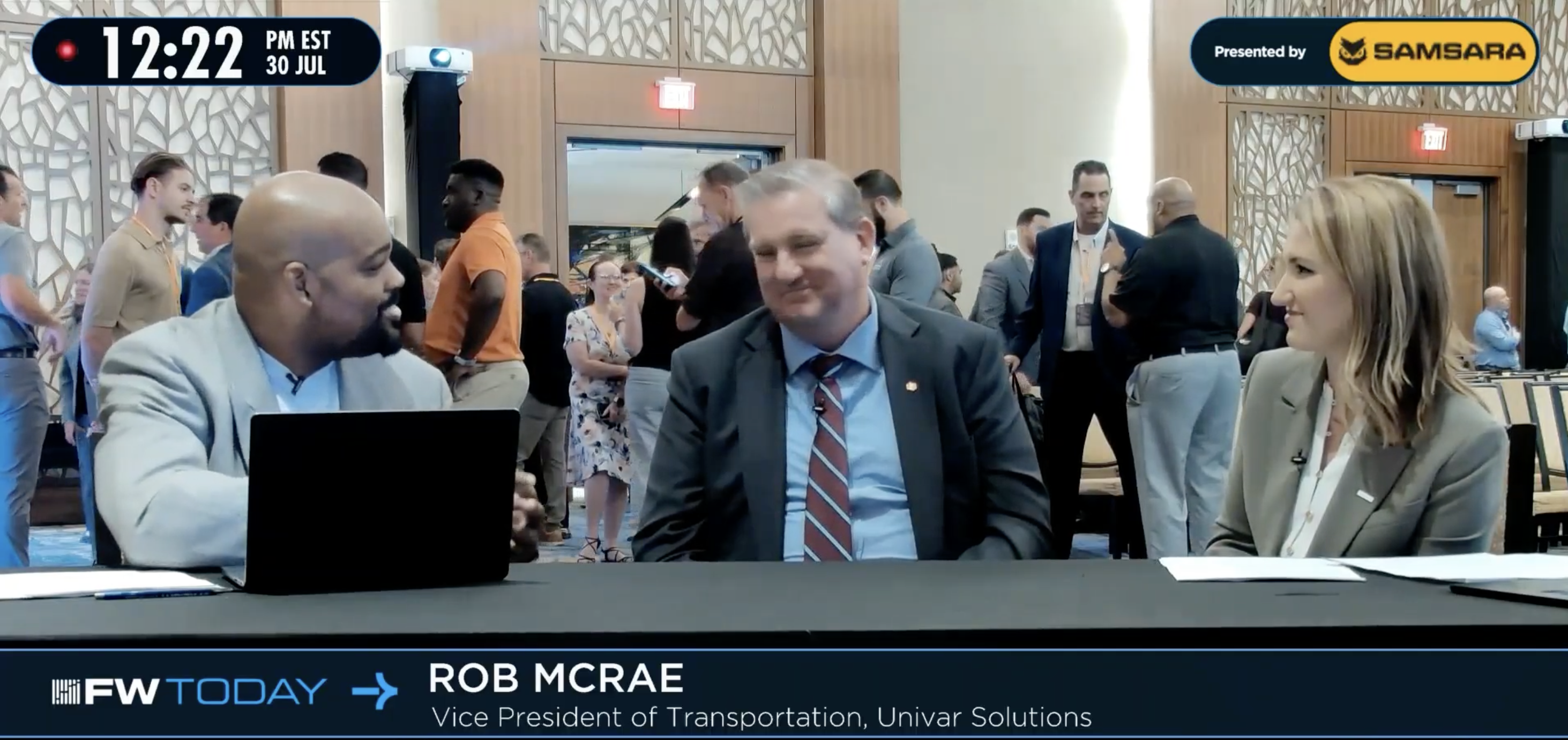
Trucking capacity that evaporated over the past four years is not coming back, according to Ben Kavlinar, EVP of Operations at LRT Solutions, speaking at the Univar annual carrier kickoff event. The result is a structurally tighter market that is raising barriers for new entrants and squeezing shippers even before a meaningful volume rebound takes hold.
Structural Barriers Keeping Capacity Off the Road
Kavlinar cited a compounding set of barriers that are effectively locking out new market participants. "You've got a couple of things that are being tough for new entries into this business," he said. "One of the costs of equipment — we always talk about cost of equipment, it's continued to skyrocket. But on the other hand, we've got all these negative things coming at us with these verdicts. So insurance is going to be a big thing in the near future. It already is and it's going to continue to be worse."
"With a lot of capacity coming out of the space over the last 4 years, it's given us an opportunity now that volumes are starting to increase a little bit. But I don't know if it's necessarily a volume increase as much as it is a capacity decrease." — Ben Kavlinar, EVP of Operations, LRT Solutions
According to FreightWaves, the backdrop is a freight market that endured what one host at the event called a roughly four-year "freight recession." Conditions have since shifted, with tender rejections now running in the 15% range — elevated compared to the same period in prior years, even after a softer stretch in recent weeks. The host attributed the near-term softness partly to seasonal factors, expecting July and August to remain quieter before activity picks back up.
How Carriers and Shippers Are Responding
LRT Solutions, a Fort Payne, Alabama-based logistics provider offering LTL and full truckload services, is using the tightening environment to pursue new shipper relationships and fill network gaps, according to Kavlinar. He described the current moment as well-suited for carriers to get in front of prospective customers before the next round of bid cycles. Safety performance, he added, has become table stakes, making service quality the primary differentiator.
On technology, Kavlinar acknowledged that LRT's scale limits its ability to make large AI or tech investments, but the company is extracting value from tools embedded in its existing transportation management system (TMS). The priority remains freeing up staff bandwidth at a manageable cost rather than chasing high-dollar platforms. "For us, it's just really being in front of our customers and being available to them and being very responsive," he said.
Outlook: More Tightening Ahead
Kavlinar said he caught a freight market update delivered earlier in the day by FreightWaves SONAR's head of Freight Market Intelligence and found himself largely in agreement — though he described his own outlook as more bullish. He expects the marketplace to become increasingly active over the next few years as structural supply constraints persist and the cost of entering the trucking business continues to climb.
| Capacity Crunch Indicators | Current Level | Trend |
|---|---|---|
| Tender rejections | ~15% | Elevated vs prior years; seasonal dip in July-August |
| New entrant barriers | High | Rising equipment costs, nuclear verdicts, insurance premiums |
| Capacity leaving market | Ongoing | Four-year drain, little sign of return |
Implications for Shippers and Operators
Freight forwarders and logistics managers should prepare for a persistent tight trucking market. With tender rejections near 15%, securing capacity on short notice will remain challenging, especially during seasonal peaks. Shippers may need to extend bid cycles, strengthen relationships with core carriers, and emphasize safety and service performance to attract available capacity. The structural exit of capacity — driven by costs and legal risks — means the market may not loosen even if volumes grow modestly.
Watch List
- Insurance cost developments: further increases could push more carriers out.
- Nuclear verdict trends: any high-profile jury awards could accelerate capacity exits.
- Seasonal volume patterns: July and August softness followed by fall ramp-up.
- AI and TMS adoption among smaller carriers: how they manage costs will affect rate competitiveness.
Sources: