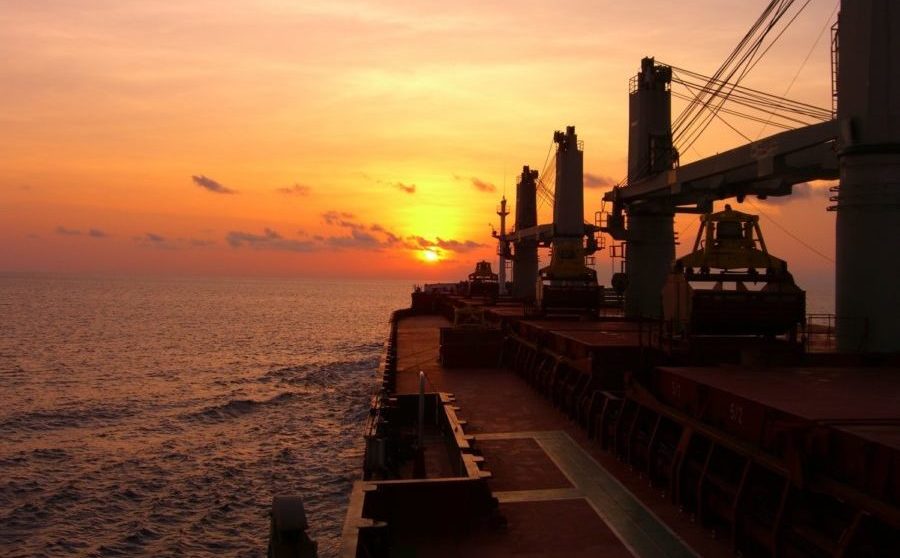
Dry bulk freight market participants must now treat volatility not as an operational risk to be minimised but as the fundamental business model, according to Thomas Zaidman, CEO of Sagitta Marine SA, as reported by Splash247. Freight rates no longer simply reflect cargo demand; they reflect disruption.
From Cyclical to Disruption-Driven Volatility
For decades, the dry bulk freight market could be understood through a relatively straightforward framework: rates rose and fell with Chinese steel production, agribulk seasonality, fleet growth and global trade cycles. Volatility was accepted as part of the business but remained predictable. Today's market is increasingly shaped by geopolitics, climate disruption, infrastructure bottlenecks and financial market behaviour, according to Splash247, citing Zaidman.
Dry bulk freight rates strengthened significantly through the first half of 2026, supported by resilient Capesize demand and tighter effective vessel supply — not because of stronger cargo growth, the article notes.
Geopolitical and Infrastructure Shocks Reshape Fleet Supply
Two examples dominate: the continuing geopolitical instability in the Middle East and water-level restrictions at the Panama Canal. While dry bulk cargoes are less directly exposed than container shipping or crude tankers, Red Sea security issues have forced diversions around the Cape of Good Hope, extending voyage durations by thousands of nautical miles and absorbing vessel capacity without any ship leaving the fleet. Similarly, Panama Canal restrictions, though regional, have become a global freight market variable. The article states that fleet supply curves will increasingly reflect not only how many ships are built but also how efficiently they respond to changing requirements.
Hedging Evolves to Manage Geopolitical Uncertainty
Historically, swaps and options smoothed cyclical earnings and managed seasonal exposure. Today, they are deployed to manage geopolitical uncertainty itself, according to Zaidman. The challenge: geopolitical risk cannot be forecast like Brazilian iron ore exports or US grain harvests. Markets can spend weeks pricing fundamentals before moving several hundred dollars per day within hours after an unexpected military escalation, canal restriction or regulatory announcement. Increasing participation from systematic and algorithmic traders has accelerated this process, compressing the time for discretionary risk management and often exaggerating short-term price movements.
Splash247 reports that some observers argue this makes freight hedging less effective, but Zaidman counters that the purpose is no longer to eliminate risk but to manage uncertainty sufficiently well to make commercial decisions with confidence. Reducing earnings volatility now has higher value than attempting to forecast market direction.
Technology — including artificial intelligence, satellite vessel tracking, AIS data, port congestion analytics and voyage optimisation models — enhances market transparency, but no algorithm can accurately price the probability of these disruptions, the article adds.
Contracting Models Under Pressure
Long-term contracts of affreightment (COAs) remain essential for miners, utilities and agricultural exporters seeking transport security. However, the nature of these contracts is evolving. The report suggests that the new volatility environment is gradually shifting freight contracting itself, though specific structural changes are still unfolding.
Comparison: Traditional vs. Current Market Drivers
| Dimension | Traditional Factors | Current Factors (Per Zaidman) |
|---|---|---|
| Primary drivers | Chinese steel, agri seasonality, fleet growth | Geopolitics, climate disruption, infrastructure bottlenecks, financial market behaviour |
| Rate behaviour | Follows cargo demand cycles | Reflects disruption (e.g., Red Sea diversions, Panama Canal restrictions) |
| Hedging purpose | Smooth cyclical earnings | Manage geopolitical uncertainty |
| Market speed | Relatively predictable | Hours can see hundreds of dollars moved by news |
Implications for Operators and Shippers
Freight forwarders and logistics managers should reassess their hedging programmes. The traditional focus on seasonal exposure must be supplemented with geopolitical scenario planning. Diversified routing options and flexibility in voyage execution — as highlighted by the Cape of Good Hope and Panama Canal examples — become strategic necessities. Contract negotiation should incorporate clauses that allow adjustment to sudden disruption-driven rate shifts.
Watch List
- Middle East geopolitical developments and Red Sea security
- Panama Canal water levels and any further restrictions
- Climate-related disruptions (e.g., droughts affecting water levels or storms damaging infrastructure)
- Regulatory announcements that alter vessel routing or emission compliance
- Algo-trading impacts on short-term freight rate volatility
The dry bulk business model has irrevocably changed: volatility is no longer the risk — it is the operating environment.
Sources: