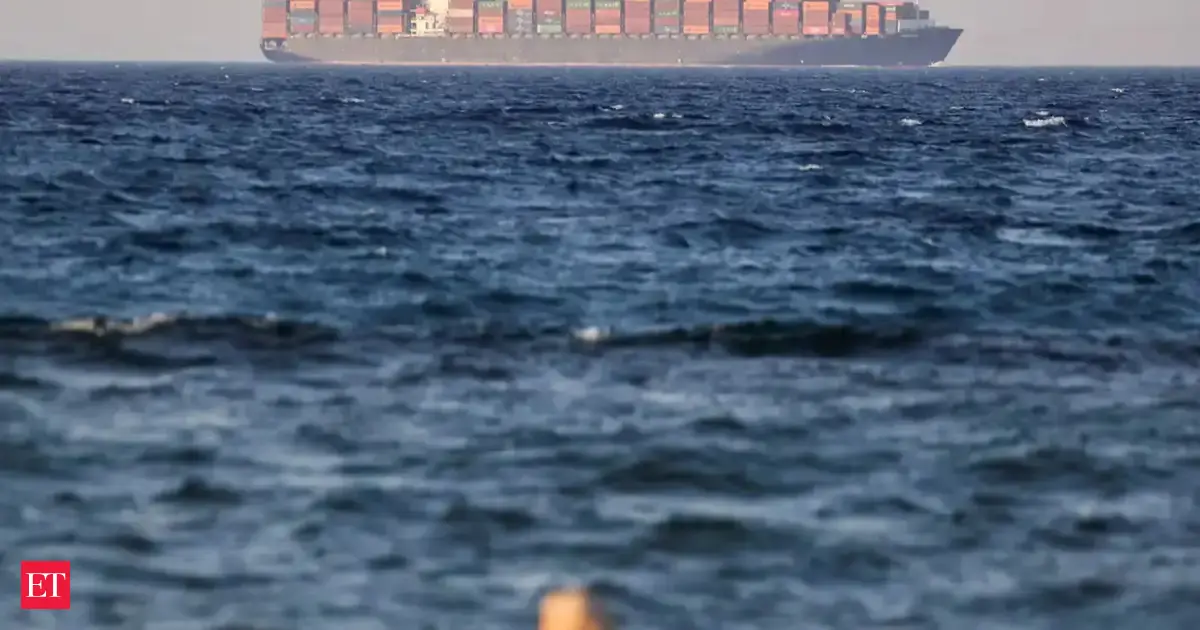
Four cargo vessels carrying urea, DAP and sulphur — which successfully navigated the Strait of Hormuz last week amid ongoing West Asia tensions — are now en route to destination ports in India, according to the Ministry of Chemicals and Fertilisers.
The ships are headed to Krishnapatnam, Kakinada, Paradeep and Mundra, the ministry said in a statement on Monday. Upon arrival, the cargo will be offloaded to supplement existing fertiliser buffers and meet ongoing agricultural requirements ahead of the Kharif season.
Stock Position and Supply
The ministry reported that cumulative fertiliser stocks stood at 196.08 lakh tonne as of June 22, up from 168.67 lakh tonne a year ago. Key inventory comparisons are shown in the table below:
| Fertiliser Type | Stock as of June 22 (lakh tonne) | Stock a year ago (lakh tonne) |
|---|---|---|
| Urea | 81.44 | 69.21 |
| DAP | 20.92 | 16.00 |
| NPKs | 55.91 | 46.13 |
| Muriate of Potash (MoP) | 12.68 | 10.68 |
| Single Super Phosphate (SSP) | 25.13 | 26.65 |
Domestic fertiliser production has reached 133.12 lakh tonne, while imports stand at 43.69 lakh tonne since the crisis began on March 1, the ministry said.
Global Tender and Supply Sources
India has also contracted 17.70 lakh tonne of urea in its latest global tender, taking total secured supplies of urea and P&K fertilisers to over 90 lakh tonne for the Kharif season, the ministry said.
Urea supplies have been locked in from Oman, Malaysia, Vietnam, Georgia, Nigeria, Russia, Finland, Egypt, Algeria, Turkey and the Netherlands. DAP and NPK supplies are being routed via the Red Sea from Russia, Morocco, Egypt, the US, Jordan, South Korea, Tunisia and Saudi Arabia.
Sales and Distribution
Total fertiliser sales since March 1 reached 153.4 lakh tonne, ahead of 140.2 lakh tonne in the corresponding year-ago period. This comprised 79.1 lakh tonne of urea, 34.8 lakh tonne of NPKs and 19.8 lakh tonne of DAP.
The ministry said it continues to work closely with state governments, distribution agencies and cooperative networks to ensure fertiliser security remains "strong, stable and well managed".
Operational Implications
For logistics managers and port authorities at Krishnapatnam, Kakinada, Paradeep and Mundra, the arrival of these four vessels will require coordinated berth allocation and discharge planning to handle bulk fertiliser volumes. The increased inventory levels (up 16.3% year-on-year) suggest that storage capacity and last-mile distribution must be adequately prepared. Freight forwarders and bulk carrier operators servicing Indian fertiliser imports should note the continued reliance on the Red Sea route for DAP and NPK supplies, as well as the diverse sourcing of urea from multiple global origins, which mitigates single-point disruption risks.
Watch list
- Further developments in West Asia tensions could affect future Strait of Hormuz transits.
- Red Sea route safety for DAP and NPK shipments from Russia, Morocco, Egypt, and other suppliers.
- Ongoing global tender results and contracting activity for urea and P&K fertilisers.
- Kharif season demand patterns and potential adjustments in inventory drawdown rates.
Sources: