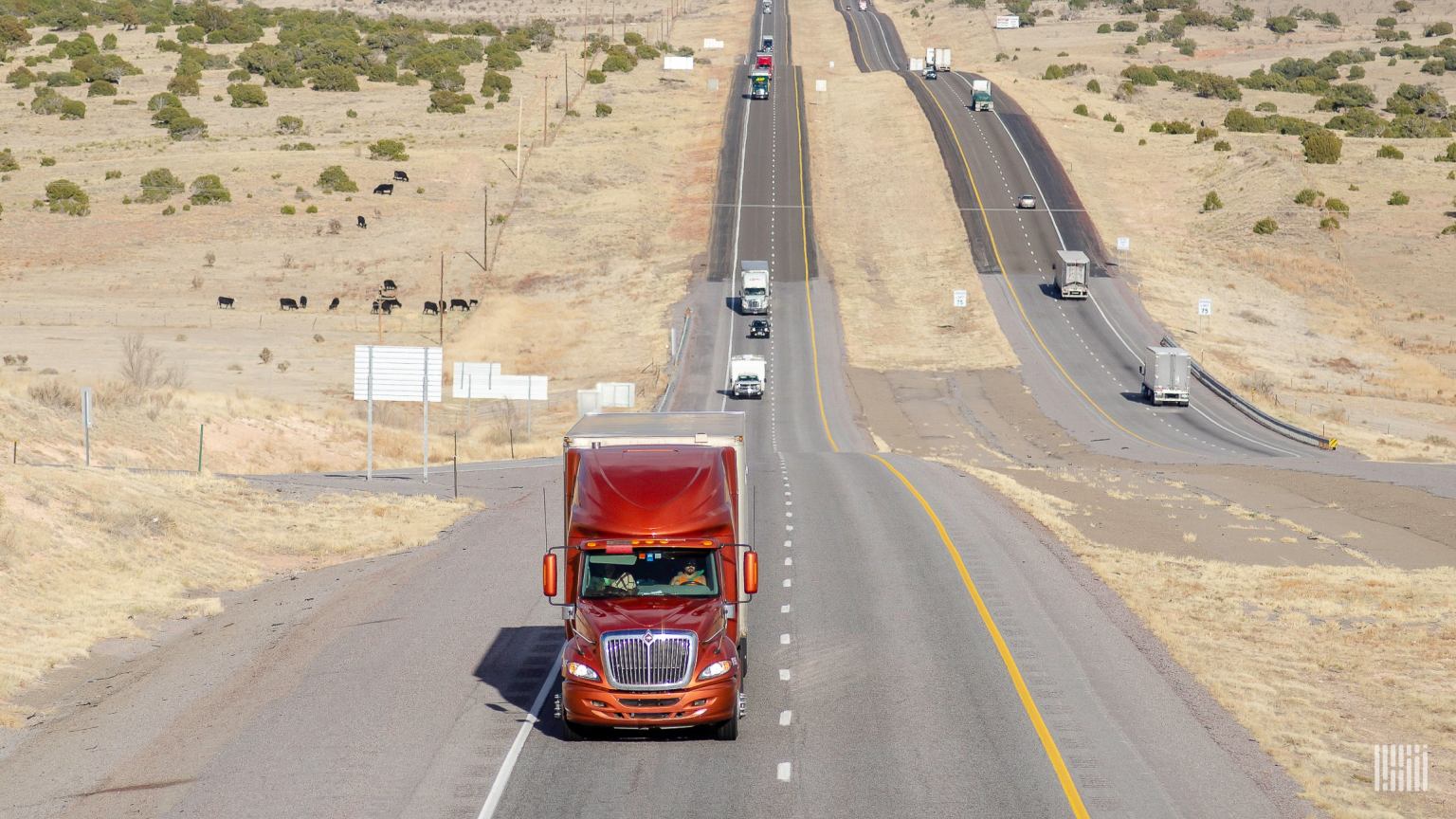
The newly approved Laredo Gateway Industrial Railway (LGIR) in South Texas will give shippers at the nation's busiest U.S.-Mexico trade gateway a new option to move cargo between trucks and rail without leaving the region, according to developers Kraus Development and Ironhorse Resources. The 2.6-mile short-line railroad, authorized by the U.S. Surface Transportation Board (STB) on June 17, is designed to expand freight movement at a border crossing that handles between 14,000 and 18,000 commercial trucks every day.
“We just received the STB authorization,” Ben Escarcega, partner at Kraus Development, told FreightWaves. “Breaking ground and construction will begin three to six months from now. And then the first train service should be available in about a year.” The STB’s approval followed a 15-month process that included a comprehensive environmental review, Escarcega noted.
The railway will serve approximately 1,900 rail-served acres within Kraus Development’s 3,314-acre Gateway Industrial Park at the intersection of Interstate 35 and State Highway 255 north of Laredo. Ironhorse Resources will operate the short-line railroad, connecting the park directly to Union Pacific’s Laredo Subdivision.
Rail Complements Trucking at Busiest Inland Port
Laredo’s two border bridges — the World Trade and Colombia-Solidarity bridges — process 14,000 to 18,000 commercial trucks daily, making it the busiest inland port in the U.S. In April, Laredo handled $33.35 billion in trade, a 21% increase from a year earlier, accounting for nearly 39% of all U.S.-Mexico trade by value, according to FreightWaves.
While Laredo has long been synonymous with truck freight, Escarcega emphasized the new railroad is intended to complement trucking, not compete with it. “We’re looking to provide a new platform, which is a completely new service, which is a complement to the supply chains of the cross-border shippers,” he said.
The project combines rail-served warehouses, cross-docks, manufacturing sites, and truck-to-rail transloading facilities in one location. Developers envision the park handling finished vehicles, consumer goods, aggregates, steel, paper products, fuels, and other bulk commodities.
| Metric | Value | Source |
|---|---|---|
| Daily commercial truck crossings (Laredo) | 14,000–18,000 | FreightWaves |
| April trade value handled | $33.35 billion | FreightWaves |
| Year-over-year increase | 21% | FreightWaves |
| Share of total US-Mexico trade (April) | 39% | FreightWaves |
According to Vidal Cantu, vice president of business development and acquisitions at Kraus Development, the goal is to build a true multimodal logistics hub. “Our goal is to build a multimodal park in an area that has high-quality infrastructure, both highway and rail, to just provide as many efficiencies to the market as possible,” Cantu told FreightWaves.
Building Supply-Chain Resiliency
Escarcega said one word repeatedly surfaced during conversations with manufacturers and logistics executives: resiliency. “This is a key word which we feel like we are contributing to the marketplace, and its resiliency in their supply chains,” he said. He pointed to Mexico’s growing automotive sector as an example, noting that automakers often rely on rail to move finished vehicles into the U.S.
Developers say the park’s location offers direct access to Union Pacific’s network through Ironhorse Resources while also providing efficient truck access via Interstate 35, State Highway 255, and the nearby Colombia Solidarity Bridge.
Shipper and Operator Implications
For shippers currently relying solely on trucking across the Laredo border, the new rail park provides an alternative that can reduce congestion and offer cost efficiencies for bulk commodities and finished vehicles. Logistics managers and 3PL operators should begin evaluating transload opportunities at the park, as rail-served warehousing and cross-dock facilities will be available when rail service starts approximately one year after construction begins. The park’s location near major highways and the Colombia-Solidarity bridge also supports seamless truck-rail transfers.
Watch List
- Construction timeline: Breaking ground is expected 3-6 months from June 2026; any delays could push back first rail service.
- Union Pacific capacity: The connection to UP’s Laredo Subdivision could be impacted by overall rail demand on the corridor.
- Automotive sector growth: Continued expansion of Mexico’s automotive production could drive demand for rail shipments of finished vehicles through Laredo.
- Trade volumes: Laredo’s trade growth (21% YoY in April) may accelerate, putting additional pressure on infrastructure even with the new rail capacity.
Sources: