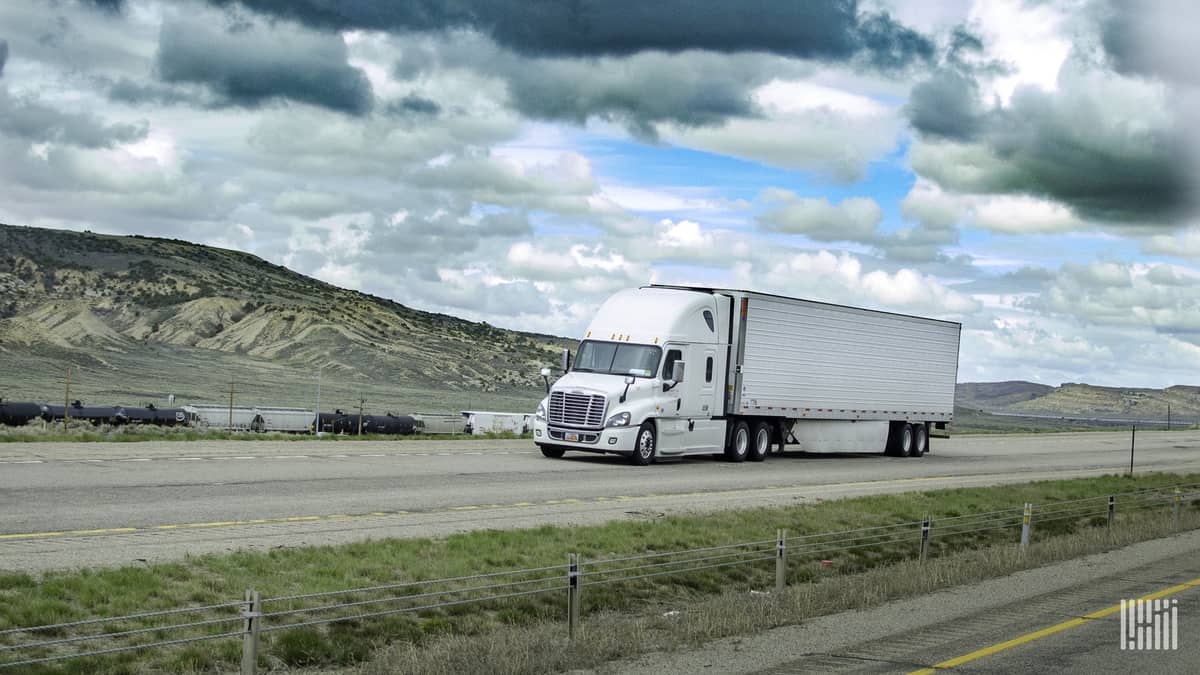
The U.S. Department of Transportation (DOT) has allocated $62 million in federal grants to tackle the chronic truck parking shortage in Kentucky, Wyoming, Louisiana, Mississippi, and Illinois — a move expected to ease driver delays, improve hours-of-service compliance, and reduce detention costs for shippers and carriers.
The funding is part of a larger $1.73 billion package awarded under the Better Utilizing Investments to Leverage Development (BUILD) grant program, which originated in 2009. The announcement by U.S. Transportation Secretary Sean Duffy covers 127 projects across 52 states, territories and the District of Columbia, according to FreightWaves.
Grant Breakdown
The largest share of the $1.73 billion — $1.3 billion, or roughly 77 percent — goes to roads and bridges. This includes $24 million for North Dakota to install modern pavement and high-tension cable guardrails along 10 miles of I-94. However, the truck parking allocation is a targeted response to a persistent industry pain point.
| Category | Amount | Key Projects |
|---|---|---|
| Roads and bridges | $1.3 billion | I-94 improvements in North Dakota ($24M) |
| Truck parking | $62 million | Kentucky, Wyoming, Louisiana, Mississippi, Illinois |
| Port infrastructure | $136.8 million | Alaska Railroad Port of Seward dock widening ($8.5M) |
| Transit projects | $169.9 million | Milwaukee County Transit System maintenance facilities ($14.7M) |
| Aviation | $11 million+ | Airport roadways at Coolidge Municipal (AZ) and New Orleans International (LA) |
| Freight and passenger rail | $87.7 million | Port of Corpus Christi Authority rail upgrades ($24.3M) |
Truck Parking Focus
The $62 million designated for truck parking will be distributed among five states, with $25 million going to Kentucky to add new parking spots at seven rest areas on four major truck corridors, according to the source. The precise allocations for Wyoming, Louisiana, Mississippi, and Illinois were not individually broken out in the announcement, but the combined investment aims to address a nationwide shortage that forces drivers to exceed hours-of-service limits or park in unsafe locations.
Port and Rail Upgrades
Beyond truck parking, the grants include $136.8 million for port infrastructure to expand capacity and reduce bottlenecks. Notably, $8.5 million will go to the Alaska Railroad to widen the Port of Seward’s freight dock by 300 feet, enabling vessels to load, unload, and transfer cargo more quickly. For freight rail, $87.7 million is allocated, including $24.3 million for the Port of Corpus Christi Authority in Texas to modernize and lengthen railways at the Port of Corpus Christi Inland Port. These projects are designed to improve intermodal connectivity and cargo throughput for shippers.
Implications for Operators
For trucking companies and logistics managers, the $62 million truck parking investment directly addresses a critical operational bottleneck. Additional parking capacity on key corridors can reduce driver downtime, lower detention costs, and improve on-time delivery performance. The port and rail upgrades also promise smoother cargo flows, particularly for Alaska and Texas gateways. While the BUILD grants represent a significant federal push, the truck parking shortage remains a nationwide issue that will require sustained investment.
Logistics professionals should monitor the rollout of these funds in the five designated states, as new parking facilities could shift routing decisions and reduce dwell times at terminals.
Sources: