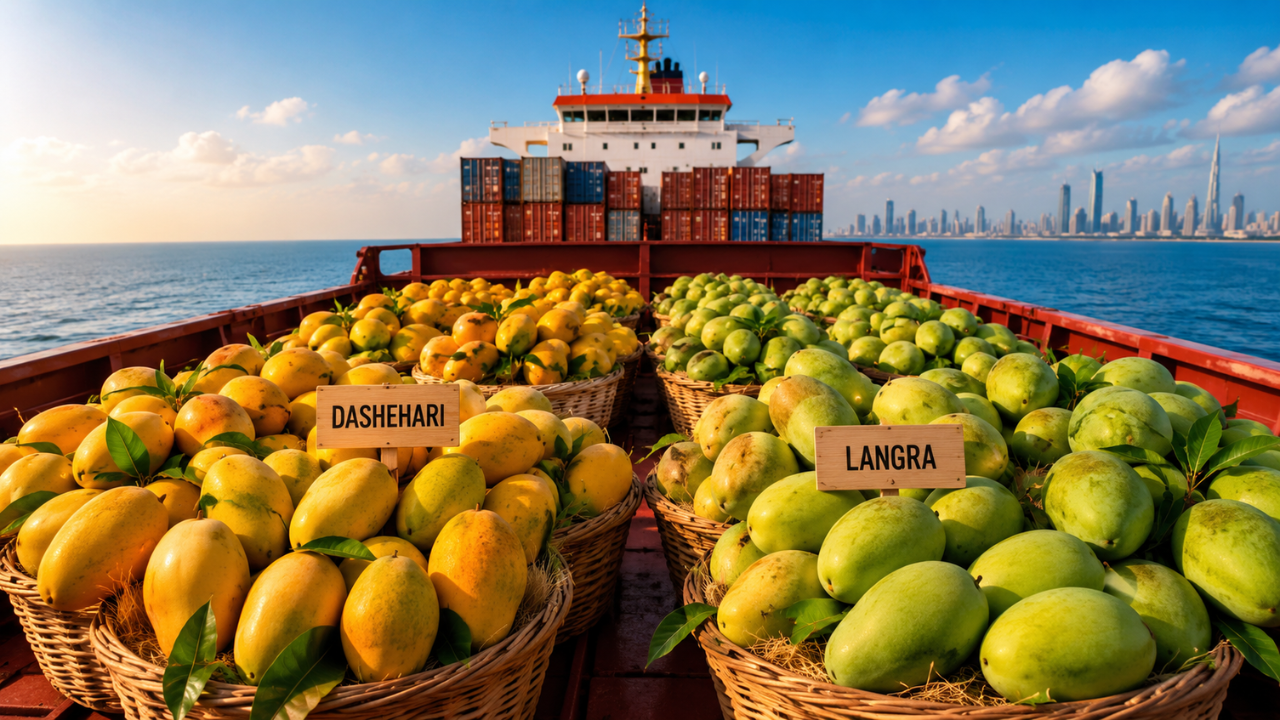
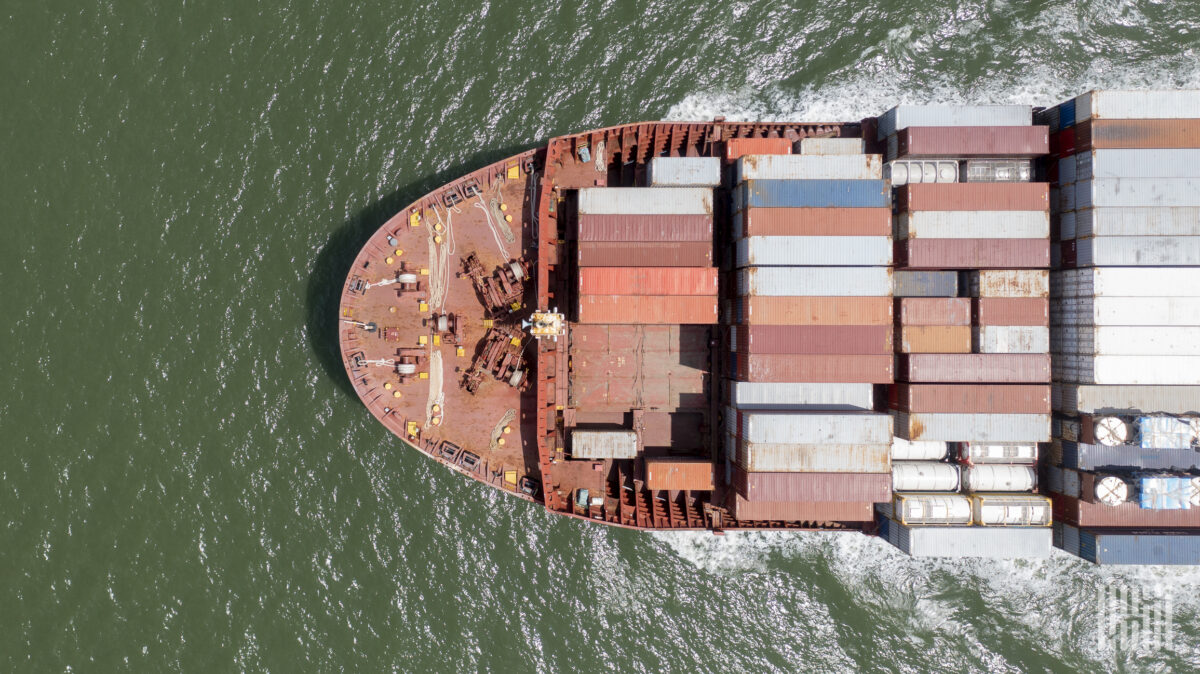
A pioneering sea shipment of 4.3 tonnes of Banganapalli mangoes from Andhra Pradesh to Singapore has demonstrated a new cold chain corridor that cuts freight costs by an estimated 90% compared to air, making large-scale perishable exports economically viable for the first time. According to a report in The Hindu BusinessLine, the consignment arrived in Singapore in 16 days with ‘excellent condition, no disease incidence, and quality comparable to air-shipped mangoes’.
Cold Chain Breakthrough
This operational milestone was enabled by a scientific sea shipment protocol developed by the ICAR-Central Institute for Subtropical Horticulture (ICAR-CISH) in Lucknow, in collaboration with the Agricultural and Processed Food Products Export Development Authority (APEDA). The protocol integrates end-to-end quality assurance covering residue-free production, Good Agricultural Practices (GAP), scientific harvesting, grading, packing, and post-harvest management. According to the report, the technology extends mango shelf life to up to 30 days under sea shipment conditions — more than sufficient for the 16-day transit to Singapore.
Freight Cost Comparison: Sea vs. Air
For logistics operators, the cost differential is transformative. The source reports the following per-kilogram shipping costs:
| Mode | Estimated Cost (per kg) |
|---|---|
| Air freight | ₹150–250 |
| Sea freight | ₹13–20 |
The sea route reduces shipping costs by a tenth — a saving of ₹130–230 per kg — making exports much more affordable for producers and consumers alike.
Market Expansion Potential
The success of this shipment is expected to facilitate expansion of Indian mango exports to Singapore, Malaysia, Hong Kong, and other markets, where current imports are estimated at $4–5 million. A larger opportunity exists in the UAE, valued at $20–25 million, according to the Government statement reported in the article. “This is a significant milestone in expanding affordable and large-scale mango exports to international markets,” the statement said.
Implications for Logistics Operators
For ocean carriers and cold chain providers, this development signals a new demand lane for reefer containers out of Indian ports — especially Kakinada or Visakhapatnam in Andhra Pradesh — to Singapore and potentially the UAE. The 16-day transit time fits within standard reefer container availability windows. Shippers should evaluate container availability and pre-cooling infrastructure at origin. The protocol’s reliance on Good Agricultural Practices and residue-free production means exporters will need end-to-end traceability systems, potentially creating partnerships with third-party logistics (3PL) providers offering cold chain compliance auditing.
Watch List
- Reefer container capacity on the India–Southeast Asia and India–UAE lanes: any shortage could constrain volume growth.
- Customs clearance timelines in Singapore and the UAE for perishable goods — delays could negate shelf-life gains.
- Adoption rate of the ICAR-CISH/APEDA protocol by other mango-producing states and for other fruits (e.g., Alphonso, Kesar).
- Competing air cargo rates if fuel prices drop, potentially reducing the sea-freight cost advantage.
Sources: