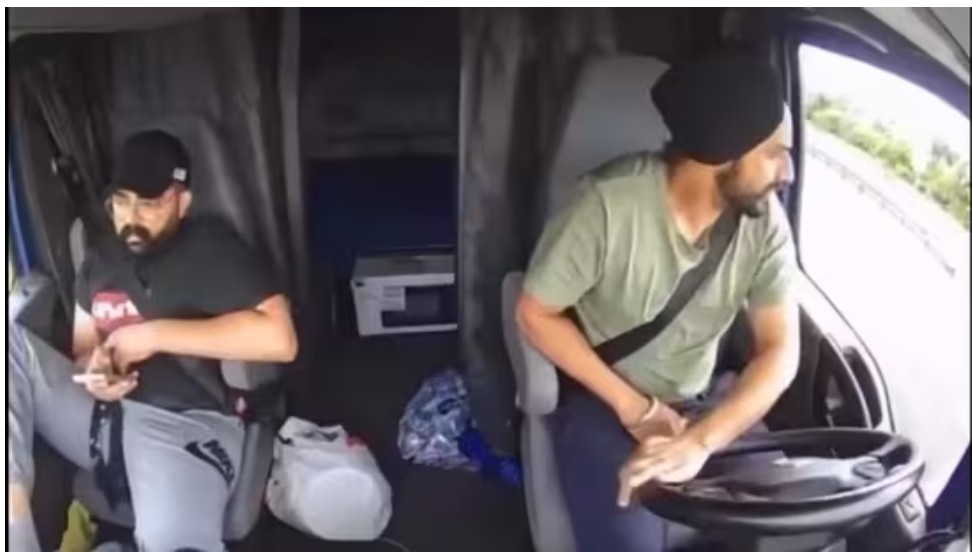
A Florida lawsuit against C.H. Robinson (NASDAQ: CHRW) could reshape freight broker liability standards after the landmark Montgomery decision. The case, filed in St. Lucie circuit court by the estate of Faniola Joseph on behalf of her surviving daughter Angeline Daudin, targets the largest U.S. broker for a fatal August 2025 crash that killed three people in a minivan that collided with a truck driven by Harjinder Singh.
The suit centers on Singh's attempted U-turn across multiple lanes of Florida's Turnpike into a "crossover slot" designed for official vehicles, not tractor-trailers. "For a commercial motor vehicle such as the truck operated by Singh, attempting a U-turn through this emergency crossover is expressly forbidden by law and the posted signage," the lawsuit states. The resulting crash drove the minivan under the trailer, killing all three occupants. Singh, a driver for carrier White Hawk, was in the U.S. illegally at the time and is being held without bond.
Post-Montgomery legal landscape
The lawsuit comes weeks after the U.S. Supreme Court's unanimous decision in Montgomery v. Caribe Transport II, which held that the Federal Aviation Administration Authorization Act's (F4A) safety exception allows state tort actions against brokers that hire unsafe carriers. C.H. Robinson was the broker in that case as well, and it had led the unsuccessful fight before the Supreme Court to keep brokers outside the safety exception. According to FreightWaves, the Montgomery decision "has ended that defense for the entire brokerage community in all jurisdictions."
Allegations against C.H. Robinson
The lawsuit alleges C.H. Robinson "owed a duty to exercise reasonable care in the selection and retention of the motor carrier it hired to transport the subject shipment, including a duty to select or retain a motor carrier that it knew or should have known was unfit, unsafe, unqualified or otherwise reasonably likely to cause harm to the motoring public." The carrier in question, White Hawk, was hired by C.H. Robinson for the load. However, a key argument expected from C.H. Robinson is that it did not broker the specific load being hauled by Singh, according to the source.
Implications for the logistics sector
This case is one of the first post-Montgomery trials to target a freight broker, and specifically the industry's largest player. It tests how courts will apply the safety exception beyond the facts of the Montgomery case. For freight forwarders, 3PLs, and brokerages, the outcome could establish new due diligence standards for carrier selection and retention. The lawsuit references not only C.H. Robinson's "own represented standards" but also "the custom and practice of the brokerage industry," potentially raising the bar across the sector.
Watch list
FreightWaves reported that the political nature of the crash — involving an illegal immigrant driver with a California CDL — has drawn wider attention. The industry will closely watch pre-trial motions, particularly whether C.H. Robinson can avoid direct liability by proving it did not broker the load. Any ruling that clarifies broker responsibility for carrier safety practices could influence how brokers vet carriers and negotiate insurance coverage.
Sources: