
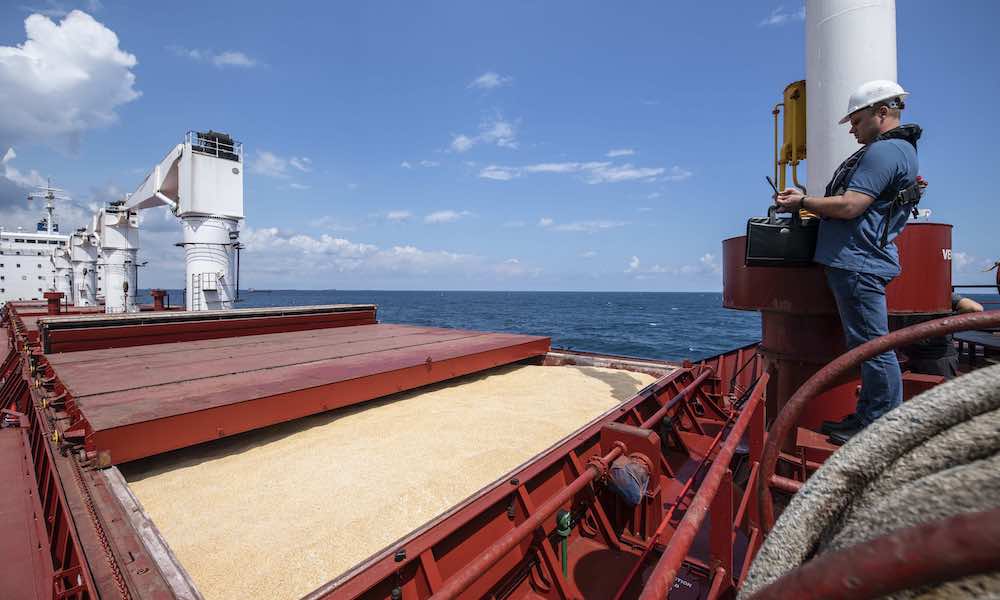
More than 150 ships were left waiting to move through Argentine ports and river terminals before port and river pilots resumed accepting assignments on Tuesday evening, after the government of President Javier Milei agreed to suspend a contested pilotage overhaul, according to Splash247. The agreement includes a temporary suspension of Decree 690/2026, a 20% reduction in pilotage charges, and the creation of a joint working group to review the reforms.
Backlog piles up across grain and fuel terminals
Clearing the backlog across Buenos Aires, the Paraná-Paraguay waterway and Argentina's principal maritime terminals is expected to take time, Splash247 reported. Local estimates of the number of affected vessels ranged from 140 to 185. Nearly 3m tonnes of cargo were caught up in the disruption, including corn, soyabeans, wheat, agricultural products and fuels. Private estimates put potential losses at as much as $100,000 per vessel per day.
Ports affected and diversion routes
As pilotage services became unavailable at Buenos Aires, Dock Sud, La Plata, Zárate-Campana, Bahía Blanca and Quequén, some ships were redirected to Montevideo and ports in southern Brazil, according to Splash247.
The scale of the standstill is reflected in the following figures:
| Metric | Value |
|---|---|
| Vessels waiting (local estimates) | 140–185 |
| Cargo caught up in disruption | Nearly 3m tonnes |
| Estimated losses | Up to $100,000 per vessel per day |
| Pilotage charge reduction | 20% |
| Suspended decree | 690/2026 |
Reform details and pilot safety concerns
President Javier Milei's government introduced the decree last week, arguing that regulations dating from 1991 had restricted competition and inflated logistics costs, Splash247 reported. The reform opened the register of qualified pilots, introduced maximum tariffs, loosened rules governing pilot boats and reduced the circumstances in which vessels must employ a local pilot. Certain foreign masters would have been permitted to navigate without one after demonstrating local knowledge and English-language competence.
Pilots argued that the changes threatened navigation safety on some of South America's most difficult and commercially important waterways, according to Splash247.
Implications for shippers and operators
Ships are now beginning to move, but Splash247 reported that clearing the backlog across Buenos Aires, the Paraná-Paraguay waterway and Argentina's principal maritime terminals is expected to take time. Affected shippers should track the joint working group's review of Decree 690/2026 and plan for continued disruption while the queue of vessels is processed.
Watch list
- Progress of the joint working group reviewing Decree 690/2026 and whether the reform returns in modified form.
- Time required to clear the backlog of 140–185 vessels at the affected Argentine terminals.
- Whether redirected cargo flows to Montevideo and southern Brazil remain elevated.
- Any further industrial action if the working group fails to reach agreement.
Sources:


