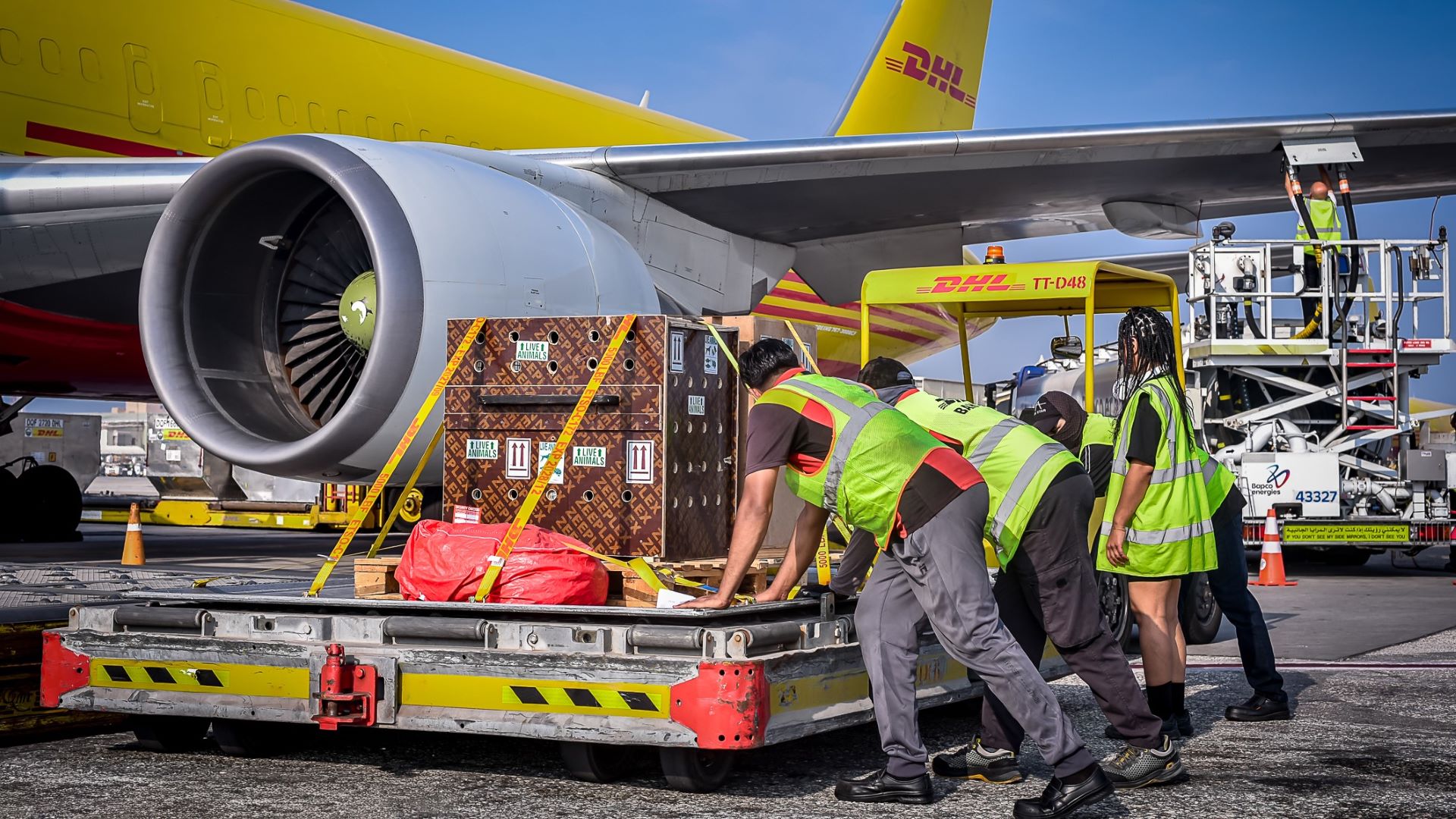
DHL Global Forwarding has signed up to use wind-powered cargo vessels developed by French startup Vela, with the first commercial transatlantic sailings expected in 2027, according to Splash247. The service marks a significant step in bringing wind propulsion from demonstration projects into regular commercial freight operations.
Vessel Specifications & Capabilities
Vela is developing aluminium trimarans measuring around 67 metres in length, Splash247 reported. Each vessel will be able to carry up to 415 tonnes of cargo — roughly five times the volume of a freight aircraft, though far smaller than a conventional containership. The trimarans are designed to cruise at around 14 knots using wind propulsion, and rather than following fixed liner-style routes, they will optimise voyages around weather systems and wind conditions.
According to Vela, the service could reduce greenhouse gas emissions by up to 99% compared with air freight and about 90% compared with conventional sea transport. The company is targeting high-value and time-sensitive cargoes where shippers seek faster alternatives to traditional ocean freight with a lower carbon footprint than air cargo — specifically pharmaceuticals, cosmetics and luxury goods.
Environmental Claims at a Glance
| Comparison | Emission Reduction Claimed by Vela |
|---|---|
| vs Air freight | Up to 99% |
| vs Conventional sea transport | Around 90% |
Commercial Implications for Shippers
DHL's involvement provides Vela with an important commercial anchor, Splash247 noted, as wind-powered shipping startups attempt to scale from pilot projects to regular services. For logistics managers and freight forwarders handling high-value transatlantic cargoes, this service presents a new modal option that sits between air freight (fast, high-carbon) and conventional ocean (slow, lower-carbon). However, capacity will initially be limited — each voyage carries only 415 tonnes — making it best suited for smaller, premium shipments.
Vela plans to build a fleet of five trimarans by 2030, enabling weekly transatlantic sailings, with additional cargo space also made available to other companies. This expansion timeline means the service will remain niche in the near term, but could grow into a reliable weekly option for certain lanes and verticals.
Watch List
The project forms part of a wider revival of wind propulsion in commercial shipping, something that was very much in evidence at the Posidonia exhibition in Greece earlier this month, according to Splash247. Factors to monitor include:
- Vela's progress in building the five-ship fleet by 2030
- Adoption by other freight forwarders and beneficial cargo owners
- Regulatory and competitive developments in wind-assisted propulsion
Sources: