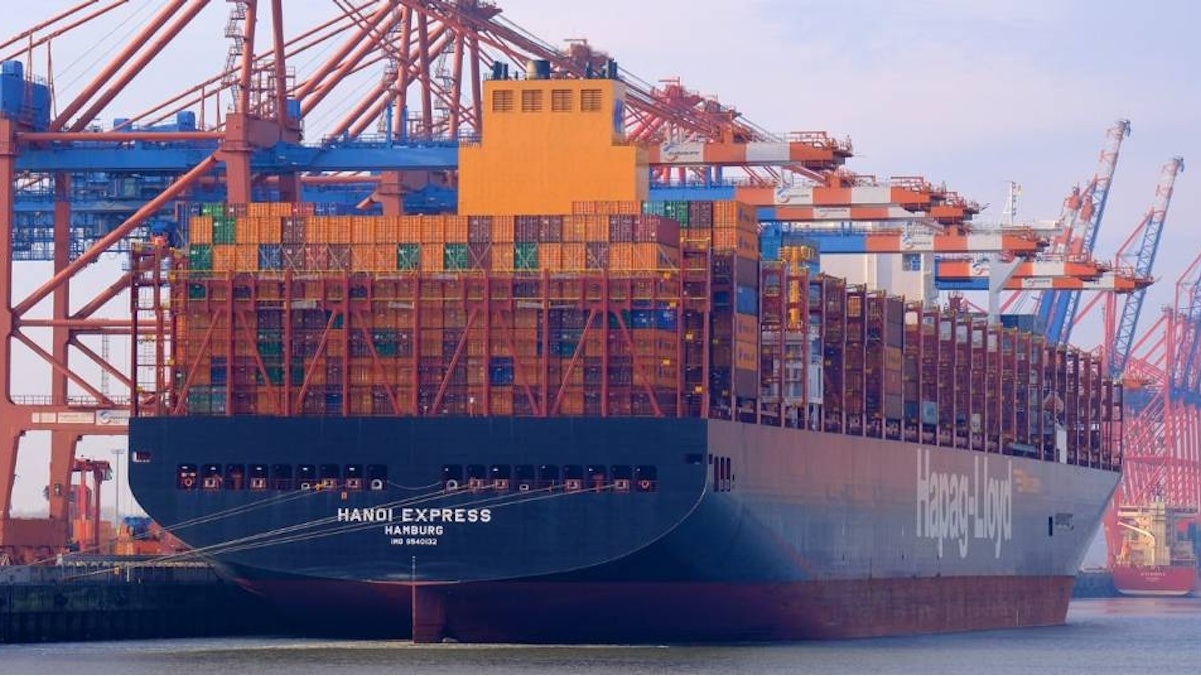
German container line Hapag-Lloyd is acquiring a 20% stake in Eurogate Container Terminal Hamburg, the second-busiest box hub at the Port of Hamburg, according to FreightWaves. The acquisition gives the world's fifth-largest liner operator greater control over a key European gateway, potentially improving reliability and capacity for shippers.
Context of the Deal
Hapag-Lloyd's subsidiary Hanseatic Global Terminals (HGT) today signed a term sheet to acquire the stake, according to FreightWaves. The transaction remains subject to the negotiation and finalization of binding agreements. No terms were disclosed. HGT is an independent entity within the Hapag-Lloyd Group; it previously acquired a 60% stake in HHLA's Altenwerder terminal in 2025.
This acquisition comes as container lines seek greater control over the global ocean supply chain. Vertical integration helps secure capacity, expand control over gateway operations, and support hub strategies, FreightWaves reported.
Terminal Volumes and Expansion Plans
Eurogate Container Terminal Hamburg handled 1.13 million TEUs in the first half of 2025, according to FreightWaves. By comparison, the three combined terminals of HHLA handled approximately 4.29 million TEUs in the same period. The Port of Hamburg posted total volume of 8.3 million TEUs in the past year, third in Europe behind Rotterdam and Antwerp.
| Terminal Operator | H1 2025 Volume (TEUs) | Notes |
|---|---|---|
| Eurogate Container Terminal Hamburg | 1.13 million | Second-busiest box hub at Port of Hamburg |
| HHLA (three terminals) | 4.29 million | Combined throughput |
| Port of Hamburg (total) | 8.3 million (full year 2025) | Third in Europe |
Plans call for the port and Eurogate to spend a combined $2.7 billion to expand capacity from 4 million to 6 million TEUs in the coming years, according to FreightWaves.
Statements from Executives
“The agreement marks another important step in strengthening our terminal portfolio in Europe,” said Dheeraj Bhatia, chief executive of Hanseatic Global Terminals, in a statement, as reported by FreightWaves. “Together with our partners, we aim to support the further development of efficient, future-ready terminal infrastructure that benefits customers, ports, and global trade.”
Michael Blach, board chairman of Eurogate, said, as quoted by FreightWaves: “Hapag-Lloyd has been a valued partner of the Eurogate Group for many decades. Together with strong partners such as Hapag-Lloyd and Hanseatic Global Terminals, we aim to further develop CTH as an important logistics hub in Northern Europe.”
Broader Terminal Investment Trends
The FreightWaves article noted that in late 2025, CMA CGM, the world's third-largest liner, bought a 20% share of Eurogate. Additionally, Mediterranean Shipping Co.’s Terminal Investment Limited unit in 2025 joined with U.S.-based private equity firm BlackRock in a bid to buy 43 facilities in 23 countries owned by CK Hutchison of Hong Kong. That deal, which was blocked by Beijing, would have made MSC the largest terminal operator by market share.
Hapag-Lloyd plans to expand its global port terminal portfolio to approximately 30 locations and grow into a leading global terminal operator. It also announced plans to increase its stake in the TC3 container terminal at Tangier in Morocco from 10% to 20%, according to FreightWaves.
Implications for Shippers and Operators
The acquisition of a 20% stake in Eurogate Hamburg could benefit shippers by ensuring capacity and service reliability at one of Europe's major hubs. Hapag-Lloyd's increased control may lead to more efficient operations and better integration of terminal and vessel schedules. Freight forwarders and logistics managers should monitor the finalization of the deal and any subsequent changes in terminal handling charges or priority access. The broader trend of carrier terminal acquisitions means shippers may face fewer independent terminal operators, potentially reducing competition but also offering more integrated supply chain solutions.
Sources: