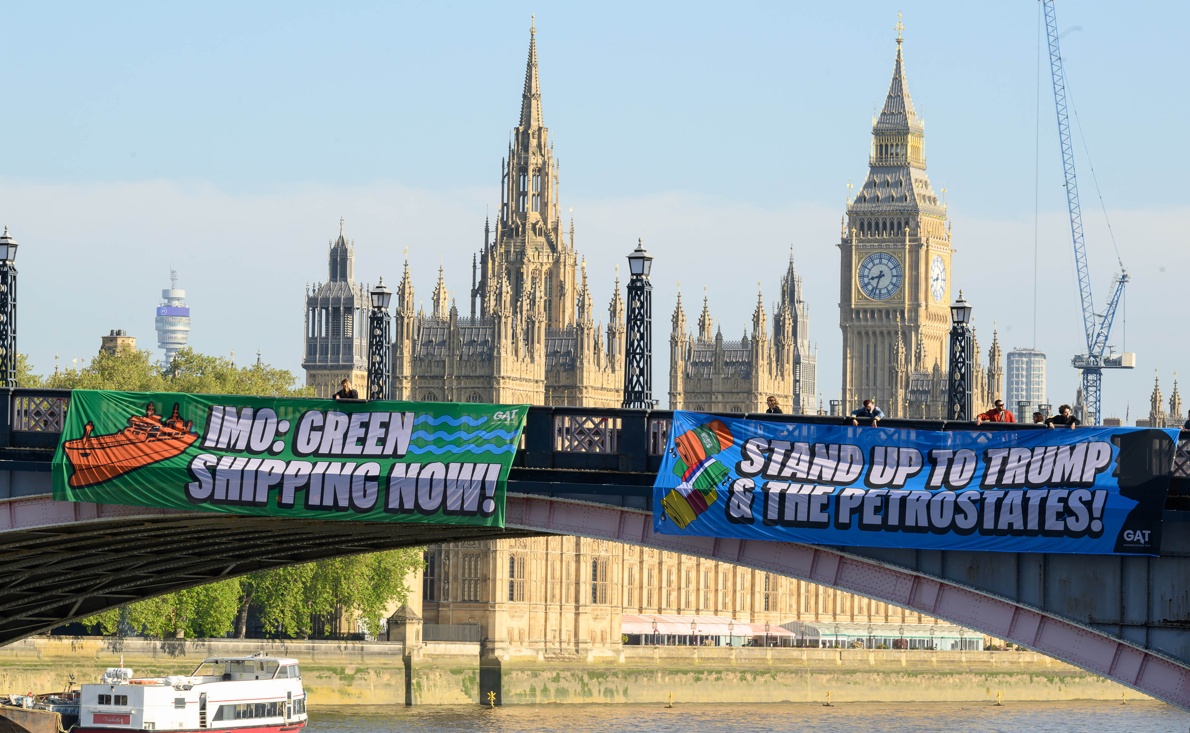
The International Maritime Organization's (IMO) Net-Zero Framework (NZF) faces a decisive test next month when governments must decide whether to protect the deal that took years to negotiate or reopen it, according to Splash247. The draft framework, approved in April 2025, remains the basis for negotiations, but momentum has stalled as member states debate adopting it as it stands, amending it, or replacing it.
The urgency is underscored by 2026's climate disasters, Splash247 reported: Europe has endured record-breaking heatwaves and one of its worst wildfire seasons in recent history, while Southern and Western Africa recover from devastating floods. 2024 was the first year in which global temperatures exceeded 1.5°C above pre-industrialised levels.
The Net-Zero Framework's mechanics
The NZF combines a greenhouse gas (GHG) pricing mechanism with a Net-Zero Fund, according to Splash247. Revenues collected help countries transition to cleaner shipping. The framework sets emission targets: ships that outperform earn credits, while those that fall short must buy credits or pay remedial charges. As targets become stricter over time, the financial incentive to adopt cleaner fuels and technology grows.
Three rival proposals on the table
All proposals were submitted to the IMO within the required deadline, making them eligible for adoption, Splash247 reported. They diverge sharply on how to price emissions and fund the transition.
- Liberia — the weakest alternative, according to Splash247, would emphasise trading surplus units between ships and remove mandatory payments into the Net-Zero Fund, so payments would largely flow between companies. Splash247 reported that if buying emission credits becomes cheaper than upgrading ships, investment in zero to near-zero emission fuels would weaken.
- Brazil — retains the NZF's overall architecture but delays the early decarbonisation reduction threshold in exchange for steeper reductions later. Splash247 reported this would postpone fund revenues and early investment in zero- and near-zero emission fuels, risking the transition before it has properly begun.
- Tuvalu — the most ambitious proposal, requiring all GHG emissions above zero to incur a charge. Splash247 said estimates suggest it would raise more than US$100 billion per year during the 2030s, compared with around US$12 billion per year under the current NZF, generating the funds for a just and equitable transition while meeting IMO targets. The proposal is politically contentious, Splash247 reported, as it would impose higher costs from the outset and could be refused by the US and petrostates.
| Proposal | Core mechanism | Estimated annual revenue | Impact on transition |
|---|---|---|---|
| Current NZF | GHG pricing + Net-Zero Fund | ~US$12 billion/year | Supports clean fuel investment |
| Liberia | Credit trading between ships, no mandatory fund | — | Weaker investment in zero-emission fuels |
| Brazil | Delays early reduction threshold, steeper later | — | Delays early investment and fund revenues |
| Tuvalu | Charge on all emissions above zero | >US$100 billion/year in 2030s | Highest revenue, politically contentious |
Implications for shippers and operators
Splash247 reported that if buying emission credits becomes cheaper than upgrading ships, investment in zero to near-zero emission fuels would become weaker.
If buying emission credits becomes cheaper than upgrading ships, then investment in zero to near-zero emission fuels would also become weaker.
For ocean carriers and freight forwarders, the proposal selected will determine short-term compliance costs and the pace of alternative fuel adoption, according to the analysis in Splash247. Brazil's delay mechanism would postpone the early reduction threshold, reducing immediate cost pressure but deferring fund revenues needed to make the transition affordable. Tuvalu's approach would impose higher costs from the outset but would generate more than US$100 billion per year during the 2030s to finance a just and equitable transition. Liberia's model, by contrast, would keep payments among companies and weaken the fund-based support for developing economies.
Watch list
- IMO member-state decision next month on whether to adopt, amend, or replace the Net-Zero Framework.
- Political opposition to Tuvalu's proposal from the US and petrostates, as reported by Splash247.
- Whether Brazil's delay mechanism, if adopted, affects the pace of early-stage fuel investment and fund revenue flows.
Sources: