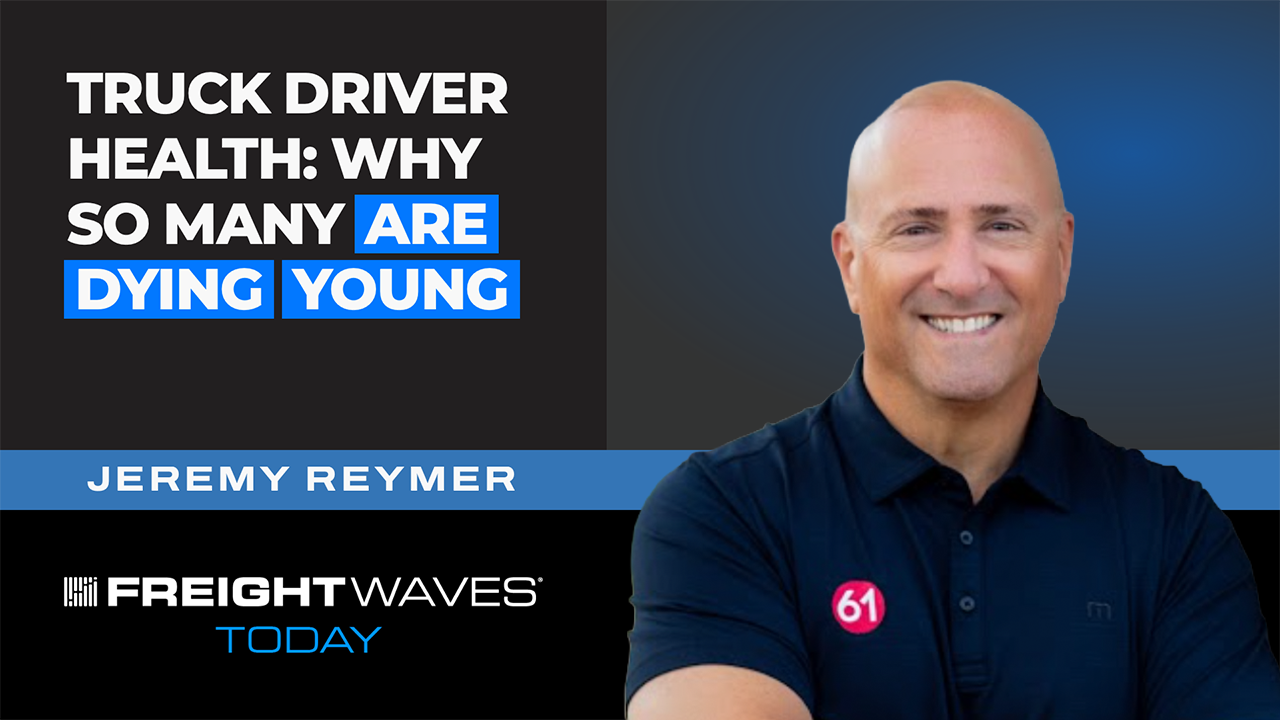
According to FreightWaves, U.S. truck drivers die at an average age of 61 — decades short of the general population's life expectancy — turning driver health into a direct operational risk for fleets, shippers, and the entire supply chain. The nonprofit Project 61 is now working to close that gap, and its founder warns that an unhealthy driver is a safety hazard moving freight at a fraction of normal capability.
Jeremy Reymer, who founded driver recruiting platform DriverReach before selling it last year, launched Project 61 after concluding that the industry invests heavily in safety technology while largely ignoring the health of the person behind the wheel. "The main operating system of that truck, the driver, is an area that we just kind of look the other way when it's so important," Reymer told FreightWaves. "When you've got a driver who's tired, who's cranky, who hasn't moved or hasn't slept, their ability to react quickly isn't there when they're operating at maybe what, somewhere in the neighborhood of 30%, 40% of what they could be otherwise."
Why driver health is a supply chain issue
The stakes are concrete and measurable. Reymer described a recurring exercise he conducts with fleet owners: he asks how many have lost a driver — meaning a driver died — in the past year, and every hand in the room goes up.
"When I'm in a group of fleets, I'll ask this question — how many of you have lost a truck driver who works for you in the last year? And every single hand goes up. By lost, I mean they've died. And I say, keep your hands up, look around. This is not some isolated thing. This is happening all the time." — Jeremy Reymer, Project 61 founder
Medical emergencies in the cab represent a significant and underappreciated crash risk, according to Reymer, who pointed to the ongoing litigation surrounding the Lucas Superior case — described by FreightWaves as the largest nuclear verdict in trucking history to be paid out by an existing company. In that case, the driver had reportedly said he was not feeling well days before the fatal accident. For fleet operators, freight forwarders, and shippers, this translates into liability exposure, interrupted deliveries, and lost capacity.
The three compounding factors
Reymer identified poor nutrition as the single biggest lever available to drivers, citing three compounding factors:
- Less than five hours of sleep per night on average
- Near-constant sedentary time during 11-hour driving shifts
- Limited access to whole food at truck stops and travel centers
Project 61 structures its guidance around what it calls the "five axles of health" — fuel (nutrition), move (exercise), recharge (sleep), mental drive (mental health), and preventative maintenance — all tracked through a free mobile app available at project-61.org. Daily nutrition targets inside the app include three servings of protein, three servings of vegetables, two servings of fruit, whole grains, and healthy fats, along with hydration reminders.
| Axle | Focus | What it covers |
|---|---|---|
| Fuel | Nutrition | 3 servings protein, 3 vegetables, 2 fruit, whole grains, healthy fats, hydration reminders |
| Move | Exercise | Countering near-constant sedentary time during 11-hour shifts |
| Recharge | Sleep | Addressing less than five hours of sleep per night on average |
| Mental drive | Mental health | Mental well-being behind the wheel |
| Preventative maintenance | Ongoing health | Regular health upkeep |
What fleets and shippers should do next
Project 61 is working with the Federal Motor Carrier Safety Administration (FMCSA) and the Department of Health and Human Services (HHS) on a program to financially incentivize drivers to purchase healthier food options, though Reymer said details are still being developed. Truck stop operators, he added, have been supportive of Project 61's mission, but acknowledge that healthier options go unpurchased when drivers aren't educated on why the choices matter.
For logistics managers and freight buyers, the operational takeaway is to treat driver health as part of carrier vetting and safety compliance. Asking carriers whether they support driver wellness programs — or whether their drivers use Project 61's free app — can be a meaningful indicator of crash risk and continuity risk. Shippers and 3PLs can also encourage truck stops and travel centers on high-volume lanes to stock whole-food options, reducing the friction that leads to poor choices.
Watch list
- FMCSA and HHS incentive program: Financial incentives for healthier food purchases are still in development; details could reshape truck stop menus and driver behavior.
- Capacity right-sizing: Reymer, who ran a truck driver staffing company for more than 15 years before founding DriverReach, said the industry has been "right-sizing" excess capacity that built up after a post-COVID pendulum swing brought a flood of new entrants and private equity into trucking. This could tighten available driver supply in coming quarters.
- Legal precedents: The Lucas Superior case continues through litigation and may raise the cost of in-cab medical emergencies for all fleets, affecting insurance rates and compliance practices.
Sources: