TAEC says a year of coordinated federal and state enforcement has produced sweeping changes in cross-border trucking, commercial driver licensing and highway safety, with roughly 194,000 non-domiciled commercial driver's license (CDL) holders — about 97% of current licensees — facing eventual ineligibility under new federal requirements, according to FreightWaves.
The assessment comes from “Trucking Resurgence: The Fight for Fairness and Safety Progress Report,” released July 23 by TAEC, which represents executives from state trucking associations in Arizona, Alabama, Arkansas, California, Iowa, Nevada, Pennsylvania and Texas. FreightWaves reported the report builds on TAEC’s “Trucking Resurgence” action plan released in 2025 calling for tougher enforcement against bad actors exploiting weaknesses in trucking regulations.
Cross-border enforcement: 3,200 visa revocations
TAEC’s report, as covered by FreightWaves, identifies “Cross-Border Workforce Integrity” as one of the biggest areas of progress. Federal agencies expanded enforcement of English-language proficiency requirements and cabotage restrictions in border regions, strengthening coordination with U.S. Customs and Border Protection. That effort produced approximately 3,200 visa revocations tied to cabotage enforcement, a statistic the report calls one of its most notable. Cabotage laws generally prohibit foreign motor carriers from transporting domestic freight between two U.S. points except under limited circumstances. TAEC said stronger oversight is helping create a more level competitive environment for trucking companies that comply with federal regulations.
Non-domiciled CDLs: 194,000 licenses in scope
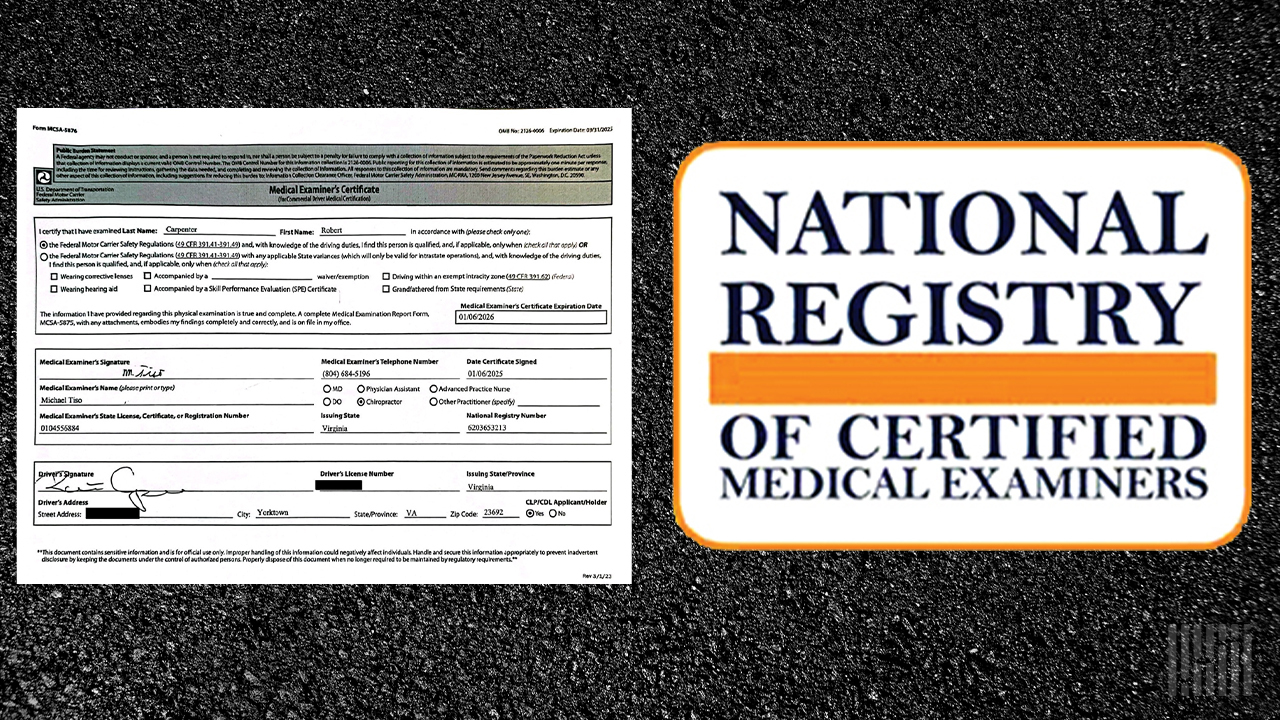
TAEC estimates that more than 194,000 existing non-domiciled CDL holders will eventually become ineligible under the new federal eligibility requirements, and some states are already revoking improperly issued licenses. All 50 states have undergone audits of their CDL programs and non-domiciled CDL issuance, according to FreightWaves. More than 20 states have enacted or proposed legislation addressing CDL integrity, English-language proficiency, non-domiciled CDL oversight, cargo theft and commercial driver qualifications, while additional states have updated enforcement policies to align with recent federal initiatives.
TAEC’s original action plan recommended:
- Restricting eligibility for non-domiciled CDLs
- Strengthening verification of immigration and work authorization documents
- Improving information sharing among federal agencies and states
- Increasing enforcement against fraudulent licensing practices
The milestones highlighted in the report — FMCSA’s new non-domiciled CDL eligibility rule, increased English-language enforcement, visa revocations tied to cabotage violations, and state crackdowns on CDL fraud — have unfolded over the past year through a series of regulatory actions covered by FreightWaves. The report represents one of the first industry efforts to compile those initiatives into a single assessment of their collective impact.
| Metric | Reported figure |
|---|---|
| Non-domiciled CDL holders affected | More than 194,000 |
| Share of current non-domiciled CDL holders | Roughly 97% |
| Visa revocations tied to cabotage enforcement | Approximately 3,200 |
| States with CDL program audits completed | All 50 |
| States with CDL, cabotage or cargo-theft legislation enacted or proposed | More than 20 |
| TAEC member state associations named in report | Arizona, Alabama, Arkansas, California, Iowa, Nevada, Pennsylvania, Texas |
What operators should do now
FMCSA Administrator Derek Barrs said the agency remains focused on removing unsafe operators while supporting compliant carriers. According to FreightWaves, Barrs said:
The overwhelming majority of motor carriers and professional drivers operate safely and responsibly. — Derek Barrs, FMCSA Administrator
For freight forwarders, third-party logistics providers, ocean carriers and shippers relying on cross-border truck capacity, the practical takeaway is document-level verification: any non-domiciled CDL holder working U.S. lanes should be rechecked against FMCSA eligibility requirements as states complete their audits and revoke improperly issued licenses. TAEC’s action plan called for restricting eligibility, verifying immigration and work authorization documents, sharing information among agencies and states, and enforcing fraud statutes — all of which now have state and federal actions attached to them, FreightWaves reported.
Sources: