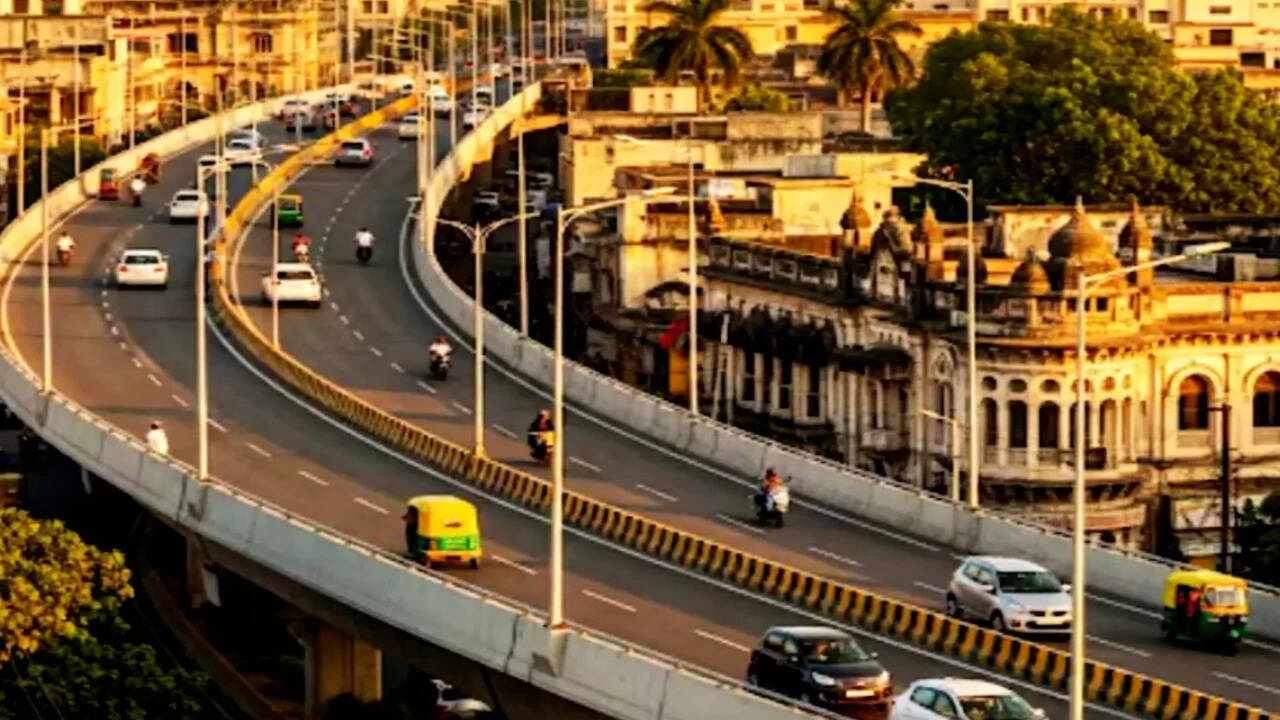
The Cabinet Committee on Economic Affairs (CCEA) has approved two major highway projects in Varanasi worth a combined Rs 25,446 crore, aiming to decongest the city and improve freight and passenger movement, according to the government.
Varuna Expressway: A 43.2-km Elevated Corridor
Union Minister Ashwini Vaishnaw announced the approval of the first project, a 43.2-km, predominantly 6/4-lane elevated corridor along the Varuna riverbank, costing approximately Rs 10,998 crore (remainder of the total). The project will be implemented by the National Highways Authority of India (NHAI) under the Hybrid Annuity Model (HAM). It will connect NH-31 with the Varanasi Ring Road via an elevated structure comprising flyovers, ramps, loops, service roads, and the main carriageway.
According to the government, the corridor is a key component of the Varanasi Decongestion Plan and will provide seamless access to:
- Kashi Railway Station
- Varanasi Ring Road
- Lal Bahadur Shastri International Airport
- Varanasi Junction and Deen Dayal Upadhyaya Junction
- Ramnagar Port (operated by the Inland Waterways Authority of India)
- City ghats and adjoining Chandauli region
Designed for an operating speed of 80-100 kmph, the project is expected to cut travel time between NH-31 and Kashi Railway Station from around 40 minutes to 20 minutes, while improving road safety, reducing vehicle operating costs, and facilitating faster movement of passenger and freight traffic.
Ganga Riverbank Corridor: Rs 14,447.64 Crore Elevated Highway
The CCEA also approved a Rs 14,447.64-crore project to develop a 46.04-km, predominantly six-lane elevated corridor connecting NH-19 with the Varanasi Ring Road along the Ganga riverbank. This project, also under NHAI's HAM, will include an iconic cable-stayed bridge, an extradosed foot-over bridge-cum-major bridge, loops, ramps, link roads, and service roads.
The government stated that the corridor will provide seamless connectivity between NH-19 and the Varanasi Ring Road while significantly decongesting the city's road network. Expected travel time reductions:
| Route | Current Travel Time | Expected Travel Time | Reduction |
|---|---|---|---|
| Across project area | ~60 minutes | 20 minutes | 40 minutes |
| NH-19 to Kashi Railway Station | ~50 minutes | 25 minutes | 25 minutes |
Additionally, the corridor will strengthen multimodal connectivity under the PM Gati Shakti National Master Plan by improving access to major highways, railway stations, Lal Bahadur Shastri International Airport, and the Ramnagar IWAI Port. It will also enhance connectivity to key religious and cultural landmarks.
Logistics and Freight Implications
For logistics operators and freight forwarders, these projects offer tangible operational benefits. The Ramnagar Port connectivity via both corridors will support inland waterway freight movement, complementing road and rail networks. The decongestion of Varanasi's road network is expected to reduce transit times for freight vehicles navigating the city, lowering fuel costs and improving schedule reliability.
According to Vaishnaw, around 15 crore tourists visit Kashi annually, indicating significant passenger traffic that currently competes for road space with freight. The new corridors are designed to separate long-distance and local traffic, with the elevated main carriageway enabling smoother freight flows.
Both projects are part of the Varanasi Decongestion Plan and align with PM Gati Shakti principles, aiming to create integrated transport hubs. The reduction in travel time from up to 60 minutes to as low as 20 minutes on key segments will allow freight operators to increase fleet utilization and offer tighter delivery windows in eastern Uttar Pradesh.
For logistics managers, the improved connectivity to Kashi Railway Station and Deen Dayal Upadhyaya Junction will facilitate smoother intermodal transfers between road and rail. The proximity to Lal Bahadur Shastri International Airport also supports air cargo connectivity for high-value goods.
As the government expects these corridors to improve logistics efficiency, enhance road safety, and support economic growth across eastern Uttar Pradesh, logistics professionals should monitor project timelines (implementation under HAM) and plan route adjustments to leverage the new infrastructure once operational.
Sources: