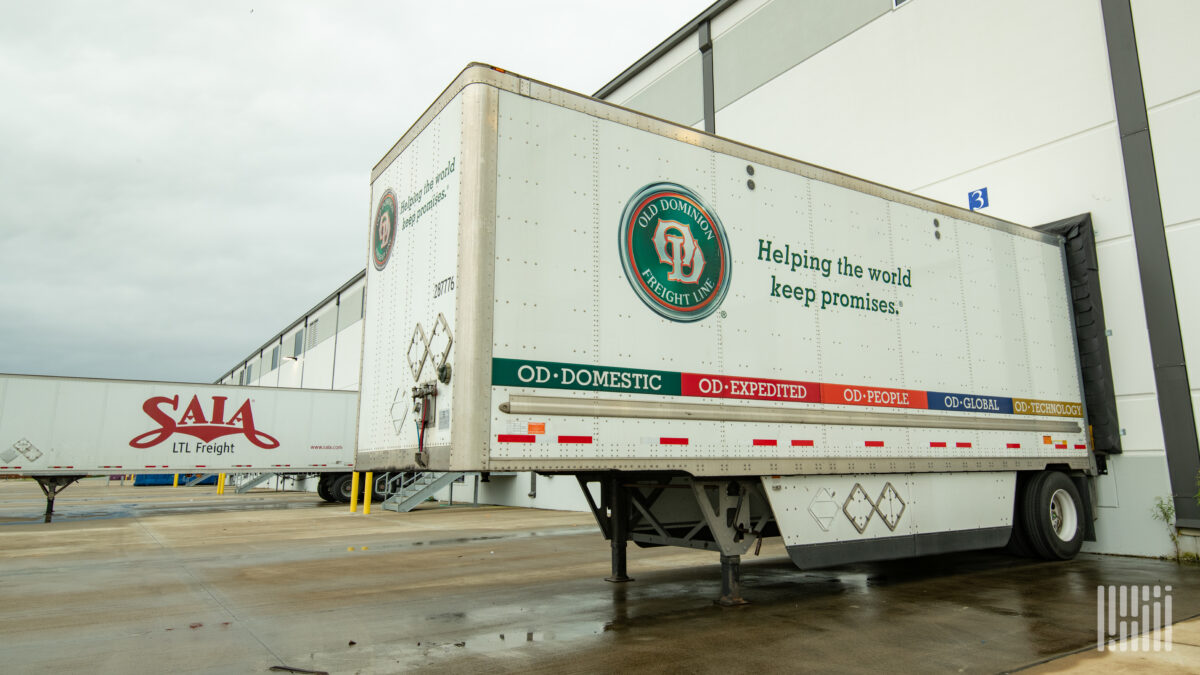
In a freight industry where shippers often treat LTL carriers as interchangeable line items on a rate sheet, Old Dominion Freight Line (ODFL) proves that execution—consistent, measurable, and repeatable across every touchpoint—is the real differentiator. According to FreightWaves, ODFL has been ranked the #1 National LTL Carrier for Quality for 16 consecutive years by Mastio & Company, a distinction built on deliberate, compounding investments rather than acquisition.
The Operational Architecture Behind Consistent LTL Performance
FreightWaves reports that ODFL’s approach to fleet management eliminates failure modes before freight leaves the dock. Every truck undergoes a proactive inspection every 90 days or 50,000 miles (whichever comes first), supplemented by annual multi-point inspections covering the full tractor, including trailers, axles, brakes, and tires. Approximately 10% of the fleet is replaced each year, keeping ODFL’s equipment among the youngest on the road. This investment in fleet quality directly reduces the risk of breakdowns and service delays that plague many LTL operators.
Load Planning and Dock Execution as Damage Prevention
Cargo claims are often lost in the loading process. ODFL employs load planning tools that verify density, dimensional fit, and packaging integrity before a trailer rolls out. These same tools optimize the network-level haul plan, tightening transit times. A sequencing discipline also governs how freight is positioned: trailers are packed so that items reach the next service center in the right order for efficient offloading. The result is a cargo claims ratio of just 0.5%, according to FreightWaves. ODFL’s operational leadership frames it this way:
"It's not one thing. It's how maintenance, load planning, and dock execution all feed into each other."
Local service center managers are trained to proactively reach out to customers when packaging issues arise, a practice FreightWaves notes remains “remarkably rare across the broader LTL landscape.”
Route Intelligence and Driver Training
Rather than treating routing as a pure math problem minimizing distance and cost, ODFL treats it as a service problem. Advanced inbound route planning maps the ideal travel sequence across shippers’ pickup and delivery requirements, balancing fuel economy against service-time commitments. The hub-and-spoke network has been refined over decades, positioning service centers to optimize flow. Drivers and dock workers are trained not just for their own roles, but for how their work sets up the next stage of the process, ensuring consistency across the freight lifecycle.
Implications for Shippers and 3PLs
For freight forwarders and logistics managers relying on LTL carriers, ODFL’s model underscores the importance of evaluating carriers beyond rate. Factors such as fleet age, maintenance cycles, load planning technology, and training directly impact on-time delivery and damage rates. Shippers committing freight to carriers that neglect these operational fundamentals risk downstream service failures. As FreightWaves states, understanding the operational architecture behind the numbers is critical to protecting service commitments.
| Operational Element | ODFL Practice | Impact |
|---|---|---|
| Fleet inspection | Every 90 days or 50,000 miles | Reduces breakdown risk |
| Fleet replacement | ~10% annually | Youngest equipment on road |
| Load planning | Density/ dimensional/packaging verification | Fewer cargo claims |
| Cargo claims ratio | 0.5% | Industry-leading performance |
| Route planning | Balances fuel economy & service time | Tighter delivery windows |
| Workforce training | Integrated role awareness | Consistent execution |
Sources: