
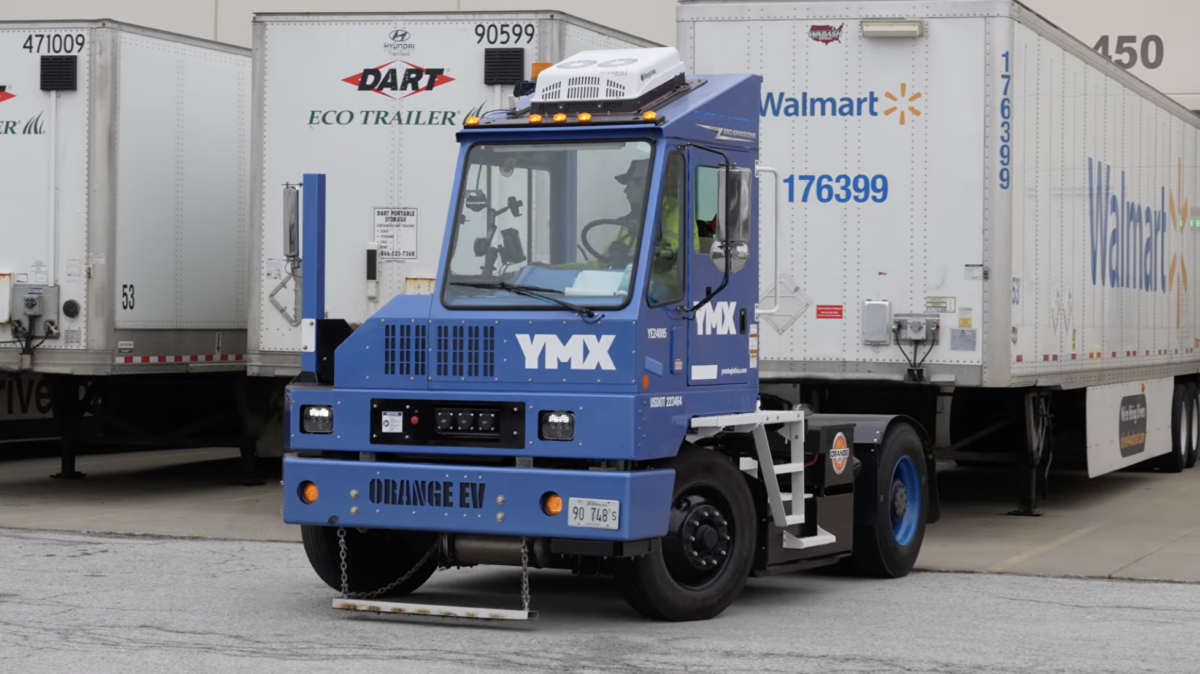
YMX Logistics' Autonomous Yard Operating System reduced a top-five U.S. grocery distribution network's yard truck fleet from 22 units to 14 units—a 36% reduction—according to a FreightWaves report. The system was also deployed across nine sites in just six months.
AI Excellence in Supply Chain Awards
FreightWaves launched the AI Excellence in Supply Chain Awards to spotlight companies leveraging AI in “truly revolutionary ways” with “real deployments and measurable outcomes,” the report said. YMX Logistics was named an honoree in the Operational AI Integration category for its Autonomous Yard Operating System (YOS).
The Under-Optimized Yard
The yard is where transportation and warehousing physically hand off. According to YMX, it is “one of the most under-optimized parts of the entire supply chain.” YMX CEO Matt Yearling described yard operations at even large shippers as running on “two channels on a radio and pen and paper” with little visibility. YMX’s system replaces that with an AI-driven operating model that measures and improves over time.
Core Technology: Digital Operational Twin
YMX’s approach centers on a Digital Operational Twin that uses yard data, service needs, and site constraints as inputs, then runs simulation and optimization models before recommending changes. Key components include:
- AI-powered yard modeling
- Decision support layered on a yard management system
- Machine-learning labor and throughput forecasting
- Automated gate transactions
- Spotter-based computer vision for trailer identification and condition monitoring
- AI-driven safety intelligence layer
Unlike traditional yard management tools that only provide visibility, this system improves execution across fleet sizing, labor planning, gate throughput, inventory accuracy, safety, EV charging, and cost.
Proof Point: 36% Fleet Reduction
The clearest result comes from a top-five U.S. grocery distribution network. Before YMX, the site had “minimal technology and no real forecasting layer.” After deploying YMX’s operating model, technology, and optimization, the yard truck fleet dropped from 22 units to 14 units.
| Metric | Before YMX | After YMX | Change |
|---|---|---|---|
| Yard truck fleet | 22 units | 14 units | -36% |
| Rollout sites | — | 9 sites | Completed in 6 months |
Implications for Logistics Operators
For freight forwarders, logistics managers, and 3PL operators, this case demonstrates the potential of AI to optimize yard operations—often the last frontier of supply chain automation. YMX’s system moves beyond visibility into active decision support and autonomous execution. Yearling framed the industry arc in stages: operational standardization, technology enablement, electrification strategy, and finally autonomous operations. He noted that many shippers remain “stuck piloting three, four, or five look-alike technology point solutions without ever fixing the operating model underneath them.” Skipping the standardization step, he said, is why so many yard technology pilots stall out. Operators seeking similar gains should prioritize standardizing processes before deploying technology.
Sources:


