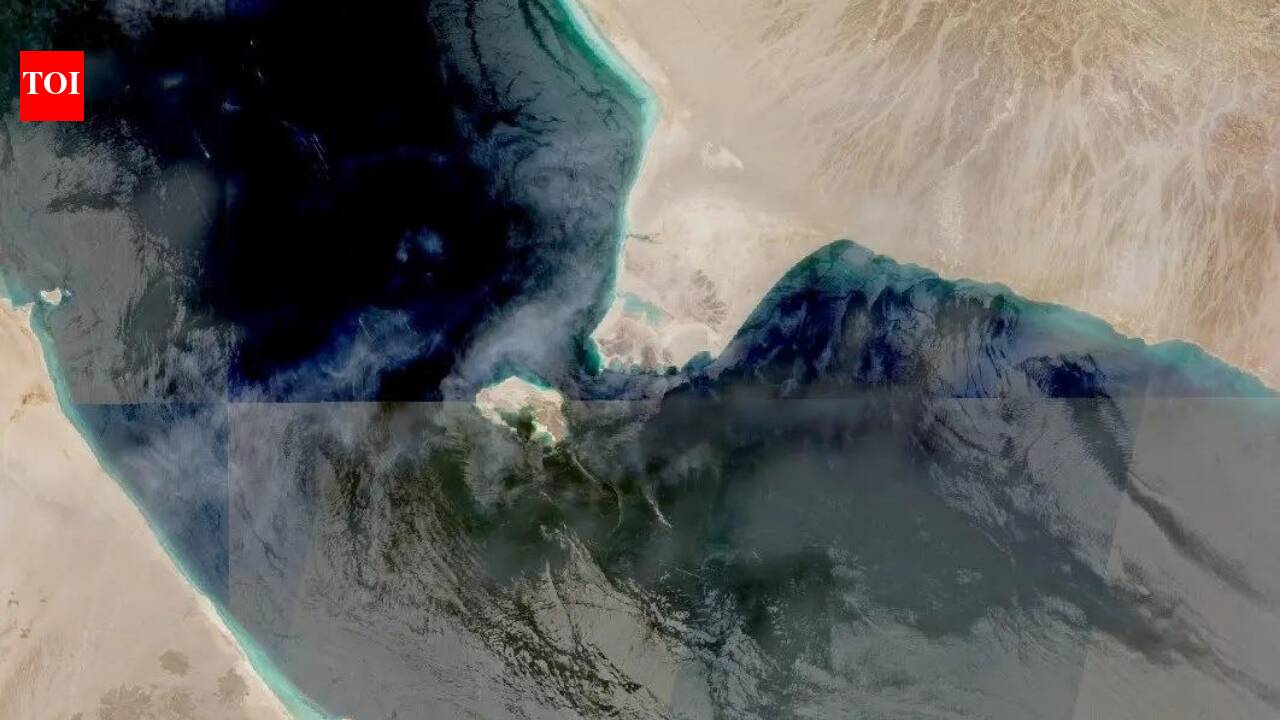
Yemen's Houthi movement claimed to have struck two Saudi oil tankers in the Red Sea on Wednesday, according to Splash247 Maritime, escalating the threat to one of the world's busiest shipping chokepoints and directly testing how far the group is willing to go in its declared blockade against Saudi Arabia.
Attacks on Saudi Tankers
The Yemeni Armed Forces said it targeted the Encelia and the Layla with ballistic missiles, cruise missiles and drones, claiming large fires broke out on each vessel after accusing both of violating the blockade. The UK Maritime Trade Operations (UKMTO) logged a strike on only one tanker, reporting the master of a vessel struck by an unknown projectile roughly 70 nautical miles southwest of Al Shuqaiq, Saudi Arabia, causing a fire the crew was actively fighting; UKMTO reported no casualties and no environmental impact, according to Splash247. Security consultancy Vanguard Tech confirmed the Encelia was hit on her starboard side, and Saudi state media confirmed the strike on the vessel without commenting on the Layla. The Layla's AIS signal had been dark for several days before the reported attack, and her position and condition remain unconfirmed, Splash247 reported.
Equasis records identify the Encelia as a 109,250 deadweight tonne (dwt), Saudi-flagged product tanker built in 2003, commercially managed by Jeddah's Bihar International, with Dubai's Red Sea Marine Services handling ISM management and Liberia's Trans Mediterranean Shipping as registered owner. The Layla is listed as a 317,821 dwt very large crude carrier (VLCC) built in 2007, owned and managed by Bahri, Saudi Arabia's National Shipping Company, through its Dubai arm Bahri Ship Management.
Blockade on Bab el-Mandeb
Houthi spokesman Yahya Saree declared the Bab el-Mandeb strait fully closed to Saudi-flagged tankers going forward, and said the strikes had already forced around ten vessels to retreat rather than risk transiting the area, according to Splash247. He described the campaign as a "blockade for blockade" strategy, framed as retaliation for Saudi support of the US military campaign in the region. In a separate statement, Yemen's Armed Forces warned that any military action against Yemen would draw “extensive operations deep inside Saudi territory,” explicitly naming oil refineries as potential targets, extending the threat from shipping lanes to onshore energy infrastructure that underpins the kingdom's export economy.
Parallel Hormuz Threats
The escalation lands alongside a parallel threat in the Strait of Hormuz. President Trump said Wednesday the US would “bomb and destroy ONE BRIDGE OR POWER PLANT” every time Iran fires on a ship in the strait, including targets “in the Capital City of Tehran,” Splash247 reported. Iranian foreign minister Abbas Araghchi said Tehran's “defence doctrine is clear: eye for an eye,” while Iran's Revolutionary Guards said they had stopped three oil tankers from transiting Hormuz, warning that “any ship that is deceived by the US and intends to pass without coordination with the Islamic Republic of Iran will suffer the same fate.” US Central Command reported a twelfth consecutive night of strikes on Iranian targets beginning Wednesday evening, aimed at degrading “Iran’s ability to threaten civilian mariners and commercial vessels transiting regional waters,” according to Splash247.
Should Trump follow through and strike Iranian infrastructure in response to a further Hormuz attack, Tehran's own stated doctrine points to immediate retaliation, compounding a risk already building around the Houthis' Red Sea campaign and raising the prospect of both of the Middle East's critical oil chokepoints facing simultaneous disruption. Splash247 noted that Tehran has briefed the Houthis to up their ship attacks if Iranian infrastructure is hit by US forces.
“Middle East risk has become a two-chokepoint problem,” Standard Chartered analysts including Emily Ashford wrote. “The cost of moving barrels is likely to increase while the risk persists.”
Shipping analysts at SEB, a Scandinavian bank, noted yesterday prior to Wednesday's attacks: “As Iran has shown at Hormuz, closing a corridor does not require the resources to physically stop shipping. It requires enough credible threa...” (the source text cut off here, but the implication is clear that the threat alone is sufficient to disrupt traffic).
Implications for Shippers and Operators
For freight forwarders, logistics managers, and ocean carriers, the immediate operational impact is heightened security risk on the Red Sea route, particularly for tankers flagged to Saudi Arabia or associated with Saudi interests. The Houthi blockade declaration, combined with the confirmed strike on the Encelia, means vessels planning to transit the Bab el-Mandeb strait will face increased insurance premiums, possible rerouting via the Cape of Good Hope, longer transit times, and potential war risk surcharges. Tanker operators with Saudi-linked cargoes should assess alternate routing and consider higher alert levels when approaching Yemeni waters. The parallel threat in Hormuz compounds the risk: if both chokepoints are disrupted, global oil supply chains will face severe strain, driving up spot freight rates for clean and dirty tankers. Shippers of all types — not just oil — should monitor the situation closely, as any widening of the conflict could affect container and bulk shipping as well.
Sources: