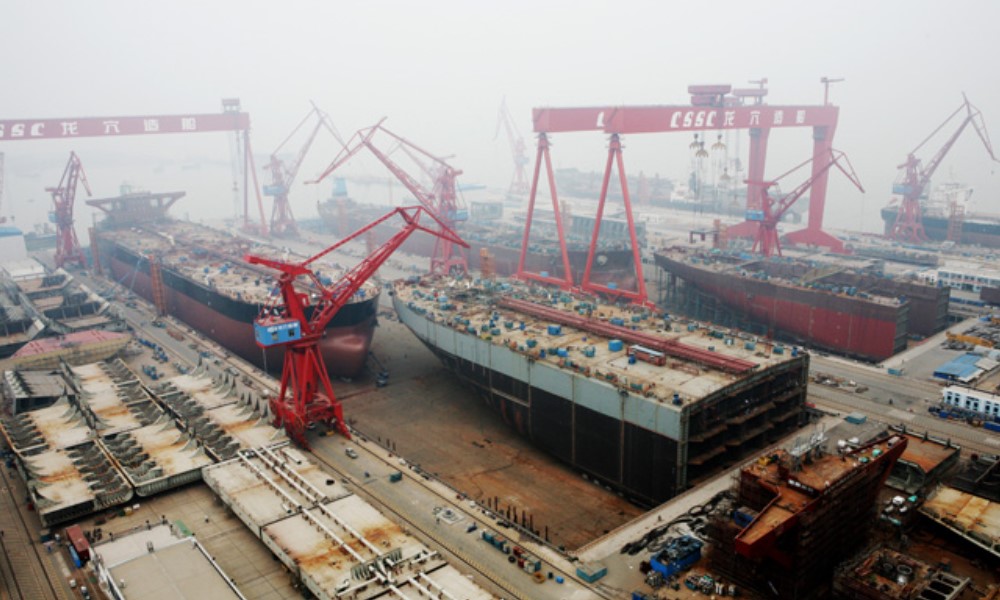
Chinese owner Nanjing Tanker has placed a $182.8m order for four MR product and chemical tankers at Guangzhou Shipyard International (GSI), adding to a wave of medium-range tanker capacity expected to hit the water between 2028 and 2029, according to Splash247. The Shanghai-listed subsidiary of China Merchants Group will contract the vessels through wholly owned subsidiary Nanjing Oil Tanker (Singapore) or another designated company.
Order Details
The quartet of 50,000 dwt tankers carries a maximum price tag of $45.7m per unit, with total investment capped at $182.8m. The newbuildings are scheduled for delivery across 2028 and 2029, according to the company filing reported by Splash247. Chinese shipbuilding media reported that Nanjing Tanker launched a public tender for the ships on June 18, with GSI now selected for the project.
Technical Specifications and Environmental Compliance
The vessels will meet IMO Tier III emission requirements and EEDI phase three standards, reflecting the industry's push toward lower emissions. Importantly, the design will also be prepared for a future conversion to methanol dual-fuel propulsion, giving Nanjing Tanker flexibility to adopt alternative fuels as infrastructure develops.
Shipyard Relationship and Fleet Renewal
This order builds on a long relationship between Nanjing Tanker and GSI. According to Splash247, GSI has already delivered more than 10 MR units to Nanjing Tanker, with at least four 49,900 dwt more to come for delivery during 2026 and 2027. In addition, Nanjing Tanker has booked four 65,000 dwt panamax tankers at GSI in a deal worth about $250m. The China Merchants Group company controls a fleet of more than 70 vessels and has added LR1s, LR2s, chemical tankers, and an ethylene carrier to its newbuilding pipeline during its latest fleet renewal drive.
Implications for Tanker Market
For freight forwarders and logistics managers overseeing petroleum and chemical shipments, the order signals continued investment in medium-range product tanker capacity. The addition of these MRs, combined with the existing orderbook, will gradually increase supply on key regional trades including the Atlantic basin and Asia-Pacific routes. Spot and contract rate pressure on MR-class vessels may emerge as deliveries ramp up toward the end of the decade, though current orderbook-to-fleet ratios remain manageable. Carriers and charterers should track delivery schedules and monitor any retrofit decisions regarding methanol conversion, as those could affect vessel availability.
Watch List
- Delivery timeline of the four panamax tankers (2026-2027) and the four MRs (2028-2029)
- Potential further orders from Nanjing Tanker as part of its fleet renewal
- Methanol bunkering infrastructure developments that could influence conversion decisions
- Scrapping rates of older MR tonnage, which could offset new supply
Sources: