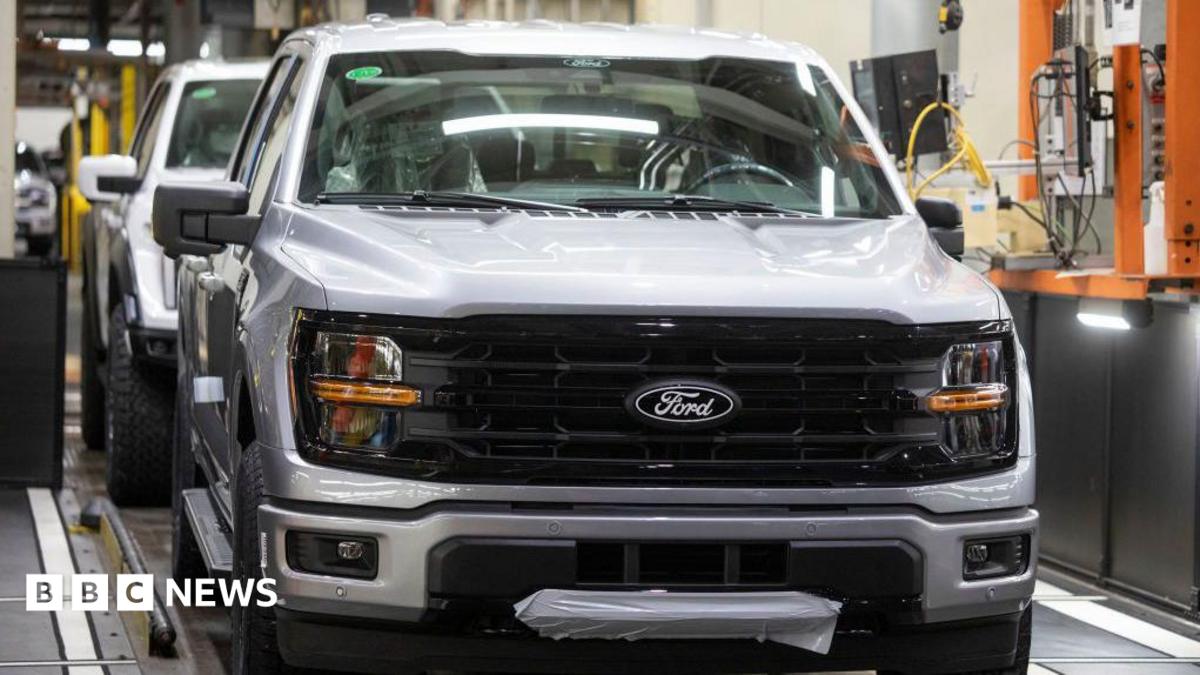
Ford has rehired more than 300 "veteran" quality inspectors in recent years after its artificial intelligence systems failed to match their skills and experience, according to reporting by Bloomberg cited by the BBC. The US automaker adopted AI across parts of its operations, including quality checks, hoping to cut costs and boost productivity, but executives now acknowledge the technology fell short.
AI Quality Checks Fall Short
Ford's COO Kumar Galhotra told investors in an October earnings call that the company was "deploying AI across the entire industrial system," including rolling out 900 AI-powered cameras in its plants "to detect quality issues at the source and help us mitigate supply disruptions." However, according to Charles Poon, Ford's vice president of vehicle hardware engineering, the AI-driven checks had failed to live up to expectations. "Mistakenly, we thought that by just introducing artificial intelligence and ingesting the design requirements that we had, that would produce a high-quality product," Poon told reporters on Wednesday.
Talent Refresh and Rehiring
To address the shortfall, Ford replaced senior leaders across engineering, supply chain, and manufacturing, and hired roughly 300 veteran engineers "who carry the hard-earned wisdom of decades of design," per a Ford press release marking the news. Poon pointed to automated tools lacking the training and expertise of veteran technicians—many of whom had left the company before their knowledge could be used to improve its tech. These human workers have since been reintroduced to train up its systems, as well as mentor younger workers. "We recognised that for us to enhance some of our automation and machine learning and artificial intelligence tools we needed to ensure that they were trained by the most experienced individuals," Poon said, per Bloomberg.
| Metric | AI Deployment | Human Rehiring |
|---|---|---|
| Quality checks | AI-powered cameras (900) failed expectations | >300 veteran engineers rehired |
| Training gap | AI not trained by most experienced individuals | Veterans now train AI and mentor young workers |
| Leadership changes | – | Senior leaders replaced in engineering, supply chain, manufacturing |
Return to Top of Quality Index
Ford's admittance of AI failings came as it lauded its return to the top of an index used as an industry benchmark to measure vehicle quality. It said it was the number one mainstream automaker in the US JD Power Initial Quality Study—a ranking it has not held since 2010. In a press release marking the news, the company said "reaching best-in-class quality required a significant talent refresh."
The Role of Human Expertise
Ford CEO Jim Farley had previously said in an interview with author Walter Isaacson last June that "AI will leave a lot of white collar people behind." But the company's experience suggests that for quality control, human judgment remains essential. Poon told reporters, "Artificial intelligence is a fantastic tool, but it's only as good as the information you use to train it." He added, "Over prior years, we didn't pay as much attention as we should have to the experience of our most knowledgeable engineers that have been with us through many product cycles."
For manufacturing executives and plant managers, Ford's reversal underscores the importance of retaining and integrating veteran expertise when deploying automation. The lesson: AI systems require continuous training by experienced humans to avoid costly quality failures. As Ford has demonstrated, even a highly automated plant cannot replace the tacit knowledge of long-tenured engineers.
Sources: