XPeng, the Chinese electric vehicle maker founded just shy of 12 years ago, announced its first-ever global vehicle release with the L03 budget model, starting at €35,600 (about $40,000). According to WIRED, the L03 is the company's mass-market play, designed to sell in volume and priced below its G6 Tesla Model Y competitor. The vehicle will launch in 60 countries across Europe, Latin America, the Middle East, and the Asia-Pacific.
Global Expansion and Market Positioning
XPeng's European journey began in 2020 when it shipped EVs to Norway. Now, the company is taking a bolder step by hosting a showcase event in Munich, right in the backyard of the German auto industry. The L03 is XPeng's first new car to be launched simultaneously in 60 countries, reflecting its ambition to become a global player. The budget pricing is key: at €35,600, the L03 sits below the G6 and targets the Volkswagen ID.4 segment, aiming to go toe-to-toe with EVs in the segment above it.
Pricing, Trims, and Performance
The L03 is offered in four variants: Standard Range, Long Range, AWD, and Ultra. All variants come standard with a claimed WLTP range of 320 miles, fast charging from 10 to 80 percent in 20 minutes, a panoramic glass roof, heated and cooled massage seats, 256-color ambient lighting, a 0.228 drag coefficient, smart parking, a 15.6-inch 2.5K central screen, a 27-inch HUD, AI-powered voice control, and Google Maps. XPeng dubs this "beyond class."
| Trim | 0–60 mph | Autonomy Level | Additional Features |
|---|---|---|---|
| Standard Range | 7.5 seconds | L2 | Base |
| Long Range | Not specified | L2 | Extended range |
| AWD | Not specified | L2 | All-wheel drive |
| Ultra | 4.5 seconds | L2++ | Hands-off navigation (Europe 2027), Turing AI chips |
The Ultra model, according to WIRED, features L2++ autonomous driving with next-gen point-to-point, hands-off navigation expected to arrive in Europe in 2027 via an over-the-air update. This is powered by a trio of XPeng’s Turing 7-nanometer AI chips. However, Xianming Liu, XPeng's senior director of engineering, told WIRED that despite the Ultra's brain capability, the car lacks hardware for the required six levels of redundancy to achieve L4 autonomy, so it will never be allowed beyond L2++.
Autonomous Driving: No Lidar Approach
XPeng has opted for a camera-based autonomous driving system, avoiding lidar altogether—similar to Tesla’s Full Self-Driving (FSD). Liu insisted to WIRED that the boosted compute power and refined models, combined with the built-in camera system on the L03, are more than a match for lidar-powered competitors. In contrast, many Chinese rivals such as BYD, Zeekr, and Nio have chosen lidar. The article notes that videos of the system may give some pause for thought.
Design and Competition
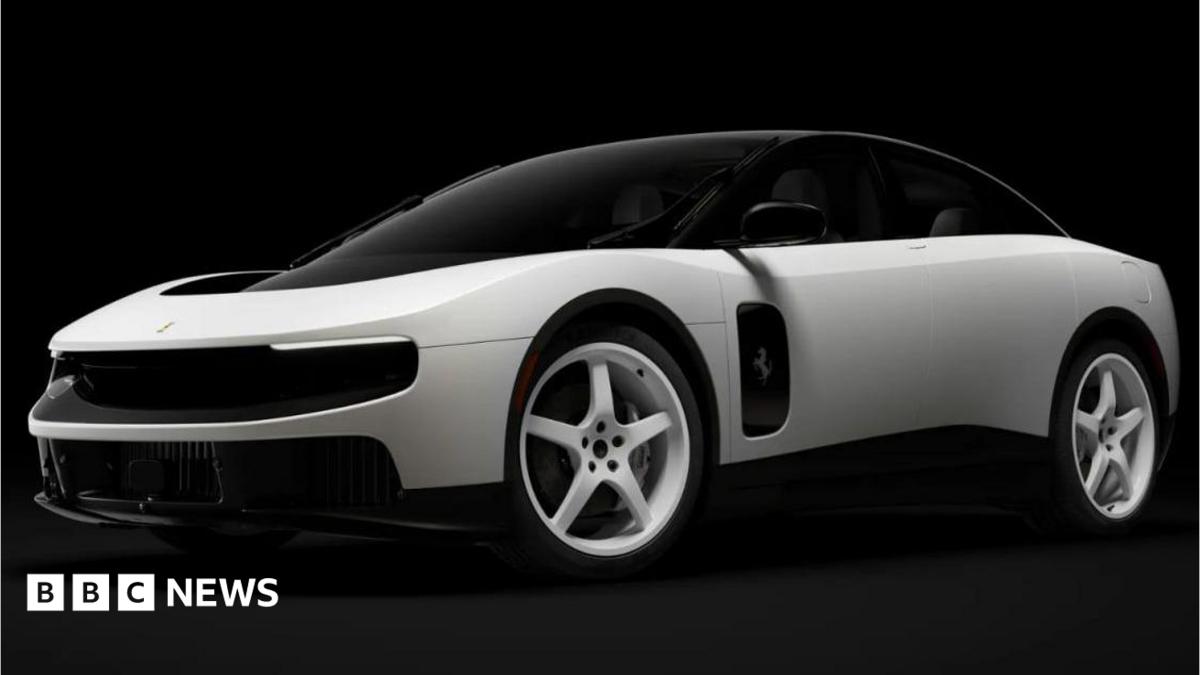
In person, the L03's design drew comparisons to the Ferrari Luce and Denza's Z9 GT. All three EVs occupy radically different positioning, but the resemblance is striking. The interior features anchor points for action cameras and magnetic clips for accessories like camping lights, adding practicality. XPeng launched the L03 at a Munich showcase event, notably entering a giant wooden Trojan horse to signal its intent in Germany.
For manufacturing executives and procurement professionals, the L03 represents XPeng's aggressive push into volume production with a globally standardized platform. The combination of competitive pricing, extensive standard features, and a no-lidar autonomy system may influence supply chain decisions for components like AI chips and sensor suites. The launch across 60 countries signals a shift in production scale and logistics strategy, though specific factory capacity or investment figures were not detailed in the source.
Sources: