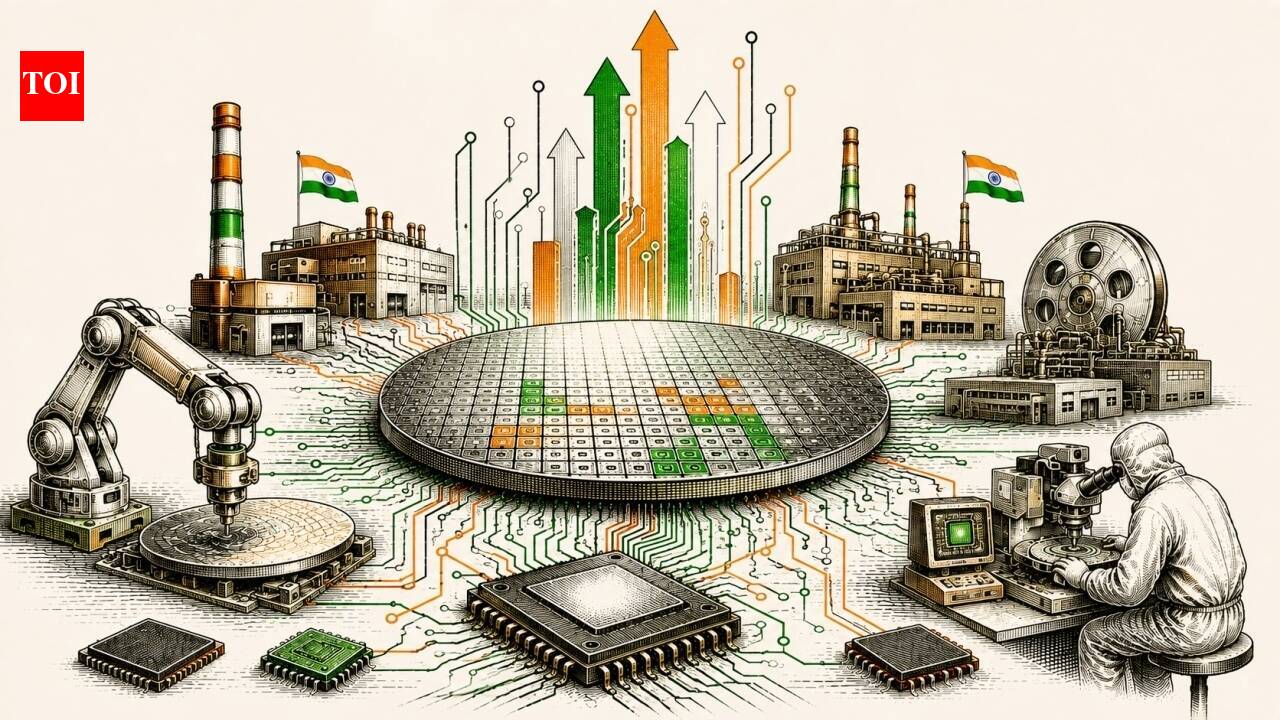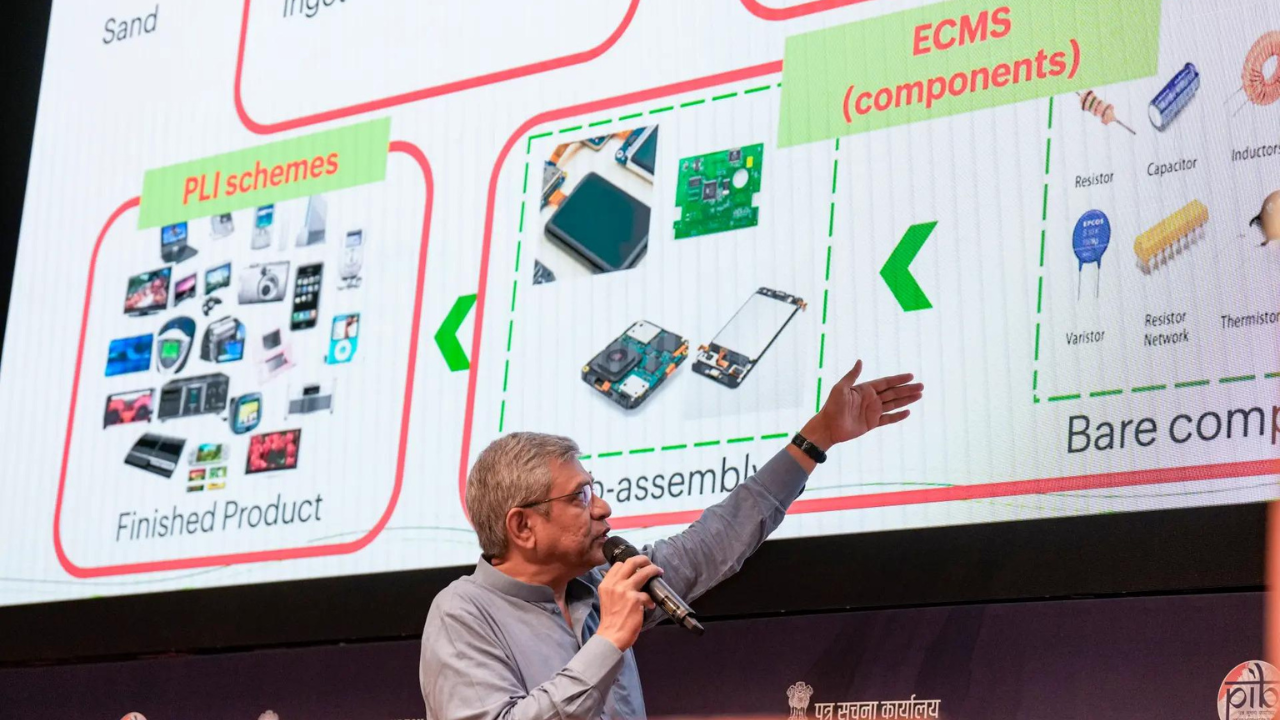
India has a game plan to become a semiconductor powerhouse, but the real test begins now. According to a recent report by Equirus Securities, the biggest hurdle is not strategy, but execution, with heavy reliance on imported equipment and gaps in the domestic supply chain posing key challenges.
Semiconductor Roadmap and Strategy
The report said India's semiconductor roadmap draws on proven approaches adopted by leading Asian chip-making economies instead of attempting to build an entirely new model. The country has steered clear of the Chinese approach while incorporating government-backed research and development from Taiwan, foreign direct investment-led manufacturing from Malaysia, domestic champions from South Korea, and capital discipline from Singapore.
Now, execution is the biggest hurdle and not strategy. The report said that India needs to rapidly develop a skilled workforce, strengthen local supply chains and meet globally competitive quality standards.
Talent and Design Strengths
The report highlighted that India is concentrating on segments where it already holds a competitive edge, supported by a talent base of nearly three lakh chip designers, representing around one-fifth of the global semiconductor design workforce. India's semiconductor strategy is focused on outsourced semiconductor assembly and test (OSAT) and mature process nodes ranging from 28nm to 110nm. These account for a significant share of global wafer capacity and are widely used across automotive, industrial and consumer applications.
"Demand-led import substitution underpins the case, with chip consumption set to more than double to about $155 billion by CY31," the report said.
Import Dependency Weakness
Despite these strengths, the report said India is expected to continue importing more than 90% of its semiconductor manufacturing equipment, along with the majority of specialty chemicals and electronic-grade gases required by the industry.
| Import Category | Estimated Import Dependency |
|---|---|
| Semiconductor manufacturing equipment | >90% |
| Specialty chemicals and electronic-grade gases | 85–90% |
According to the report, the country's dependence on imports for upstream equipment and raw materials remains the biggest weakness in its semiconductor ambitions.
Workforce and Talent Gaps
It also pointed out that although India has a strong pool of chip designers, it faces a shortage of manufacturing-specific talent, including process engineers, metrology specialists, yield engineers and cleanroom technicians.
The report described the goal of producing 85,000 industry-ready engineers by CY27 as ambitious but achievable. It cited Micron's Sanand ATMP facility, which became operational with around 2,000 trained workers within three years of construction, as an example.
Policy Strengths and Gaps
While describing India's semiconductor policy as one of its most credible industrial initiatives, the report said several gaps still need to be addressed. These include stronger incentives for chip design, the lack of a robust equipment and materials ecosystem, and limited prospects for manufacturing chips below the 28nm node in the near term.
It added that the proposed 28nm fabrication facility at Dholera would continue to be considered a mature-node project by global standards even after reaching scale.
For manufacturing executives and procurement professionals, the report underscores that India's semiconductor ambitions depend on bridging the execution gap — ramping up domestic equipment and materials supply, building a specialised manufacturing workforce, and ensuring quality standards compete globally.
Sources: