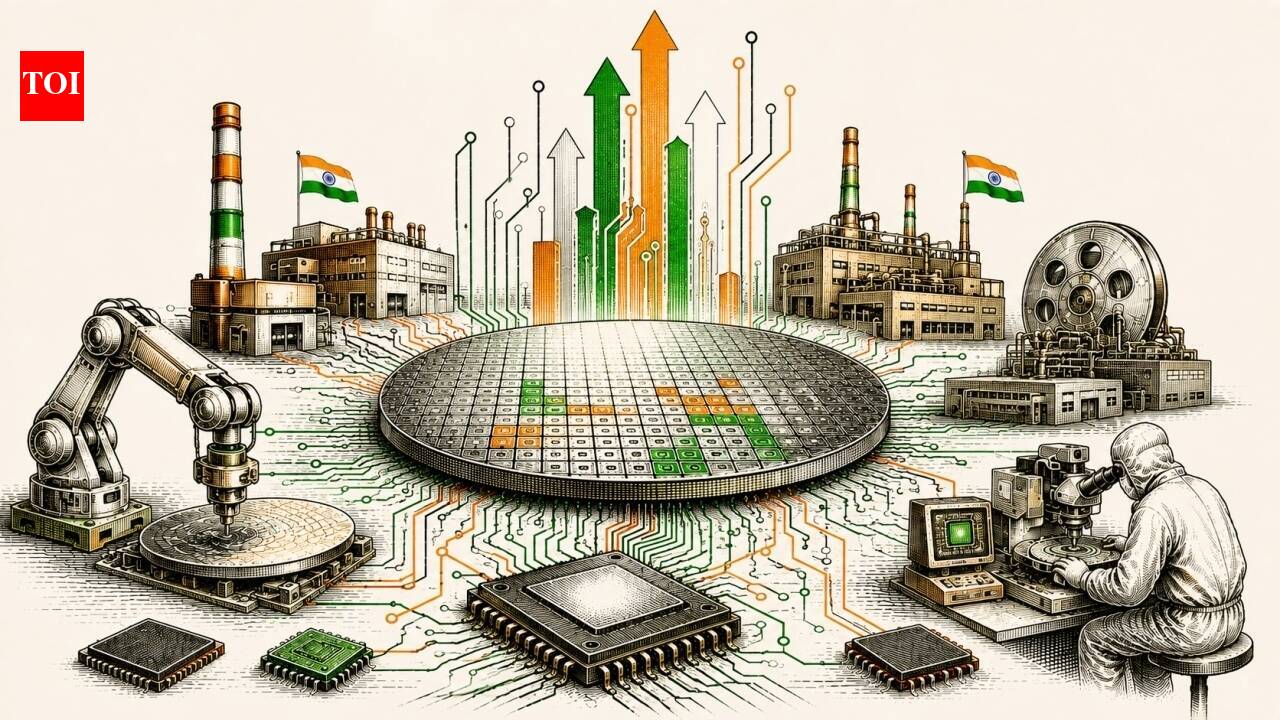
India has approved the second phase of its national semiconductor programme with an outlay of over Rs 1.27 lakh crore — a direct attempt to reduce dependence on external supply chains for a component that underpins electronics, EVs, telecom, AI, data centres, defence and manufacturing. The move arrives as KPMG's 2026 Global Semiconductor Outlook describes a semiconductor supercycle driven by real AI demand: "In boardrooms across the semiconductor industry, the conversation has shifted. For years, leaders asked when the cycle would turn. Today, they're asking how fast they can build."
Why semiconductors are a strategic imperative
Semiconductors sit underneath almost everything today: electronics, EVs, telecom, AI, data centres, defence and manufacturing. According to McKinsey, the semiconductor industry is now one of the world's most profitable sectors, and the firm estimates the sector could reach $1.6 trillion in revenue by 2030. US and South Korean stock markets have scaled new records driven by AI-led semiconductor demand, the source reports.
"If a country of India's size stays dependent on outside supply chains for something this fundamental, that's a real vulnerability, both economically and strategically," Saurabh Agarwal, Partner, EY India, told TOI.
India's two-phase semiconductor plan
India's semiconductor push runs in two phases. Semicon 1 had an outlay of Rs 76,000 crore; the recently approved Semicon 2.0 carries a Cabinet nod of Rs 1,27,500 crore. So far, 12 semiconductor projects with investment commitments of over Rs 1.64 lakh crore have been approved, and three facilities are already in commercial production.
| Phase | Outlay | Focus |
|---|---|---|
| Semicon 1 | Rs 76,000 crore | Fiscal support up to 50% for silicon fabrication plants, compound semiconductor units, assembly and testing, chip design |
| Semicon 2.0 | Rs 1,27,500 crore | Six pillars: chip design, equipment and materials, fabrication, advanced packaging (ATMP/OSAT), R&D, talent; roadmap for 3nm and 2nm nodes |
Semicon 1.0 provided fiscal support of up to 50% for silicon fabrication plants, compound semiconductor units, semiconductor assembly and testing facilities, and chip design. India Semiconductor Mission 2.0 prioritises domestic production of semiconductor equipment and materials and the development of an end-to-end Indian semiconductor intellectual property stack.
Market size and demand projections
The Indian semiconductor market was around $38 billion in 2023, rising to approximately $45-50 billion during 2024-25, according to industry estimates cited in the source. The market is projected to expand further to $100-110 billion by 2030. The government hopes India can develop the capability to design and manufacture chips catering to nearly 70-75% of its domestic demand by 2029.
Building toward a global semiconductor hub
Semicon 2.0 aims to accelerate advanced chip manufacturing with a defined roadmap for achieving 3-nanometre and 2-nanometre technology nodes. Semiconductor design capabilities are being expanded through skilling programmes, startup support and global partnerships.
"If a country of India's size stays dependent on outside supply chains for something this fundamental, that's a real vulnerability, both economically and strategically." — Saurabh Agarwal, Partner, EY India, told TOI
Experts see Semicon 2.0 as a potential gamechanger for India. Through the mission, India is aiming to build an integrated semiconductor and AI ecosystem that spans chip design, fabrication, advanced packaging, research, talent and computer infrastructure — positioning itself as a global semiconductor hub that can strengthen the entire value chain, attract more chipmakers, support indigenous intellectual property and advance semiconductor technologies.
Sources: