
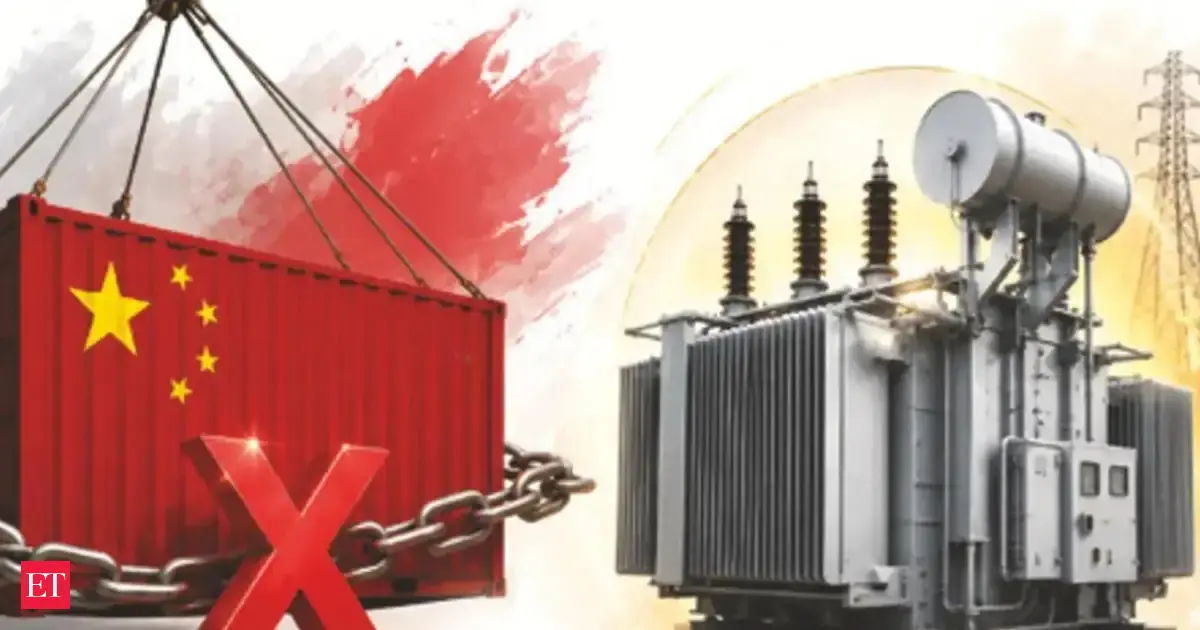
Indian transformer makers are confident despite the re-entry of Chinese-owned manufacturers into the country's power transmission sector, according to a report by the Economic Times. The government last week opened the door for four Chinese-owned companies—TBEA, Nanjing Electric, New Northeast Electric, and Taikai Electric—granting a two-year exemption under the Public Procurement Order (PPO). The relaxation applies to critical transmission components including bushings, insulators, circuit breakers, power transformers, gas-insulated switchgear (GIS), and related equipment, and is limited to tenders from public-sector undertakings (PSUs). The exemption mandates that these Chinese entities manufacture in India, with procurement requiring 50-60% domestic content.
Competitive Landscape Among Chinese Entrants
Of the four permitted firms, only TBEA has meaningful capacity to compete, while the others are still building out, according to the report. The table below summarises the status of each company:
| Company | Capacity Status |
|---|---|
| TBEA | Meaningful capacity to compete |
| Nanjing Electric | Still building out |
| New Northeast Electric | Still building out |
| Taikai Electric | Still building out |
Capacity Ramp-Up and Demand
Indian transformer manufacturers have been ramping up capacity to meet strong domestic demand. The report highlights that capacity ramp-up and strong demand offset the potential competition from Chinese re-entry. The government’s Make in India imperative underpins the exemption, which requires Chinese firms to manufacture locally.
Industry Reactions
N Venu, Managing Director of Hitachi Energy India, commented on the decision:
"While the decision is rooted in the Make in India imperative, I am confident that the Government of India has remained cognisant of maintaining a level playing field vis-a-vis subsidies, incentives and more. This will inspire companies like ours to continue investing deeply in India to support the country's energy transition with cutting-edge technology and world-class talent."
Hitachi Energy and Siemens Energy are considered viable propositions in the sector, the report notes. Industry experts believe that if the exemption is extended to imported components, domestic manufacturers could face pressure.
Implications for Domestic Manufacturers
For now, the two-year exemption applies only to locally manufactured products with 50-60% domestic content, limiting the competitive threat. Domestic transformer makers continue to invest in capacity expansion, betting on sustained demand from India’s power transmission network. Procurement professionals and executives should monitor whether the exemption scope widens to include imported components, which could alter the competitive dynamics.
Sources:


