For every frozen box delivered to a doorstep, the cost decision comes days earlier: five pounds of dry ice or 15? That margin-sensitive calculation, repeated millions of times, is the business Grip built. The Miami-based cold chain fulfillment company is now handing its national operation to a 40-year veteran of frozen and refrigerated distribution.
Veteran hire signals scaling ambition
Grip said Tuesday that John Hummel will join as president of Grip Fulfillment, leading the company’s national fulfillment operations. For the e-commerce brands that rely on Grip to move pet food, prepared meals and grocery orders, the hire brings proven experience. According to FreightWaves, Hummel served as president of Burris Logistics’ Custom Distribution division, where he oversaw five frozen and refrigerated distribution centers and eight direct-to-consumer fulfillment facilities. Earlier he was president of United Natural Foods Inc.’s (UNFI) Central/Southeast Region, running eight distribution centers with more than $6 billion in annual sales. Before that, he led operations for 31 distribution centers at Reinhart Foodservice as the company grew from $2 billion to $7 billion.
"I’ve known Juan since his ButcherBox days, and I’ve followed Grip’s journey ever since," Hummel said in the announcement. "Joining the team to lead its fulfillment operation is an incredible opportunity."
Grip’s perishable e-commerce infrastructure
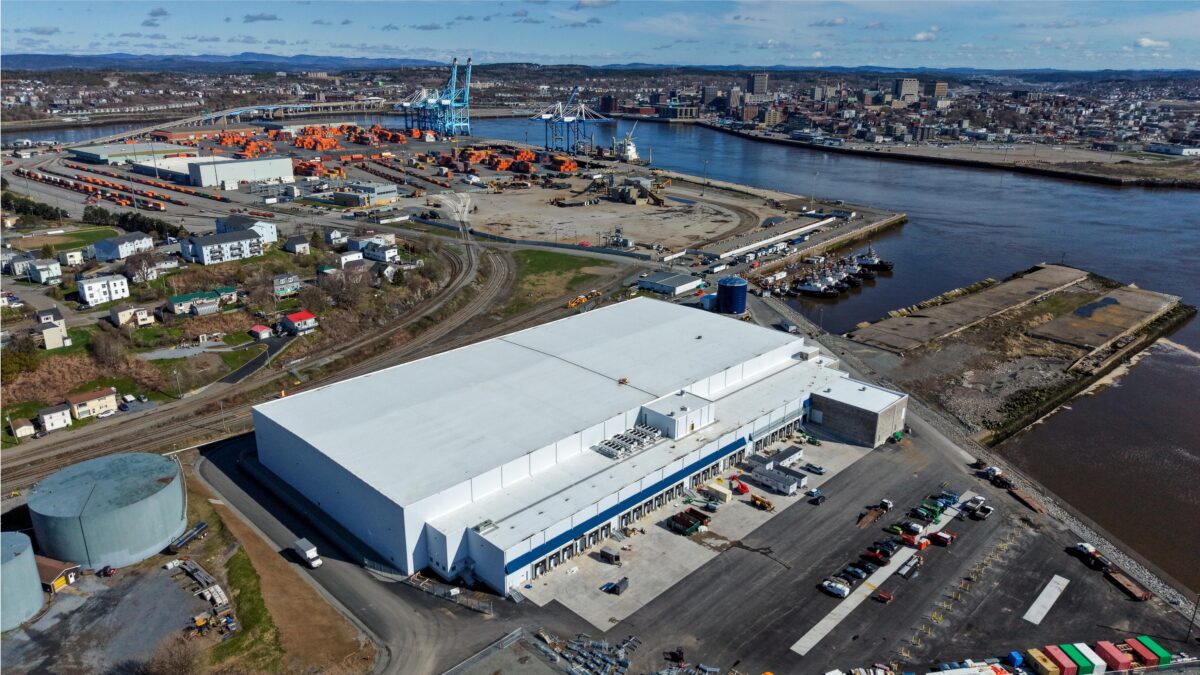
Grip has shipped more than $3 billion in perishable goods since launching in 2022, according to the company. Fulfillment centers in New Jersey, Texas, Michigan, Nevada and Florida reach more than 80% of the U.S. population within 24 hours, and the rest of the country within 48.
The company was founded in 2022 by Juan Camilo Meisel, who was on the early team at ButcherBox and helped scale it past $500 million. The opening he saw was not consumer demand, but the distance between that demand and the infrastructure serving it.
"Consumer behavior had changed. People now know that they can buy refrigerated and frozen items online and you also have all these beautiful brands popping up, but in the middle you have a fragmented industry," Meisel told FreightWaves. The facilities that existed were built for pallets moving to grocery shelves, not parcels moving to porches. "So you have multiple pallet-in, pallet-out facilities on one end where you have to work with multiple providers to get a good nationwide coverage," he said. "And it’s also just providers that are not designed for e-commerce or CPG products."
| John Hummel's career highlights | |
|---|---|
| Role | Organization |
| President, Custom Distribution | Burris Logistics (5 frozen/refrigerated DCs, 8 DTC facilities) |
| President, Central/Southeast Region | UNFI (8 DCs, >$6B annual sales) |
| Operations leader (31 DCs) | Reinhart Foodservice ($2B to $7B growth) |
The dry ice math and technology differentiator
Grip’s answer was an order management system (OMS) built for perishables rather than adapted from dry goods. An OMS for perishable e-commerce has to set origin, refrigerant type, refrigerant weight, insulation, carrier and service level on every single order. "It’s a thinking software because behind it it’s making all these decisions for the final user," Meisel said.
The alternative is what Meisel calls flat logic, and he says it fails in both directions. "You could say, ‘Hey, I’m going to ship every single one of my boxes that takes two days to get to the final customer with 10 pounds of dry ice.’ That’s a flat logic," he said. "But the reality is that there’s a specific box that will be benefited by having 15 pounds and not 10 because you would be improving the end customer experience. You would be reducing waste and you would be increasing your lifetime value." The reverse is just as common: the same order that flat logic would require 10 pounds of dry ice can actually ship with five while maintaining product integrity.
Meisel also noted that the software layer was disconnected from operations: "And then you have also someone else managing technology that is just not connected to what you’re seeing and what you do on the ground."
What this means for your procurement team
For procurement and logistics directors evaluating cold chain partners, Grip’s hire of Hummel signals a push toward scale and operational discipline. The company now has a leader who has managed multi-billion-dollar perishable networks. The five fulfillment centers already provide a national footprint, but the software-driven optimization of refrigerant and carrier selection is the differentiator. Procurement teams should assess whether their current cold chain providers have a similar OMS capability, or whether they rely on flat logic that either wastes margin or risks spoilage. With $3 billion in shipped goods since 2022, Grip has proven the model works; the addition of Hummel suggests the company is preparing for the next growth phase, potentially handling larger retail and CPG volumes.
Sources: