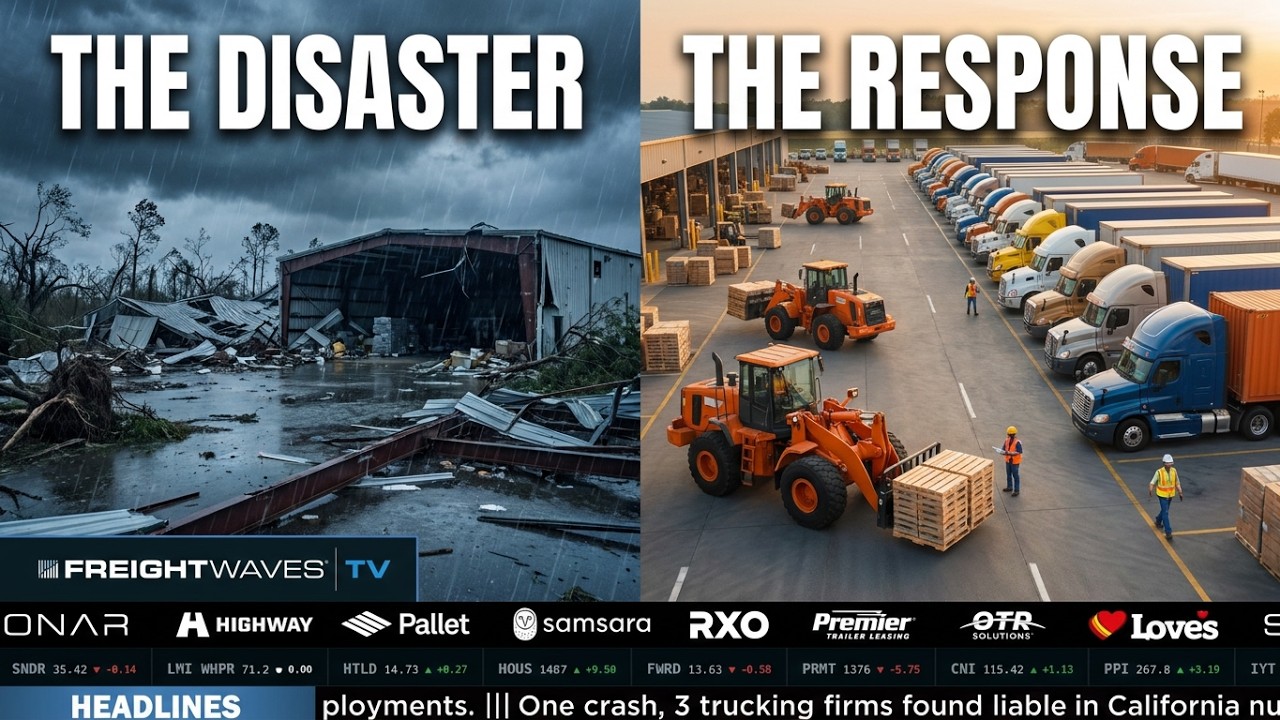
For Chief Supply Chain Officers preparing for hurricane season, the true test of resilience lies not in technology alone but in people, visibility, and strategic partnerships, according to a FreightWaves article highlighting logistics performance during disasters.
The Crisis Response Blueprint
The FreightWaves article profiles Michelle Livingstone, founder of M.D. Livingstone Consulting, who shared her journey from managing Home Depot’s hurricane command center to her current work empowering women in supply chain. Livingstone’s experience at Home Depot provides a concrete example of how large retailers operationalize disaster readiness. During hurricane season, the logistics industry “truly shines,” according to the article, though the source does not detail specific events or response timelines.
The article identifies three pillars that elevate logistics operations in crises:
- Improved visibility – A clear view of inventory, shipments, and infrastructure status.
- Strategic partnerships – Pre-existing relationships with carriers, suppliers, and local authorities.
- Commitment to people – Investing in workforce training, safety, and community support.
For procurement directors, these pillars translate into actionable due diligence. The FreightWaves piece suggests that without these foundations, supply chain continuity degrades rapidly during weather emergencies. No specific cost or lead time figures are provided in the source, but the implied message is that companies with strong visibility and partnership networks experience fewer disruptions.
People and Partnerships as Resilience Drivers
The article notes that Livingstone’s own career arc — from a command center role at Home Depot to founding a consulting firm focused on women in supply chain — underscores a broader point: crisis performance depends on experienced people who can coordinate under pressure. Home Depot’s hurricane command center, while not described in operational detail, is referenced as a model of preparedness that the logistics industry can learn from.
The FreightWaves article also promotes two upcoming industry events that reinforce these themes:
- Supply Chain AI Symposium – Focused on “deploying AI in supply chain” beyond the hype, targeting operators, founders, and enterprise leaders.
- F3: Future of Freight Festival – Held in Chattanooga, Tennessee at The Signal at Chattanooga Choo Choo, featuring keynotes, technology demos, and the FreightTech and Shipper of Choice Awards.
While the article does not quantify the ROI of attending such events, the emphasis on AI deployment and networking suggests that procurement teams should benchmark their crisis readiness against best practices shared at these gatherings.
What Your Procurement Team Can Extract from This Coverage
The FreightWaves piece offers limited granular data — no inventory weeks on hand, no cost-per-disruption figures, no supplier concentration maps. Yet for supply chain leaders, it reinforces a foundational principle: resilience is not a set of tools but a combination of visibility, trust-based partnerships, and skilled talent. Home Depot’s hurricane command center approach, as referenced by Livingstone, implies that investment in pre-crisis coordination infrastructure pays dividends when storms hit.
The article’s key takeaway for procurement directors: when evaluating your own readiness for hurricane season or other disruptions, assess whether your team has equivalent visibility into supplier and logistics partner capacities. If the answer is no, the FreightWaves article implicitly argues that technology adoption and strategic partnership development should be prioritized in your next planning cycle.
| Resilience Pillar (from FreightWaves) | Practical Procurement Action |
|---|---|
| Improved visibility | Audit real-time tracking capabilities across Tier 1 and Tier 2 suppliers |
| Strategic partnerships | Pre-negotiate contingency rates with carriers and warehousing providers |
| Commitment to people | Cross-train supply chain staff and establish escalation protocols |
The article concludes by noting that in both crises and opportunities, the logistics industry’s “true grit” comes from its people and processes — a message that CSCOs can apply to their own organizations by investing in the three pillars before the next disaster.