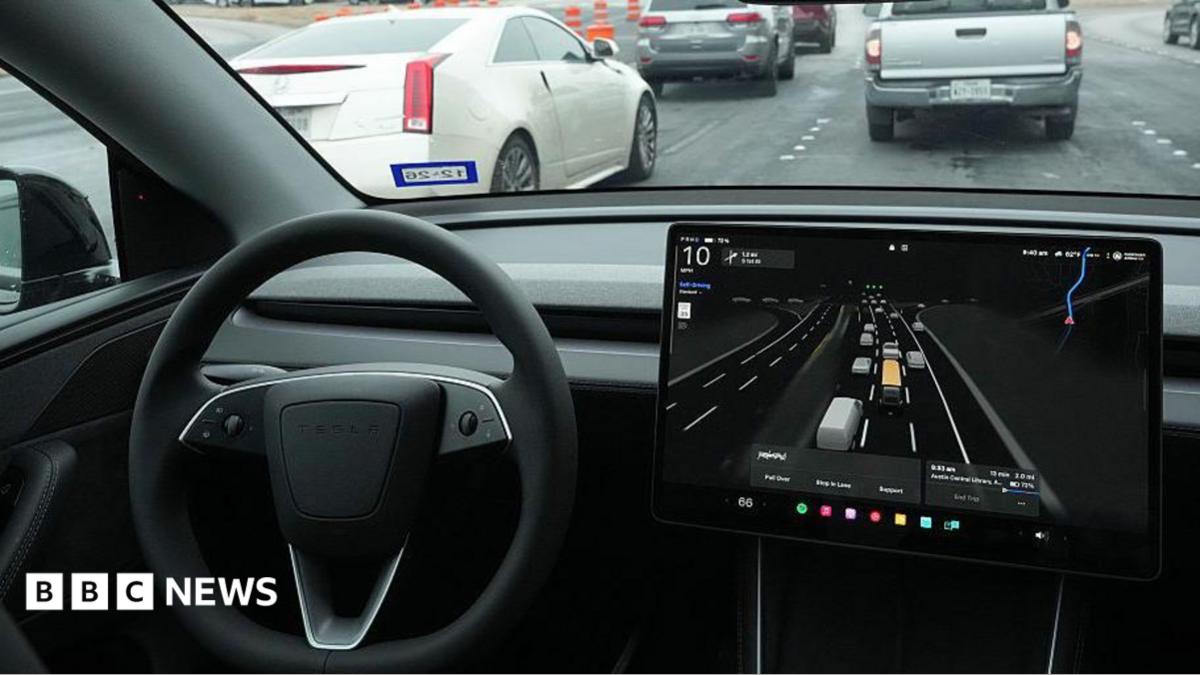
On a Texas evening last week, a 76-year-old grandmother named Martha Avila was standing in the front room of her suburban home when a Tesla Model 3 hurtled into her brick home at a reported speed of over 70 miles per hour, killing her, according to WIRED. The car's driver, 44-year-old Michael Butler, later told police that he had Tesla's driver assistance features engaged during the crash. Butler exhibited "no signs of intoxication," the Harris County Sheriff's Office noted in a report.
The Lawsuit
Avila's family is suing not only Butler but also Tesla, alleging that the electric automaker's Full Self-Driving (Supervised) driver assistance feature, also called FSD, played a role in her death. The suit alleges Tesla's tech "was defective in design and unreasonably dangerous," lawyers representing Avila's daughter and son-in-law wrote in a lawsuit filed in Harris County District Court on Tuesday, according to WIRED. The son-in-law, Justin Barbour, was also in the home and injured in the crash.
Tesla didn't respond to WIRED's request for comment. But on X, Tesla Vice President of AI Software Ashok Elluswamy wrote that Tesla data showed that Butler "manually overrode self-driving by pressing the accelerator all the way to 100 percent" and "had the accelerator pressed even after the crash." Elon Musk posted that speculation that the company's technology played a role "makes no sense."
Previous Precedent: Florida Jury Finds Tesla Partly Liable
Last year, a Florida jury found that the driver of a Tesla Model S using Autopilot was mostly responsible for a crash in which he failed to see that the T-shaped intersection was ending. He kept his foot on the accelerator, and the Tesla collided with and killed 22-year-old Naibel Benavides Leon. Her boyfriend, Dillon Angulo, was seriously injured. The jury also found, in a precedent-breaking decision, that Tesla shared one-third responsibility for the crash because it believed Autopilot was effective. It determined that Tesla was liable for $200 million in punitive damages, plus an additional $43 million in compensatory damages. A judge upheld the verdict earlier this year.
| Case | Driver Responsibility | Tesla Responsibility | Damages |
|---|---|---|---|
| Florida (2025) | Mostly responsible (driver failed to see intersection end) | One-third share because it believed Autopilot was effective | $243 million ($200M punitive + $43M compensatory) |
| Texas (2026) | Driver claims FSD engaged; Tesla says driver overrode system | Pending | Unknown |
Legal Expert: Product Design Could Be Key
"If the product is designed in a way that it leaves drivers vulnerable to situations where suddenly the system is not working and they've lost situational awareness, Tesla could be found responsible," says Matthew Wansley, a professor with Yeshiva University’s Cardozo School of Law who studies automotive tech, according to WIRED. Critics of Tesla’s approach argue that it’s precisely because FSD is pretty great that the feature presents a problem. If drivers trust that the system operates well all the time, they might not be prepared to take over if something goes wrong.
In a 2018 California highway crash, the driver behind the wheel of a Model X using Autopilot failed to take over steering before the vehicle crashed into a barrier, killing him. Tesla later settled a lawsuit related to the crash hours before it was set to begin.
The Texas case is ongoing. An ongoing probe conducted by the National Traffic Safety Administration's Office of Defects is also looking into the matter, though details are limited. Regardless of the outcome, the legal showdown underscores the unresolved questions around liability when autonomous driving features are involved.
Sources: