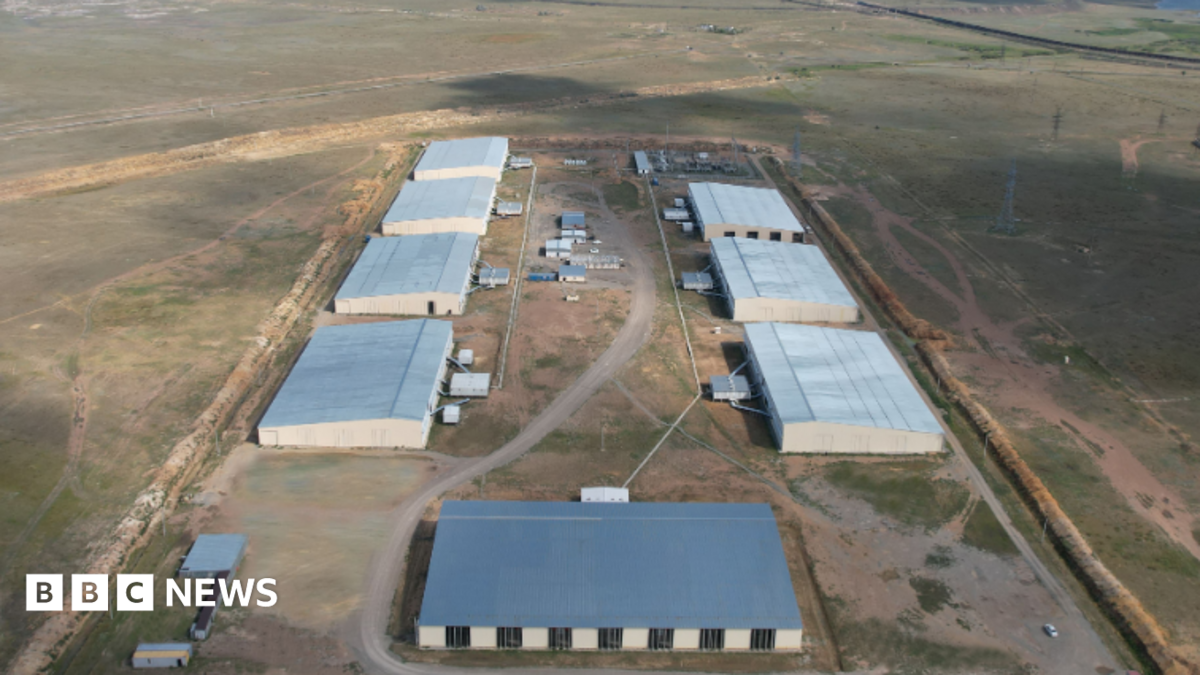
According to the BBC, the Ekibastuz Bitcoin mine in Kazakhstan — opened in 2020 and once symbolising cryptocurrency's rise — is part of a wave of operations converting their server banks from earning Bitcoin to running artificial intelligence workloads. Companies that once filled warehouses with computers to mine Bitcoin are now using that computing power for AI, the BBC reported.
Falling rewards push miners to AI
Bitcoin mining companies invested heavily in banks of powerful computers as the price of Bitcoin rocketed in recent years, but they have since faced falling rewards as the value slumped from its October 2025 peak, according to the BBC. One bitcoin was worth about $124,000 (£91,000) at that peak before falling sharply. It has recently rallied to around $80,000, up almost 30% so far in August, the BBC reported.
For companies that have already changed direction, even that price gain may not be enough to return to crypto, because the switch of use — once made — is expensive to undo.
Why mining infrastructure suits AI
The logic behind the pivot is structural. Bitcoin operates without a central authority; its computers verify transactions and are rewarded with newly created digital coins. AI systems similarly rely on vast networks of powerful computers housed in data centres, the BBC said. Mining companies have years of experience in finding cheap electricity and efficiently running large data centres, which industry analysts say makes them natural AI infrastructure operators.
Companies and deals in the pivot
Several publicly known Bitcoin mining firms are now diverting investment and infrastructure toward AI, the BBC reported. They include:
- TerraWulf
- Ionic Digital
- Core Scientific
- Iris Energy
- Bitdeer
- Riot Platforms
- Hut 8
| Company | Pivot action reported by the BBC |
|---|---|
| Riot Platforms | Signed a $9bn, 20-year compute deal with AI firm Anthropic earlier this month |
| Applied Blockchain | Renamed itself Applied Digital |
| TerraWulf | Website changed from describing an "infrastructure-focused bitcoin mining company" to "next-generation AI and high-performance computing" |
| Enegix | In active discussions with AI and high-performance computing companies; planning to convert a "significant" portion of the business to AI |
Enegix, which opened a huge Bitcoin mining site in Kazakhstan to great fanfare in 2020, is moving "confidently towards artificial intelligence", according to its chief executive Yerbolsyn Sarsenov.
"Today, we are moving confidently towards artificial intelligence and planning the gradual alignment of our energy and infrastructure capabilities, both in Kazakhstan and elsewhere, towards the development of AI infrastructure."
Sarsenov's statement was reported by the BBC.
The cost of switching
Refitting crypto mines for AI is expensive, and in some cases companies have had to sell part of their Bitcoin holdings to fund the switch, the BBC reported. The expense of the conversion is one reason the migration is likely to stick even if Bitcoin prices recover.
Industry outlook
Wolfie Zhao of The Energy Mag — a publication that rebranded from The Miner Mag to reflect the trend — predicts the pivot will continue even as Bitcoin has risen in recent days, according to the BBC.
"We expect to see many public miners continue winding down their Bitcoin mining hardware in the coming quarters."
Zhao said he hoped more miners will enter the market as conditions improve, the BBC reported.
The shift means large data-centre operators are increasingly repurposing infrastructure built for Bitcoin mining to serve AI workloads, the BBC reported. The cost of refitting — and the fact that some companies have sold Bitcoin holdings to fund it — illustrates how much capital is required to change direction in the data-centre industry.
Sources: